
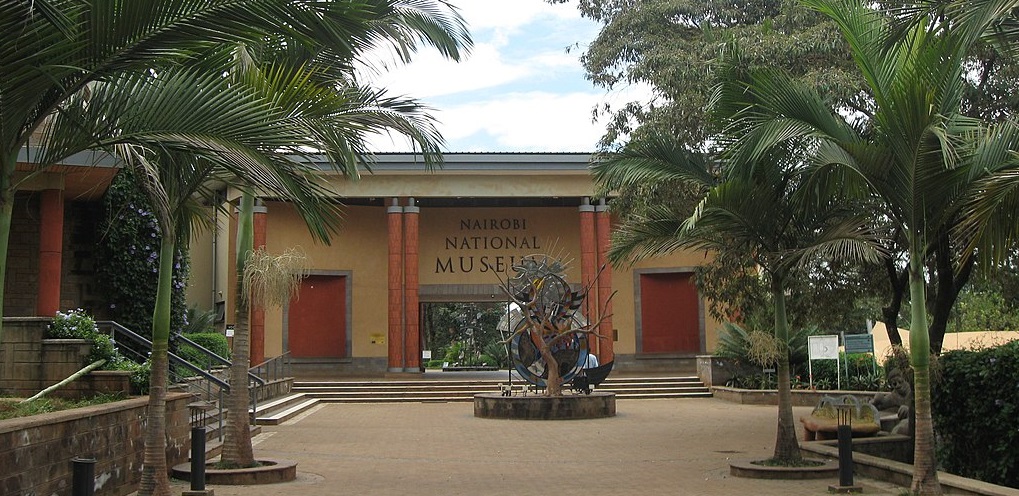
I attended an IPBES fellows training in Nairobi, Kenya, on 9–11 April. During the training, fellows involved in the Nexus, Transformative Change and Invasive Alien Species assessments had a chance to exchange knowledge and discuss common issues across the assessments while also strengthening their network and having a bit of fun. The training concluded with the 6th meeting of the IPBES capacity-building forum on 12 April, which was held in the Nairobi National Museum and focused on youth and their engagement in science-policy platforms. It provided a space for learning, knowledge-sharing and exchange of the participants’ experiences as they discussed solutions to current issues.
At the forum, fellows of the respective assessments ran a world café. After a short introduction of the activities for each of the assessments’ workshops, participants could choose which one they wanted to attend. The fellows from the Nexus assessment (me included!) prepared an exercise that could be broken down into three main parts:
- a short introduction to IPBES and the Nexus assessment
- group discussions
- a summary of the activity and feedback.
For the discussions, participants were assigned one of the elements of the nexus (water, food, health, biodiversity, climate). The first part of the discussions had the participants with the same element grouped around one table that was moderated by a fellow from the assessment’s corresponding sub-chapter. The focus was on how and why the discussed element is important to them personally and to their community. In the second part of the discussions, the participants were invited to join any other table to discuss the connections between their element of choice and their assigned element. The focus was on both the positive and the negative interactions between the two elements (and sometimes more than just the two). The discussion naturally evolved into a conversation about possible solutions and response options, addressing also the following questions: What needs to happen for a change? What needs to be solved? What are the barriers and challenges to these solutions?
Since I am a fellow for the chapter dealing with options to sustainable approaches to climate change, here are a few key points that arose from the discussions at the climate table:
- The discussions were mostly focused on problems related to the Kenyan environment.
- The participants viewed the current situation as an urgent climate crisis.
- The participants ended up discussing interactions with other elements during the first part of the discussions, which was by design focused only on the importance of climate in the participants’ life and community. This signals that the participants strongly related to the issue.
- The main impacts discussed were food security, biodiversity loss, flooding, land and mudslides, related soil quality, drought, lack of water, migration related to lack of resources, increased poverty levels, and how all these affect human and environmental health.
- There is a lack of community involvement (especially indigenous local communities) in climate (and related elements) conversations.
- For the adaptation/mitigation strategies to work, there needs to be empowerment of local people – they need to be given information and responsibility, and they need to be involved from the initiation and design phases of projects (not just informed).
- The participants feel a lack of government support that would help to address the issues.
- Climate change measures need to be context-specific (they need to be tailored to a specific characteristic of a location, in terms of local climate, environment and culture, while addressing local needs).
- The participants had a wide knowledge of climate and its interactions with other nexus elements (including their own experiences with climate change).
- The participants also discussed possible measures that could be implemented as nexus climate response options.
- There was also knowledge among the participants of what is happening and what needs to be done. The challenge remains (similarly to other parts of the world) as to how that can be done. For example: How to get resources (time, finances, capacity)? How to initiate a systems’ change (e.g. persuade governments to address the crisis more efficiently and involve local communities)?
A lot of the discussed points may be applied in other contexts (for example, the importance of involving local communities). I personally very much enjoyed moderating the table, all the discussions, the interesting points, the feedback, and, overall, learning from the inspiring and enthusiastic participants. Even though the workshops will not directly feed into the Nexus assessment, they contributed to shaping my thinking about the nexus issues, and were also hopefully somewhat enriching for the participants.
Do not forget to keep an eye on the Nexus assessment second order draft for comments!
https://www.ipbes.net/events
https://www.ipbes.net/notifications
Featured image: Ruslik0, CC BY-SA 4.0 https://creativecommons.org/licenses/by-sa/4.0, via Wikimedia Commons







 SustainableCZ
Leave a comment