

The FoSTA Health team conducted the first round of cross-country stakeholder consultation workshops for the project across Zambia, Tanzania, South Africa, and Malawi between October 11 and 12, 2023. The workshops aimed to glean diverse perspectives on food system transformations, focusing on One Health outcomes. These engagements are the first step toward exploring how human, animal and environmental health linkages can be leveraged to transform food systems. These interactions also seek to understand how different project partners and stakeholders in the focus countries conceptualise food systems and One Health.
Abhigya from the Czech Globe team (along with partners from the University of Leeds, Wageningen University, Sokoine University of Agriculture, Food, Agriculture and Natural Resources Policy Analysis Network (FANRPAN) and University of Nairobi) had the opportunity to participate in the Tanzania dialogue that took place in the city of Morogoro. The Economic and Social Research Foundation (ESRF), the in-country partner for FoSTA Health in Tanzania, coordinated the workshop spanning 2 days. The event brought together stakeholders from diverse institutions, disciplines and orientations, such as research universities, civil society groups and different ministries of the Tanzanian government and regulatory bodies.
The program was divided into sessions on food systems mapping, gender & Tanzania’s food systems, governance work, food and trade regulation in Southern Africa, and an exploration of representative transformation pathways as a tool for food system transformation. The rationale behind these different foci is to bring out the plurality of vantage points and perspectives on Food Systems Transformations for OneHealth and emphasise on that plurality. In the same vein, in the mapping exercise, we began with probing into different understandings of OneHealth among the stakeholders and engaging with their ideas around how linkages between human, animal, and plant health are intertwined with food systems. We posed questions regarding existing OneHealth initiatives in the region and the actors who play a vital role in those interventions. Further, we discussed the main barriers and obstacles that limit these interventions and the solutions and opportunities to overcome the same the stakeholders could think of.

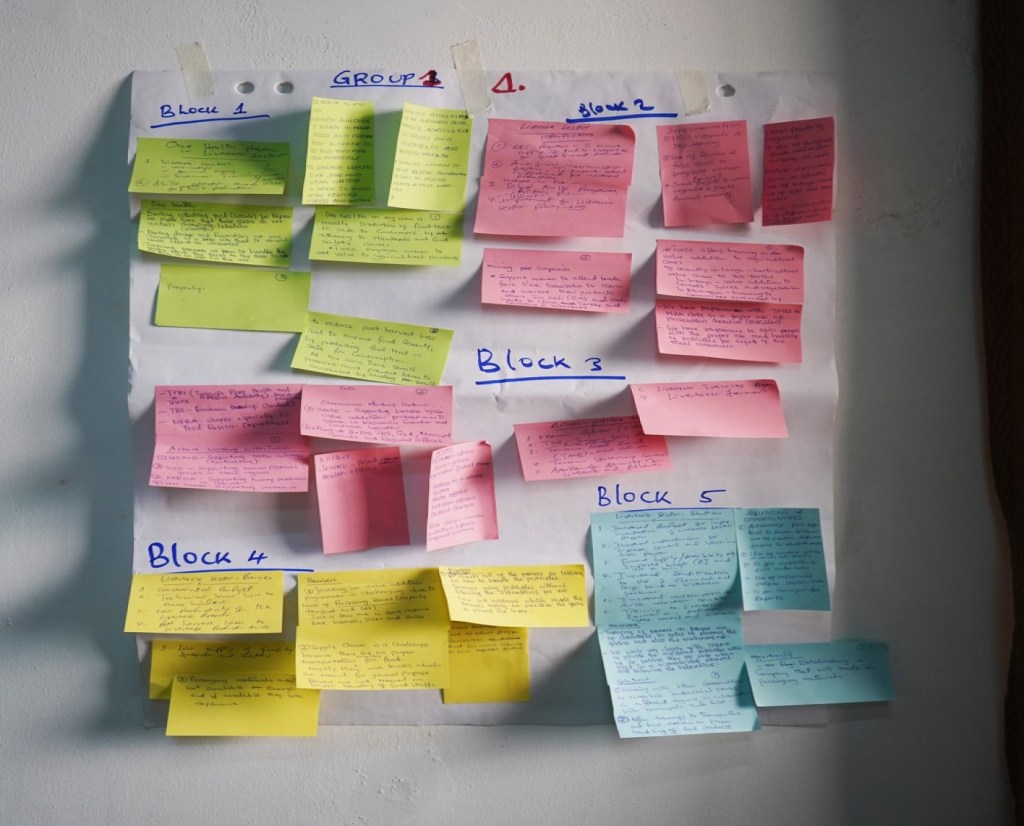
Issues such as livestock diseases, nutrition insecurity, land use policies, cultural barriers to consuming nutritious food, and the significance of supporting women’s businesses were recurring themes in the discussions on achieving One Health outcomes. The stakeholders also emphasised the importance of adhering to regulatory standards to address food safety issues, such as producing safe food for consumers as an imperative to achieving ‘One Health.’
The inputs give us a window into how the institutional affiliations of different stakeholders inform the choice(s) of food system components that particular actors tend to prioritise. For instance, stakeholders working in the livestock domain emphasised on the importance of vaccination and farmer training to prevent zoonotic diseases. Those from women empowerment collectives stressed the need for mainstreaming gender within food system transformation projects. Standard settings, compliance and lack thereof ranked high on the agenda of actors from regulatory bodies. These insights illuminate the breadth of elements, human and non-human actors, institutions, cultural, socio-political and governance issues that animate food systems.
The diversity of the inputs also ties back to another key focus of the Czech Globe team on the FoSTA project, which is to contribute to developing the methodology of ‘formative accompanying research’ . This is to learn along the way from the stakeholders and partners within the FoSTA team about the challenges and opportunities pertaining to food systems transformations – and also the challenges we encounter within the FoSTA project. The idea is to continuously reflect on the power dynamics that shape research priorities and methods, use the learnings to refine the FoSTA methodology, and contribute to a more extensive discussion on how power dynamics shape participatory processes and research. The dialogues brought us closer to exploring this component of our research and gave us a chance to observe how stakeholders’ institutional priorities interact with the researchers’ agendas.









 SustainableCZ
Leave a comment