

We have concluded our regular meetings with local actors in the One Nature project case studies with the fourth round of our workshops. The aim of these case studies in the three selected protected areas in Czechia is to identify and evaluate significant nature’s contributions to people and their relationships using the socio-cultural assessment method.
This type of assessment requires that we work with a wide range of local actors who influence the local nature and landscape. The four rounds of workshops in the three PLAs brought in over 140 participants from a diverse range of backgrounds – conservation, agriculture, forestry, tourism, local businesses, local government (mayors and other officials), even science and research. This enabled us to capture comprehensive information on the forms that the relationship between people, nature and its values takes in the areas. Each round of workshops focused on specific aspects of nature’s contributions to people; we have addressed these in the relevant posts previously published on our blog. There is a blog on the content of the first round of seminars, an interview with a participant from the second round of seminars, and another blog focused on the third round of seminars.
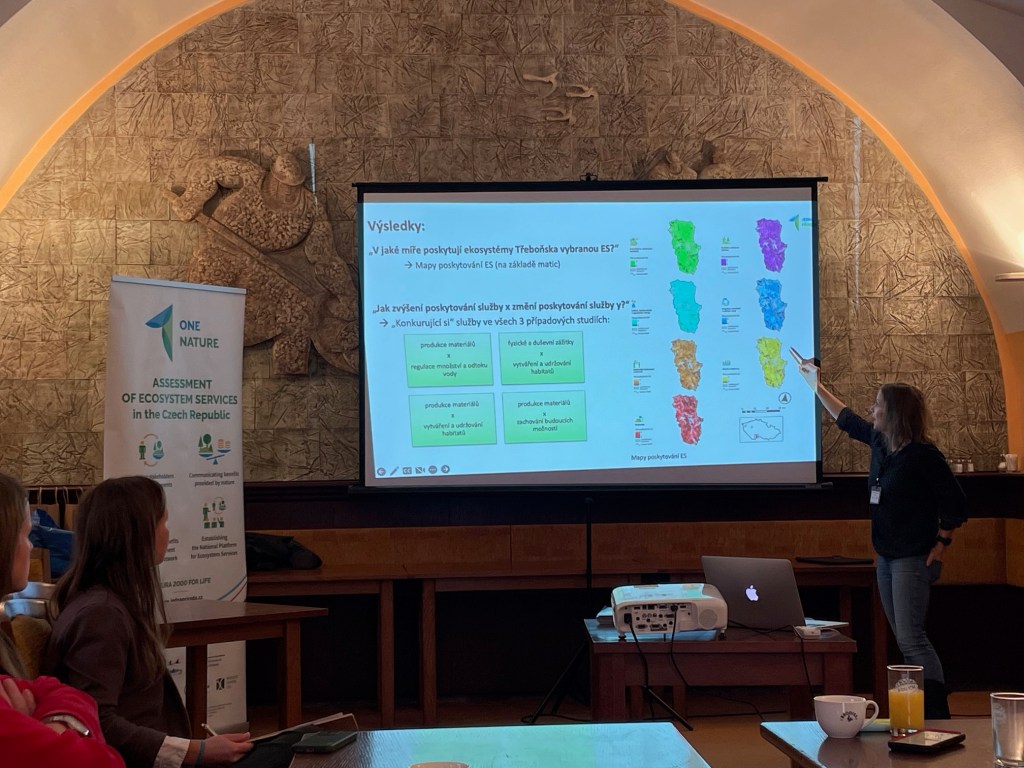
This year’s meetings took place on 22 February 2024 in the PLA Třeboňsko, on 27 February in the PLA Slavkov Forest, and on 29 February in the PLA Křivoklátsko. As always, we started the seminars with a short theory-based introduction, which outlined the objectives and scope of the One Nature project and reintroduced the concept of nature’s contributions to people (also known as ecosystem services). Next, we briefly reminded the participants of the content of the previous rounds of workshops and presented the results obtained so far.
The main focus of the fourth session was a roundtable discussion among all participants. The discussion revolved around three main topics, which developed and complemented the lessons learnt from the previous workshops. We used the IPBES Game cards during the discussion once again to present the 16 ecosystem services relevant to Czechia, and give the participants brief definitions and specific examples thereof. The first topic focused on preferences for ecosystem services from a variety of value perspectives, specifically perceptions of their value from ecological, economic, and social perspectives; next, the local actors discussed their vision for the harmonious development and sustainability of ecosystem services management in their respective localities; finally, we raised the topic of opportunities and barriers to implementing the ecosystem services concept in the participants’ professional practice.

The roundtable discussion revealed several interesting, and to some extent regionally specific, suggestions. In general, participants from all locations highlighted the need for sensitive management of ecosystem services with knowledge of the local context. The debate also revolved around education of all age groups, public awareness, and funding to support intangible and regulatory contributions in the landscape, including the support for volunteerism. The issues most frequently highlighted with regards to promotion of the use of ecosystem services in the participants’ professions were the legislative anchoring of the concept, the training of professionals to promote its use at all levels of government, and the translation of research results into applicable methodologies. The roundtable topics were often mirrored in the discussions that were had during the excursion, which loosely followed the roundtable discussions. In the Třeboň region, it was led by ornithologist Petr Musil in the nature reserve near pond Rod; in Slavkov Forest, we were guided through the botanical garden in Bečov nad Teplou by the garden’s director Jiří Šindelář; in the Křivoklát region, we visited a well-preserved forest in the Velká Buková municipality with Miroslav Pecha, the director of the Křivoklátsko Forestry Park.

We concluded the series of participatory workshops by saying goodbye and giving out small presents to the participants. A big thank you not only to them but also to all the others who participated in the previous rounds for providing their personal and professional perspectives to our evaluation of nature’s contributions in the case studies of the One Nature project.
Tento článek vyšel v češtině na webových stránkách projektu Jedna příroda.










 SustainableCZ
Leave a comment