
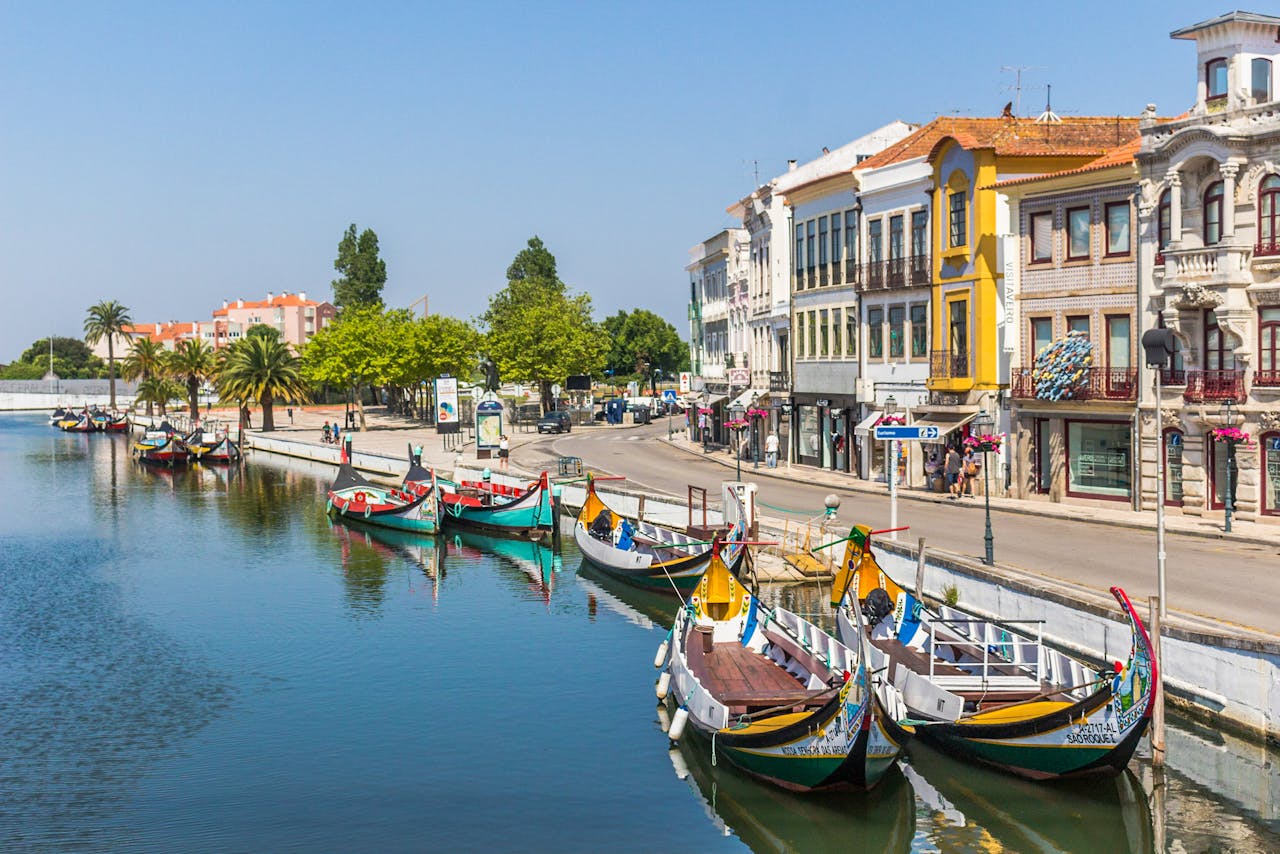
The 2025 Alternet conference took place in the beautiful city of Aveiro, Portugal from 13-16 May, bringing together researchers, experts and decision makers with a common goal of realising transformation for sustainability. This year’s theme dubbed, “Achieving Transformative Change for Biodiversity” sought to explore the root causes of biodiversity decline and how to drive fundamental changes for a just and sustainable future. Through various sessions, strategies and approaches for mainstreaming biodiversity across key sectors central to sustainability challenges and the factors that shape decisions at different societal levels were discussed.

Patricia Ofori-Amanfo, a PhD student at the Human Dimensions department of CzechGlobe, delivered a presentation titled “A participatory approach to understanding processes of transformation in Ghana.’’. This paper, co-authored with Professor Julia Leventon, is part of a broader doctoral project called “Bridging scales and interests in transformation for sustainability: the political economy of community development in Ghana.” The doctoral project seeks, among other objectives, to bridge transformations knowledge emerging from local place-based cases and global conceptual levels, and to situate this within political-economy contexts. The presentation highlighted findings from her recent fieldwork with a local marginalised community in Ghana, during which she aimed to understand what transformation for sustainability means to members of this community. Her presentation focused on the use of scenarios and interviews in co-creating alternative plausible futures and exploring strategies for enacting broader societal transformation. She highlighted how the standard, but flexible, 2*2 double uncertainty scenario matrix can be used to harness local knowledge to guide societal transformation for sustainability. Her presentation underscored the importance of integrating local knowledge in transformation processes for a sustainable and just future.
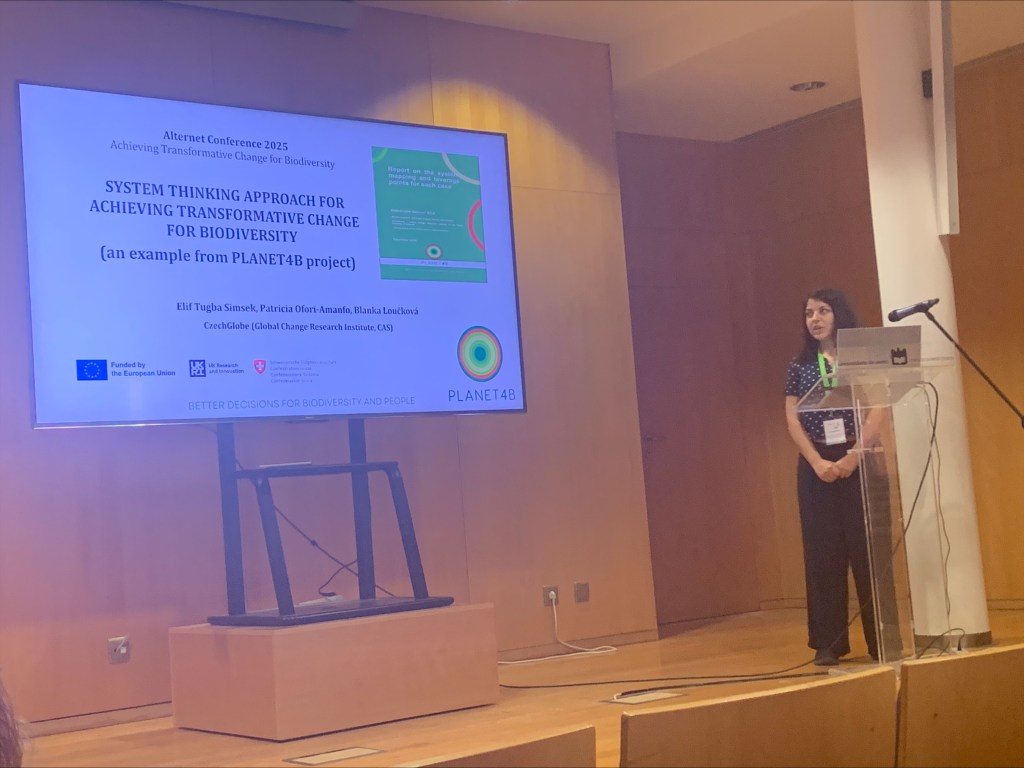
Elif Tugba Simsek, a postdoctoral researcher from the same department, also delivered a presentation on the system thinking approach for achieving transformative change for biodiversity based on the PLANET4B project. The presentation focused on a recent report of the project, “System Mapping and Leverage Points for Each Case,” prepared by Blanka Loučková, Elif Tugba Simsek and Patricia Ofori-Amanfo. The report synthesised findings from five place-based and six sector-based case studies, identifying key leverage points and insights from local communities and sectors that can drive meaningful change. The case studies span different countries, including Norway, Austria, the UK, Germany, Switzerland, Hungary, and Italy, and the sectors examined are fashion, financial investments, global soy and beef trade, education, and agrobiodiversity. The presentation specifically focused on the findings from five place-based case studies: Nature Recreation in Oslo, Urban Youth in Germany, Edible City and Inclusion in Graz, Opening Nature to Black, Asian, and Ethnic Minority Communities, and Attitudes towards Agro-biodiversity and Religion in Switzerland. It emphasised the importance of inclusive decision-making and leveraging local knowledge to create context-specific solutions based on the report’s findings.
Participating in this year’s conference offered a great platform not only for the researchers to present their work but also to engage with an interactive community of researchers and non-academic experts on moving beyond research to action in advancing transformation for sustainability.
Post authors: Patricia Ofori-Amanfo and Elif Tugba Simsek









 SustainableCZ
Leave a comment