
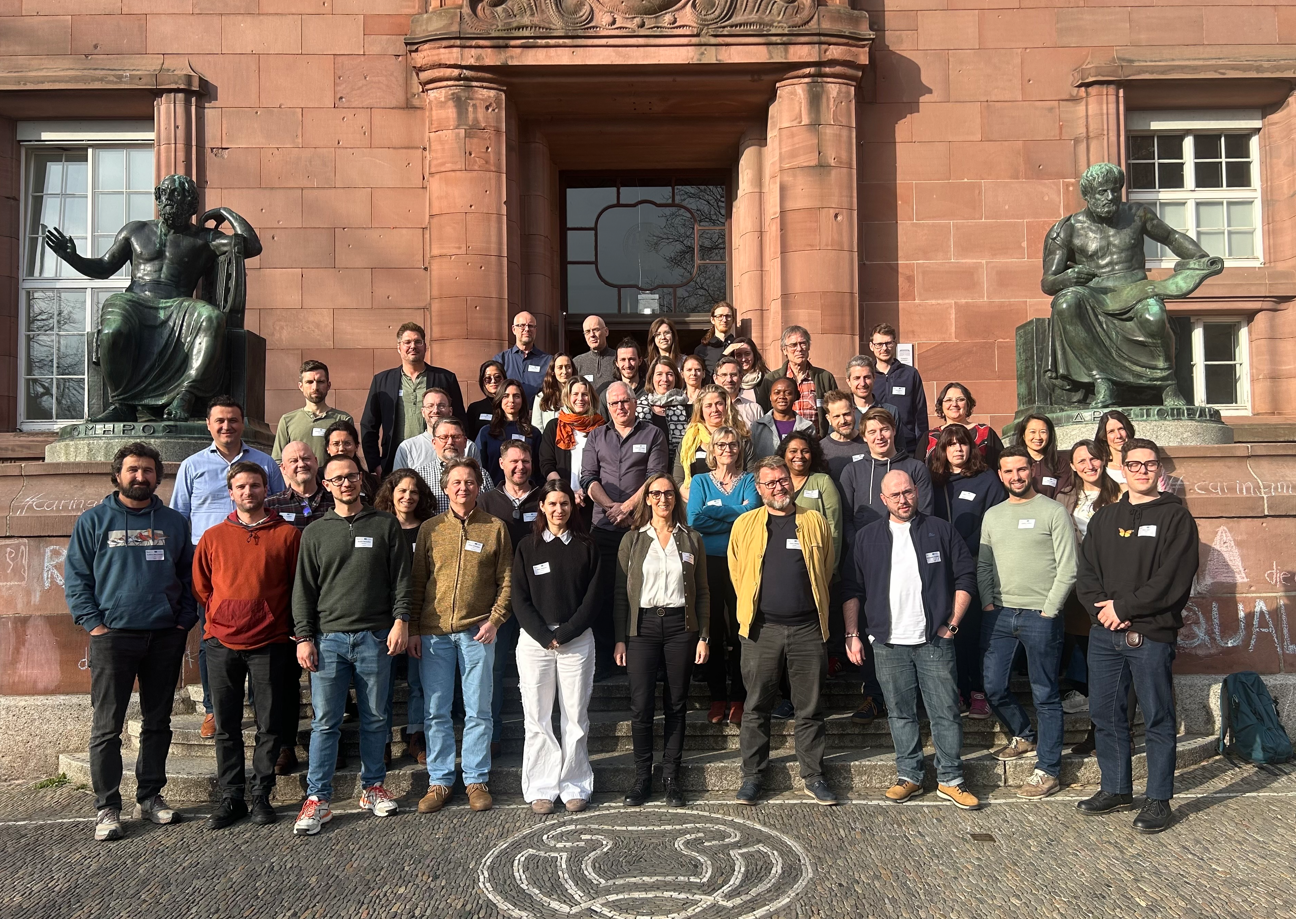
From 10 to 12 March, partners in the AGRI4POL project gathered at the University of Freiburg for the project’s first Annual General Meeting (AGM). Over three days, the meeting offered a valuable chance to reflect on progress made so far, connect the project’s different strands of work, and plan the next steps together.
AGRI4POL brings together researchers and practitioners from across Europe to explore how agriculture can become a positive force for pollinators, crop pollination services, and wider benefits for ecosystems and society. Because the project combines ecological, agricultural, economic, social, and policy perspectives, meetings like this are essential for keeping that broad collaboration moving forward coherently.
CzechGlobe was represented in Freiburg by Tereza Prášilová and Simona Zvěřinová. On the first day, we presented CzechGlobe’s work so far as part of the WP1 activities, contributing to the wider exchange on the progress achieved across the consortium during the past year. The opening day gave an overview of the project as a whole, with discussions covering the co-design of research, pollinator-friendly farming, policy, and practitioner engagement. It was a useful reminder that AGRI4POL is not only about ecological research, but also about how knowledge is developed together with stakeholders and translated into practical and policy-relevant outcomes.
The first full day of the meeting then continued with a series of workshops led by project partners. These focused on topics such as acceptability of pollinator-friendly farming measures, pollination syndromes, breeding targets, modelling and future field work planned within the project. Together, these sessions highlighted the breadth of expertise within AGRI4POL and the importance of linking experimental, field-based, and conceptual work. The discussions made it clear that the project will soon be moving into a more connected phase, where the different activities will be increasingly informing one another.
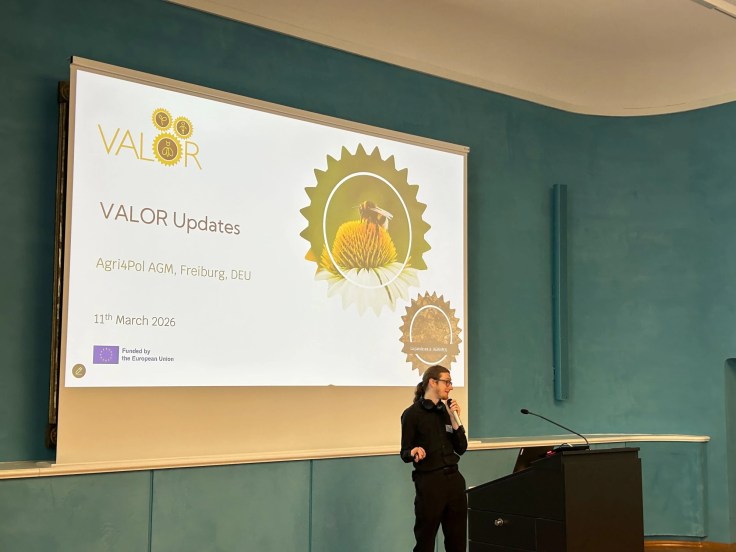
The second day turned even more strongly towards the wider social and policy dimensions of pollinator-friendly farming. Partners presented on the social and economic value of pollinators to agriculture, food production, and society, and also discussed AGRI4POL’s links to agricultural and conservation policies at European and international scales. This part of the programme underlined a key point: pollinator-friendly farming is not only a technical or ecological issue, but also something shaped by institutions, incentives, public priorities, and the realities of agricultural practice.
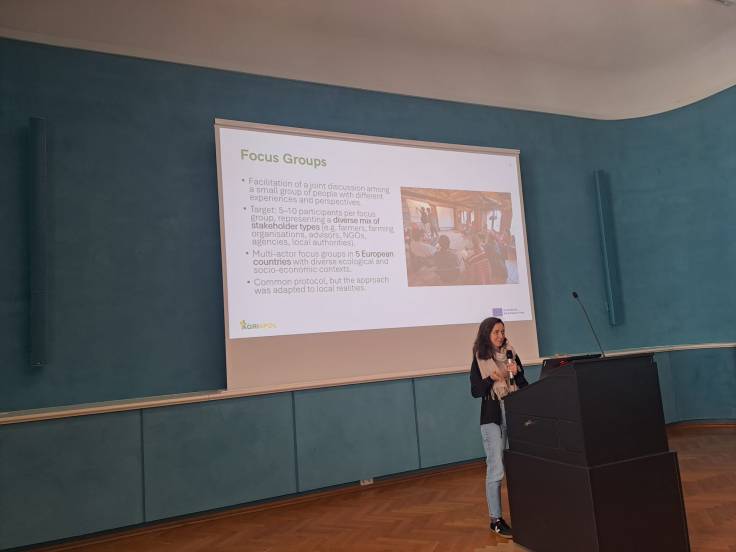
For CzechGlobe, one important part of the AGM was also the debrief on the focus groups linked to our work in the project. As we wrote in our earlier AGRI4POL blog post, these focus groups are designed to explore how the co-benefits and trade-offs of pollinator-friendly farming are understood in different national and sub-national contexts. Their purpose is to look beyond the ecological benefits alone and examine how such measures are perceived in relation to agronomic, economic, social, and policy considerations. In practice, this means identifying not only where pollinator-friendly farming can bring multiple benefits, but also where tensions, barriers, or conflicting priorities may arise.
The focus groups build on the earlier stakeholder workshop in Brussels, where participants helped refine a framework for thinking about these co-benefits and trade-offs. The next step is to use the outcome of these focus groups, of which most have now taken place, and ground this discussion in the realities of five different European countries, including Czechia.
Beyond the core AGM programme, the meeting also included presentations and discussions on actions towards biodiversity and pollinator-friendly farming from other EU projects, including RESTPOLL and FarmBioNet, as well as local initiatives such as the Baden-Württemberg Living Lab Network and a local wine producer. The final day also focused on synergies with other projects and on how knowledge and results can be shared more effectively, with contributions from Butterfly Europe, VALOR, ProPollSoil, HeLEX, WildPosh, and ENCORE. These exchanges showed clearly that AGRI4POL is part of a wider European effort to rethink agriculture in ways that support both biodiversity and resilient food systems.
For us at CzechGlobe, the meeting was a welcome opportunity not only to share our work, but also to place it within the wider direction of the project and discuss how stakeholder perspectives, co-benefits, and trade-offs can inform more pollinator-friendly agriculture. If AGRI4POL is to contribute meaningfully to a more sustainable future for both farming and pollinators, then exactly this kind of exchange across disciplines, sectors, and countries will be essential.


AGRI4POL receives funding from the European Union’s Horizon Europe research and innovation programmeunder grant agreement No 101181146 and The State Secretariat for Education, Research and Innovation (SERI). Views and opinions expressed are those of the author(s) only and do not necessarily reflect those of the European Union (EU), the European Research Executive Agency (REA), or the SERI.










 SustainableCZ
Leave a comment