

The Evidence for Policy in Disaster Risk Management Summer School brought together researchers, scientists and policy makers to network, share knowledge and explore methods for the incorporation of more research into policy making. The Summer School, organised by the Union Civil Protection Knowledge Network and hosted by the Scuola Superiore Sant’Anna, took place in Pisa, Italy, from 29 to 31 May 2023. Around 70 researchers and policy makers from 30 EU member states and UPCM (Union Civil Protection Mechanism) participating states attended. Participants came from a range of organisations such as research institutions, national civil protection agencies, EU institutions, the private sector and the UN.
The Summer School opened with a plenary session where keynote speakers such as Maria Chiara Carrozza, President of the National Research Council of Italy, and Fabrizio Curcio, Head of the Civil Protection Department in Italy, addressed the participants.
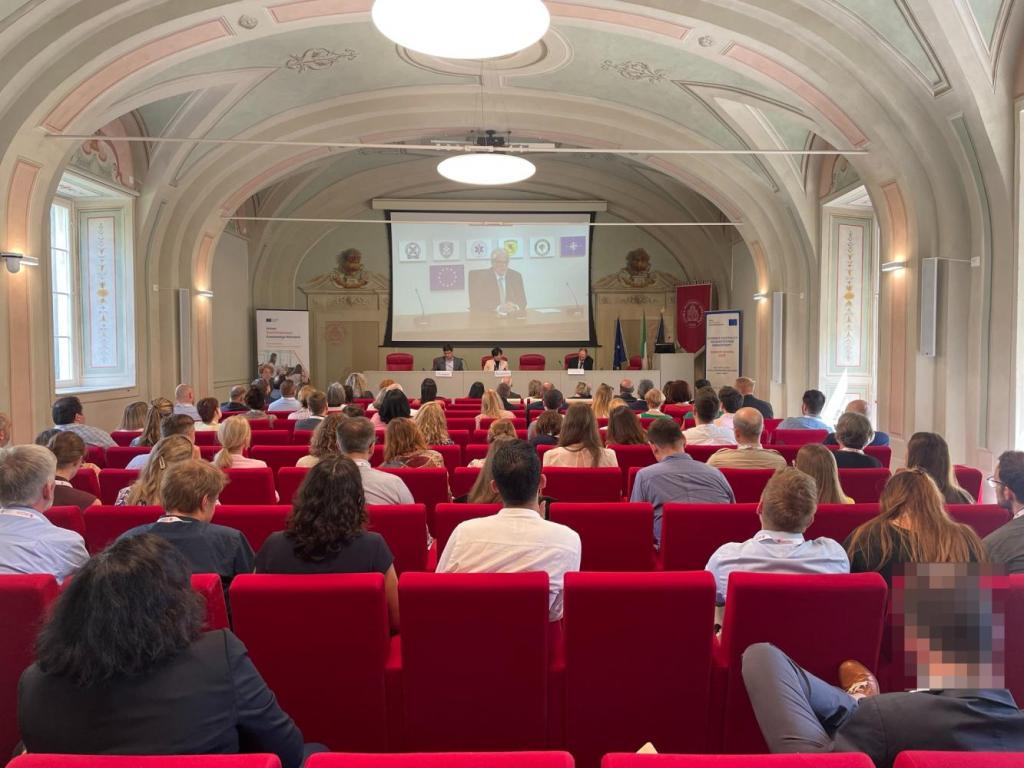
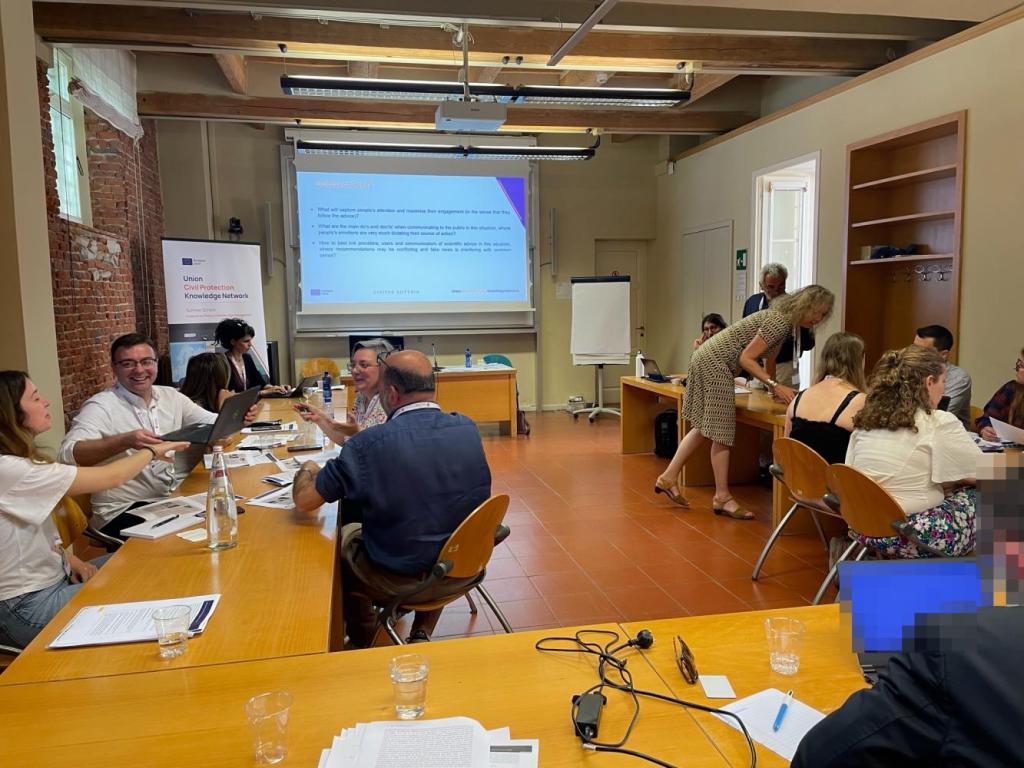
The six masterclasses held on the second day explored the relationship between science and policymaking from different perspectives and showed how strong and effective collaboration between the two is essential. Using an interactive approach, the masterclasses encouraged participants to explore how they can facilitate better integration of scientific evidence into policy-making in their respective roles. For scientists this meant gaining a better understanding of how to communicate and visualise their findings and how to align their research with policy needs; policy makers gained insights on how to find research relevant to their field and then interpret and integrate this research into their policies. The two masterclasses we attended – Can hybrid experts help bridge the science-policy gap and Developing a behavioural and risk communication approach that is balanced and engages the public – explored the different strategies used in the emerging science-policy interface, and the benefits and limitations of technocratic developments and of the use of hybrid experts in evidence-based policy making.

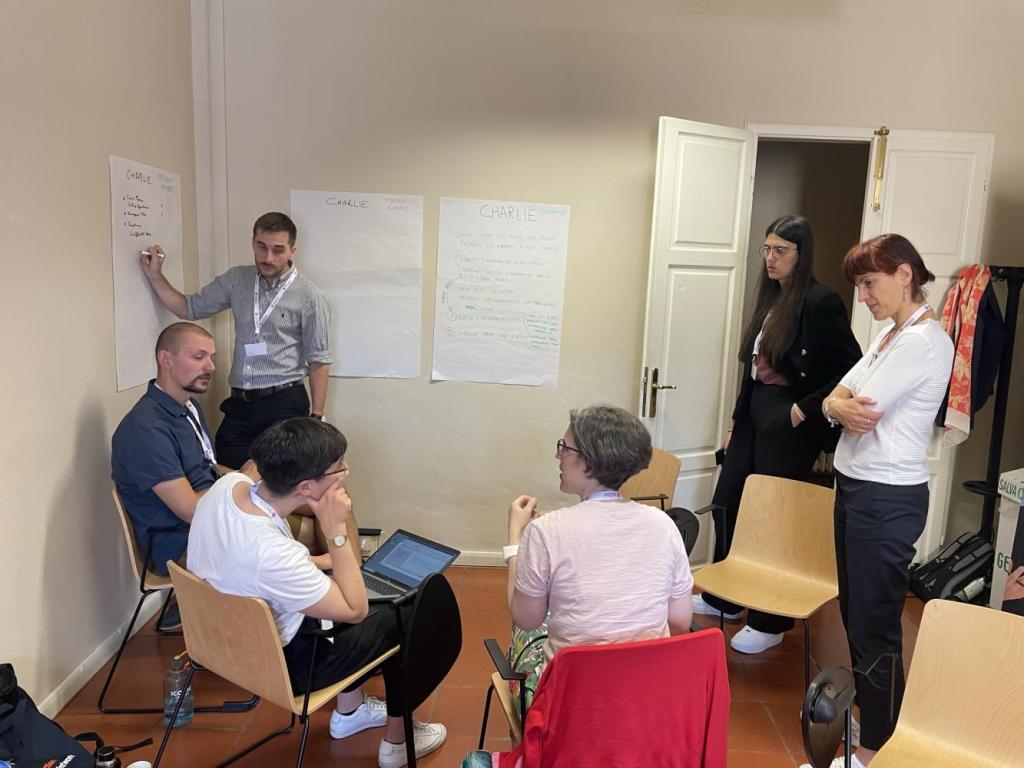
The great diversity of speakers and participants led to a deep and meaningful exchange of ideas during most activities. At first glance it might seem that an ecologist, for example, would not share common topics with a senior official from Brussels, or a sociologist with a professional firefighter; however, the important things here are the approach, understanding of the issue at a general level and the effort to get to know the other party. And yet, in this case, it is not the other party but rather a colleague who, like you, is trying to reach the same goal. And so we can say, with a bit of exaggeration, that we met 70 new colleagues who are trying to clear and straighten the path between science and reality through policy and other planning documents. Perhaps this will help to make the world a better place!







 SustainableCZ
Leave a comment