

The PLUS Change project aims to develop strategies and decision-making processes for land use that effectively address challenges related to climate change, biodiversity, and human well-being. The project involves interventions across diverse political, economic, societal, material, and cultural contexts, involving actors at multiple decision-making levels including the individual, land management, planning, and policy levels. This diversity is represented by 12 practice cases, including the Nitra city case coordinated by the Department of Ecology and Environmental Science at UKF Nitra, Czech Globe, and in close collaboration with the Office of the Chief Architect of Nitra city.
About the Nitra City Practice Case
The City of Nitra in Slovakia, a regional economic hub with historical significance, grapples with diverse land use challenges. Nitra faces issues such as rapid suburbanization, conversion of fertile agricultural lands for industrial use, and consequent impacts on housing, transportation, and recreation. These activities exacerbate environmental concerns, including degradation of soil, air, and water quality, posing threats to both citizens and ecosystems.
Since 2020, the City of Nitra has undertaken a new master plan to pioneer innovative urban and landscape planning approaches, aimed at enhancing citizen well-being and ecosystem health through inclusive, expert-led processes. The PLUS Change project supports these efforts by leveraging science and expertise to help establish a sustainable urban environment.
Workshop 1
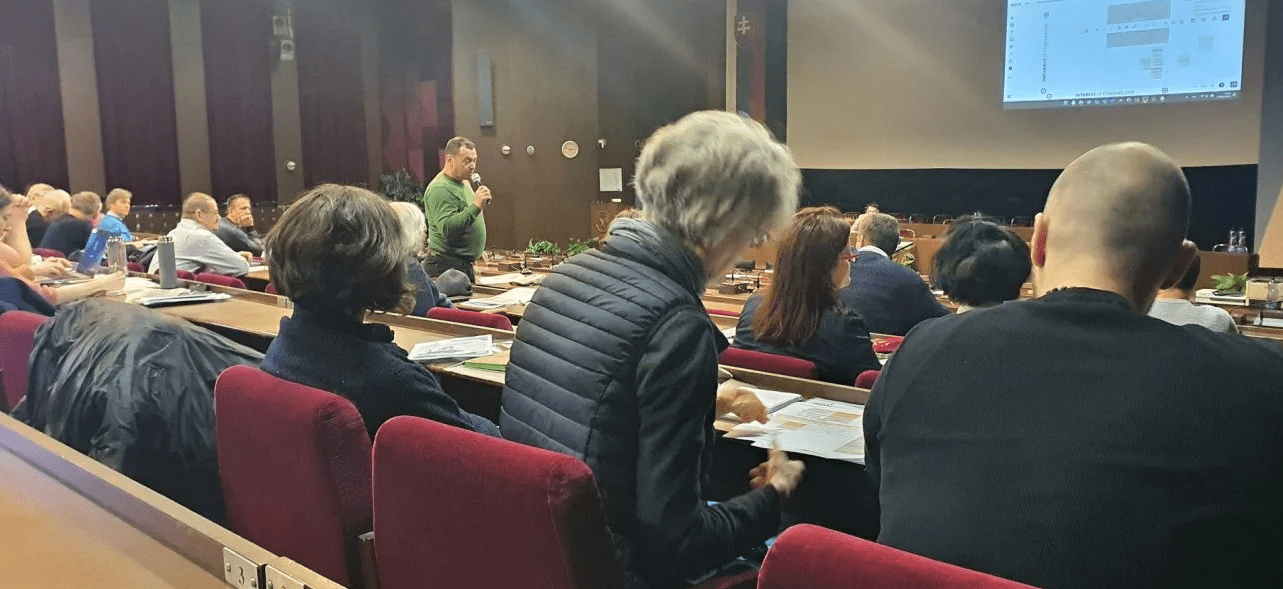
On January 24th, the first meeting of the Nitra Case Study took place at the City Hall of Nitra, aiming to inform attendees about the project and its main objectives, methodology, and tasks for 2024. The meeting hosted 40 participants, including researchers, representatives from various departments of the City Hall, as well as representatives from governmental and local authorities, development agencies, educational institutions, media, and also agricultural and forestry stakeholders.
Representatives of various stakeholder groups expressed interest in the project and discussed potential collaboration opportunities. They also helped to identify other important stakeholders who were not present or invited to the workshop and who could benefit from and be beneficial to the project.
Workshop 1 served not only as an introduction to the project and case study, but also provided valuable insights and numerous contacts for further collaboration and engagement of a wide range of experts and stakeholders. The workshop concluded with discussions on some of the issues surrounding the case study, particularly regarding future steps and collaboration levels among involved parties.


The PLUS Change project has received funding from the European Union’s Horizon Europe research and innovation programme under grant agreement No. 101081464.







 SustainableCZ
Leave a comment