

Sustainable land use strategies in both urban and rural areas in Europe must be planned to meet biodiversity, climate and human wellbeing in a changing world. The PLUS Change project aims to help achieve this through a series of research activities and participatory workshops in 12 case studies from 11 EU countries. One of these case studies is Nitra city in Slovakia. The City of Nitra is involved in the project as a co-investigator together with the University of Constantine the Philosopher, representing an urban case study.
The City of Nitra is currently in the process of creating a new Master plan. It aims to set out the development concept and vision for the city that promotes sustainability, public functions and quality of life, and urbanisation that respects and recreates natural qualities in the landscape. The whole process emphasizes broad stakeholder and resident participation, with final decision-making based on a competitive dialogue between experts and the city. This fits perfectly within the framework of the PLUS Change project, in which participation and co-creation are central aspects.
Recently, on 18 June 2024, two workshops from the projects’ workshop series took place in Nitra, one dealing with historical land use changes and the other with the future of a defined area within the city. More than 25 representatives of various stakeholder groups attended the meeting including researchers, city deputies, urban planners, state and regional governments, NGOs, nature conservation, agriculture, forestry, media, and other professional organizations.
Main land use changes in Nitra since 1950
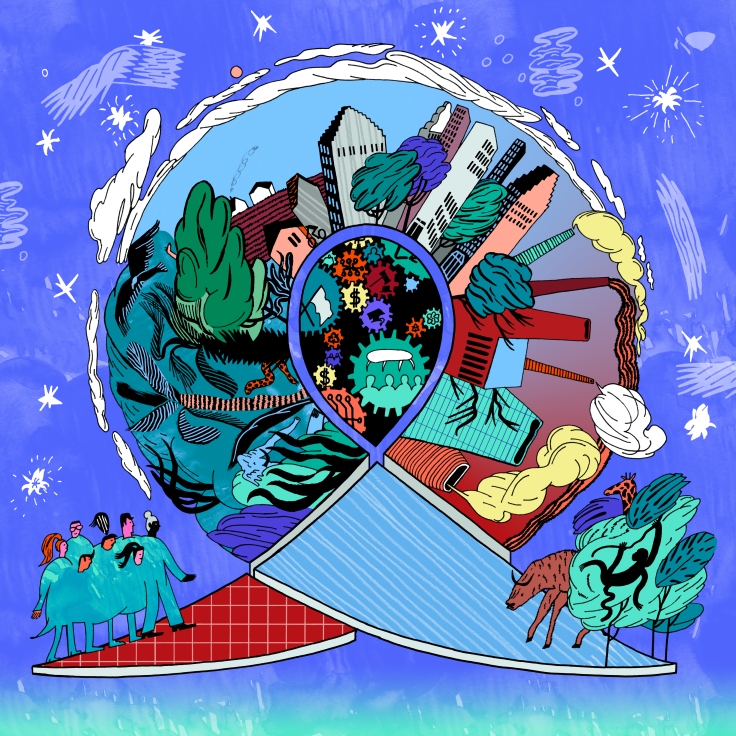
In the first part of the day, the participants identified and discussed the main land use changes that took place in Nitra after 1950. In the period from 1950 to 1990 the communist regime reigned for which collectivization of land, industrialization and urbanization were characteristic processes. After 1990, with the advent of a democratic regime and a free market economy, we can see that urbanisation and land use trends have changed significantly. As a result of the long-term process of land use changes in Nitra, the city has gradually grown far into the countryside and its internal structure has changed, almost a third of the agricultural land has been lost. The city’s vulnerability to climate change and threats to biodiversity have increased, as have differences in the quality of life in different parts of the city.

Common future visions for Nitra city
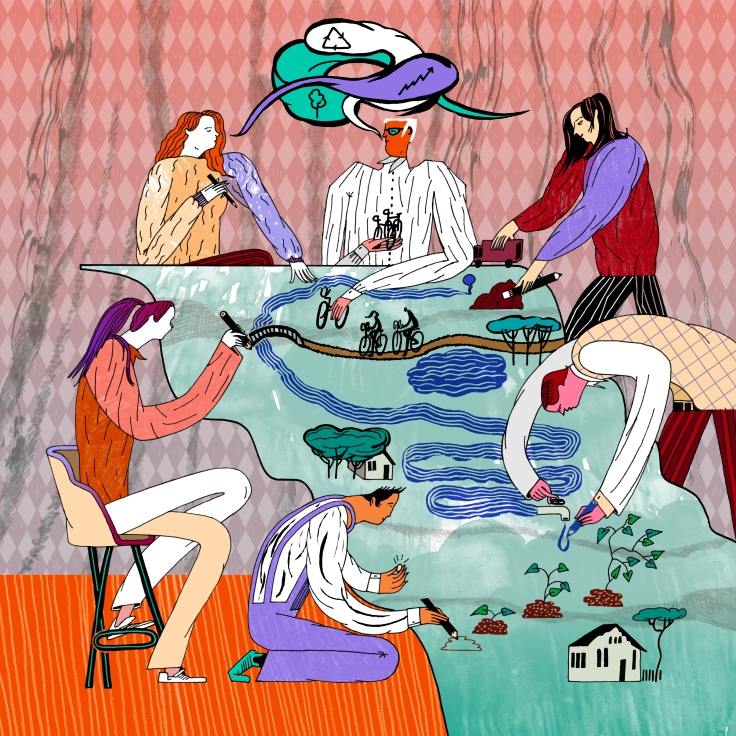
The second part of the day was led by the Biobased Creation studio in coordination with the team from Nitra, aiming to outline future visions for Párovské lúky, which is a peri-urban area that has been planned for urbanization for about 20 years. A sustainable urban neighbourhood for 20 to 30 thousand inhabitants is to be created here. The participants proposed and discussed three possible visions, then narrowed them down and agreed on common principles and qualities that the neighbourhood should have.
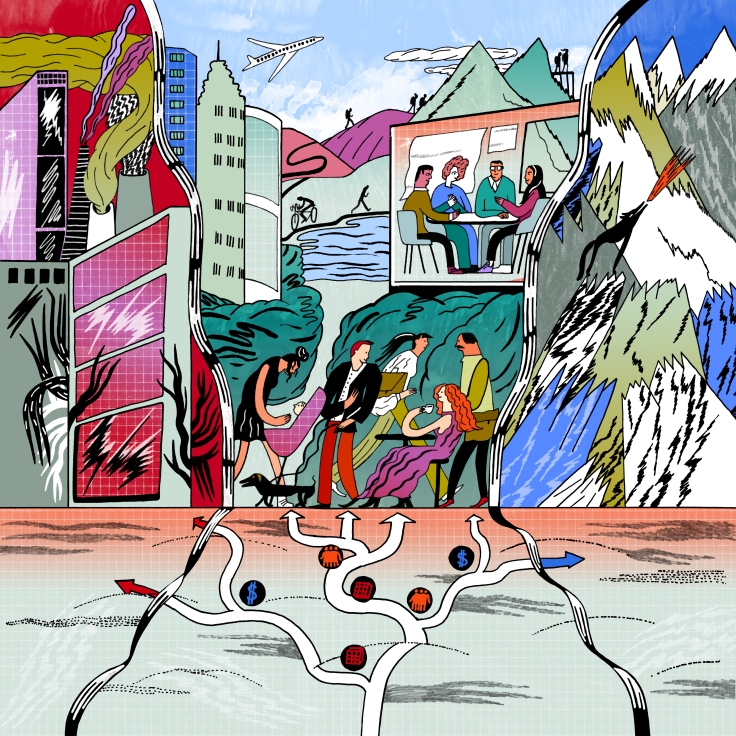
All proposals emphasized the importance of natural and recreational qualities that fulfil many ecosystem functions and services, and the need to create conditions for pedestrian, cycling and partly also water transport, while significantly reducing car traffic. It was recommended to maintain 50% of the area for nature and recreation by reconstructing natural features with emphasis on water (water bodies, streams, wetlands) that were historically present here. Further, participants emphasized the importance of quality housing, landscape multifunctionality, good social and cultural facilities and community life, sufficient quality employment opportunities and amenities for different groups of residents (including elderly). Finally, the main principles of a “desirable” future were formulated not only for Párovské lúky, but also for the whole city.

Next steps and challenges in Nitra city within the PLUS Change project
In addition to the analysis of the existing spatial development and its consequences for the environment and the quality of life, the research and coordination team will participate in co-developing and implementing new planning approaches and tools such as policy simulations or elaboration of regulations based on the concept of ecosystem functions and services. These will be presented and discussed throughout the upcoming workshops with local stakeholders and partners. The City of Nitra is committed to include the outputs from the project to strengthen currently ongoing development of the new Master plan.
Further, Biobased Creation is currently processing workshop outputs on the future of the Párovské lúky area. The results will be processed in the form of infographics and presented to the inhabitants of the city in the form of an exhibition, where they will have the opportunity to express their views and preferences. Following to that, The City of Nitra will discuss the shared visions with the working group of experts to look for alternative solutions and ways to work together towards their fulfilment.
The common challenge is the gradual transformation into a sustainable city, which, in addition to a favourable quality of life for residents and attractiveness for visitors, also promotes natural spaces and qualities fulfilling ecosystem functions and providing protection for the city’s inhabitants from the effects of climate change and related risks. However, this challenge goes beyond political and group interests and can only be achieved if different groups in society work together, seek common priorities and objectives and implement the necessary measures. This is what the new Master plan and the PLUS Change project should contribute to.
*This blog post takes inspiration from an article by Peter Mederly and Jana Krajčovičová







 SustainableCZ
Leave a comment