

The PLANET4B 3rd Consortium Meeting took place from October 8th to 10th, 2024, in Budapest. It was an insightful gathering aimed at advancing the project’s objectives. Held at the centrally located Impact Hub Budapest, the meeting brought together all project partners to review progress, share findings, and strategize the next steps. Over three days, project partners explored various key areas of the project.

The meeting began on Tuesday with a warm welcome from the coordinating institutions (Martin Luther University of Halle-Wittenberg, Coventry University, and UNEP-WCMC) and an overview of the progress made by different work packages (WPs). One of the first sessions focused on presentations and discussions about the progress of all 11 case studies over the past three months. Each partner presented an object that represented their case study, offering some non-verbal insights (through smell, taste, touch, or sight). These objects (e.g., pumpkins, cotton wool, plant seeds) were used as an icebreaker activity during the introductory session. In the following sessions, the WP leads then provided updates on specific tasks, including sessions on learning communities, leverage points, intersectionality and biodiversity within the context of the P4B case studies. As discussions progressed, topics such as communication and outreach strategies and the policy impact within case studies were highlighted.
On Tuesday afternoon, the CzechGlobe team led one of the sessions discussing the Task 3.2 (Systems mapping and transformative interventions). The outline of the Report on the system mapping and leverage points for each case, which will be completed in December 2024 based on data from project partners, was presented to all partners and discussed.
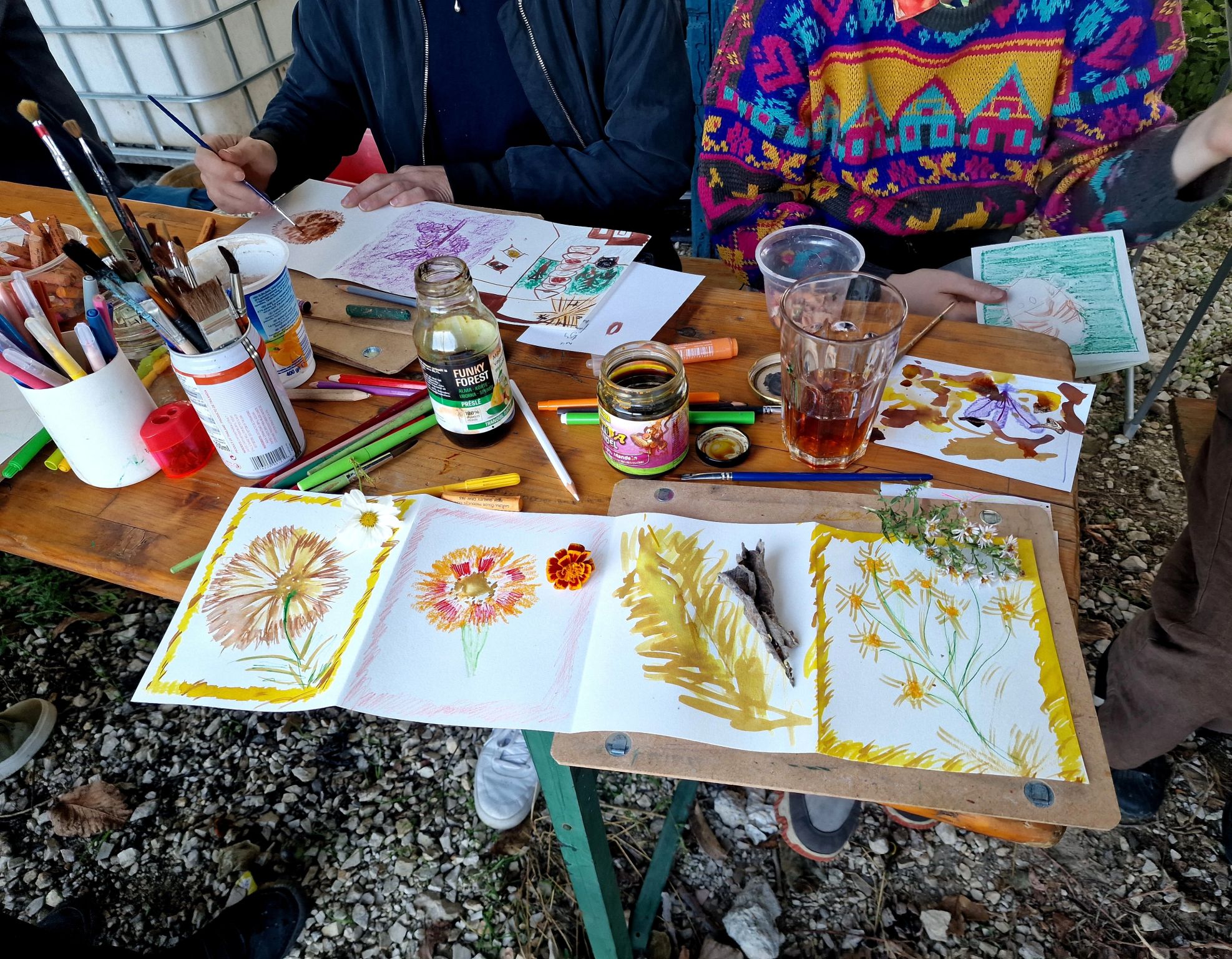
A highlight of the second day was a site visit to the small-scale organic Szezon Kert farm in Páty (a village 30 minutes from Budapest). The farm focuses on producing organic products using environmentally friendly practices, prioritizing biodiversity, soil health, and eco-friendly farming techniques. The farm offers a variety of seasonal fruits and vegetables, herbs and flowers, depending on the season. It also engages with local communities, offering direct sales to consumers through markets or farm stands. Participants of PLANET4B 3rd Consortium Meeting engaged in art-based interventions during their visit on this farm, providing a tangible view of theoretical concepts in practice.


On the concluding day (Thursday), a steering committee meeting reviewed overall progress, reflected on accomplishments, and refined future strategies. In the afternoon, discussions focused on policy impact of project PLANET4B. The project’s early results are already providing valuable insights for policymakers, and the next phase will focus on developing evidence-based policy recommendations to promote biodiversity prioritization at regional and national levels.
The meeting included also various socio-cultural events, allowing participants to taste local specialties (e.g., excellent Hungarian goulash) and experience local attractions like thermal baths.
The consortium meeting was an important milestone for the PLANET4B project, combining in-depth research discussions with hands-on activities. The insights and ideas generated in Budapest helped to shape the next steps in the project and will drive it toward achieving its goals.


PLANET4B receives funding from the European Union’s Horizon Europe research and innovation programme under grant agreement No 101082212.







 SustainableCZ
Leave a comment