

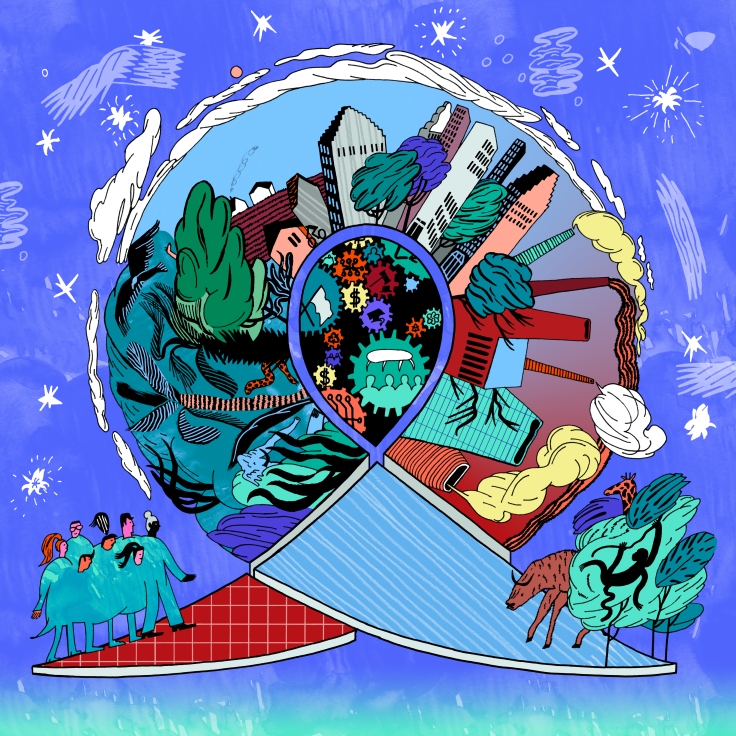
TransformERS is a COST Action network that aims to inform research, policy and practice for transformations that deliver justice in a changing global context by bringing together and positioning research relevant to societal transformation. Societal transformations such as these are refered to as highly necessary to avoid catastrophic climate change and biodiversity loss, and are called for in intergovernmental frameworks such as the IPCC and IPBES, as well as the European Green Deal.
Current research into transformations is highly fragmented; pieces of relevant knowledge are held by experts from within a range of contexts, disciplines, projects and perspectives, both within and outside of the sustainability research community. This is why our mission is to generate high quality research-integration outputs that overcome existing marginalisations and fragmentations in transformations knowledge, and more.
Some of the researchers from the Human Dimensions department are active in the network, including the head of department, Julia Leventon, as Action Chair. Below is some information on what the network has been up to!
The TransformERS Network: Year 2
We spent Year 1 of TransformERS setting foundations for the network, which we have tracked on our website and social media 👆
We have held a general meeting and practice case visit in Riga, Latvia, and a working group 2 meeting in Vienna, Austria. We have also awarded conference grants, virtual mobility grants, and short term scientific grants! Our other working groups have all be active online, and experiences from 2024 are being consolidated in our Action handbook which will be shared with the members of the network and likely also here so that people from outside the network can keep up with us!


The core group is in progress of planning out calls and activities for Year 2. We have our eyes on the deliverables due, around creating compendiums of transformative change. We will have more grants available, including conference grants, STSMs connected to the working groups, and STSMs connected to the IPBES Transformative Change assessment. We will also have our first training school, led by WG1, and timed and located to feed into the Transformations TCX event in York, UK. More details are in this newsletter and have previously been sent to all.
In December last year, Julia Leventon (Action Chair) was at the IPBES plenary negotiations in Namibia. IPBES is the UN-Intergovernmental Panel for Biodiversity and Ecosystem Services. In plenary, governments negotiated the Transformative Change assessment. This has been a 3-year assessment compiled by 100+ international experts (including me, WG4 co-lead Jerneja, and various Action members). The final report should prove to be useful for our Action – you can learn more in the media release!
Working Groups
WG1 – Integration
Objectives › To pull together perspectives across all WGs to create an overall understanding of transformations. Ensure all foci [ energy, food, textiles, mobility ] and justice are pulled through all WGs.
Strand 1: Epistemic injustice in food systemtransformation research Sarah Milliken (University of Greenwich, UK) is leading work to investigate epistemic injustice in food systems transformation research using bibliometric analysis to identify dominant discourses, where these discourses are being developed, and by whom. Social network analysis will be used to analyse the geographic distribution and composition of consortia that have received EU funding on food system transformation. Finally, a survey will identify alternative discourses that are currently marginalised. This work emerged from the WG1 meeting in Riga and is being delivered by a core team who volunteered after that meeting.
Strand 2: Characterising epistemic injustice in sustainability transformation research Katy Roelich (University ofLeeds, UK) is leading work to understand how knowledge relating to sustainability transformations has become marginalised and fragmented and how this is creating epistemic injustices. This builds on the examples of epistemic injustices submitted by action members in advance of the Riga meeting and analysed during the WG1 meeting. In this strand of work we will conduct in-depth interviews examining the context of injustices, produce a typology of characteristics of epistemic injustice in relation to sustainability transformations and make recommendations to address injustices.
Strand 3: Virtual Exhibition of signs of sustainability Guido Caniglia (University of Helsinki, Finland) is leading work to use experiential and arts-based methodologies to examine and re-think sustainability transformations. Using the signs of sustainability collected during the site visit in Riga we have developed a virtual exhibition, to make sense of the data collected and to explore the implications of insights generated. Watch out for details of the exhibition launch. We will be repeating the experience-based data collection in future study visits in different contexts and reflecting on methodological and theoretical implications of thisapproach.
Grant news
We hosted a successful Virtual Mobility grant with Milena Radic (University of Nis, Serbia) working with Sarah Milliken and Katy Roelich contributing to strands 1 and 2 of WG1 work.
Upcoming activities
- Training school: The recent call for applications for a Training School on Sustainability Transformations and Epistemic Injustice in June 2025 had a fantastic response and we are currently shortlisting applications.
- Virtual Exhibition: We will be announcing plans for opening the virtual exhibition soon. Contributors will be invited to an ‘artists’ opening’ in advance of the main exhibition opening.
- Study visit: We will start planning for activities relating to the next study visit, including another data collection phase of signs of sustainability and a WG1 meeting. More to follow soon.
WG2 – Historical Transformations
Objectives › To understand which disciplines and research communities have conducted research on, and have knowledge about transformation, and what they say about how transformation.
To reach our objective, the working group draws on historical examples of transformation along urbanization and industrialization processes and considers socio-political changes and cross-disciplinary understandings. The chosen frame of reference also determines the time frame, which is thus classified as the core industrialization period in the late 19th and early 20th century (circa 1870 to 1940). The task is to identify the key factors that have shaped historical examples of different types of transformation and to identify known key drivers and barriers.
After our successful first workshop last September in Vienna, four sub-groups have been formed to work on case studies and specific topics.
- FOOD: The transformation of urban foodscapes in late 19th and early 20th century Europe
- ENERGY: Energy transformations and urban space in European cities between the late 19th and early 20th centuries
- SOCIAL: The role of citizen engagement in historical urban transformations
- ENVIRONMENT: Natural disasters, urban transformation and resilience

If you are interested in contributing please go to see our Call for Participation or fill out this FORM if you would like to contribute a case study to our online compendium on the TransformERS website.
WG3 – Current Transformations
Objectives › To evaluate what the Action members know about what works to create transformation across contexts and research communities, and to identify the knowledge gaps.
WG4 – Future Transformations
Objectives › To identify which tools and techniques the Action can employ, how, and with whom, to facilitate transformative processes, especially looking at contexts often marginalised in the current transformation research and policy-making, drawing on findings from WG2 and 3.
WG4 held four meetings thus far, including one face to face one in Riga, where we considered potential collaborations and paved the way for WG members to collaborate in smaller projects, intiatives. A virtual and physical STSM, and a Dissemination grant were conducted as part of the WG – see the Grants section on our website. The most recent meeting was held right before the end of 2024, so more to come!
WG5 – Dissemination and Exploitation
Objectives › This WG ensures that findings are picked up across research, policy and practice. It ensures that the impacts of the Action are achieved.
TransformERS Ambassadors
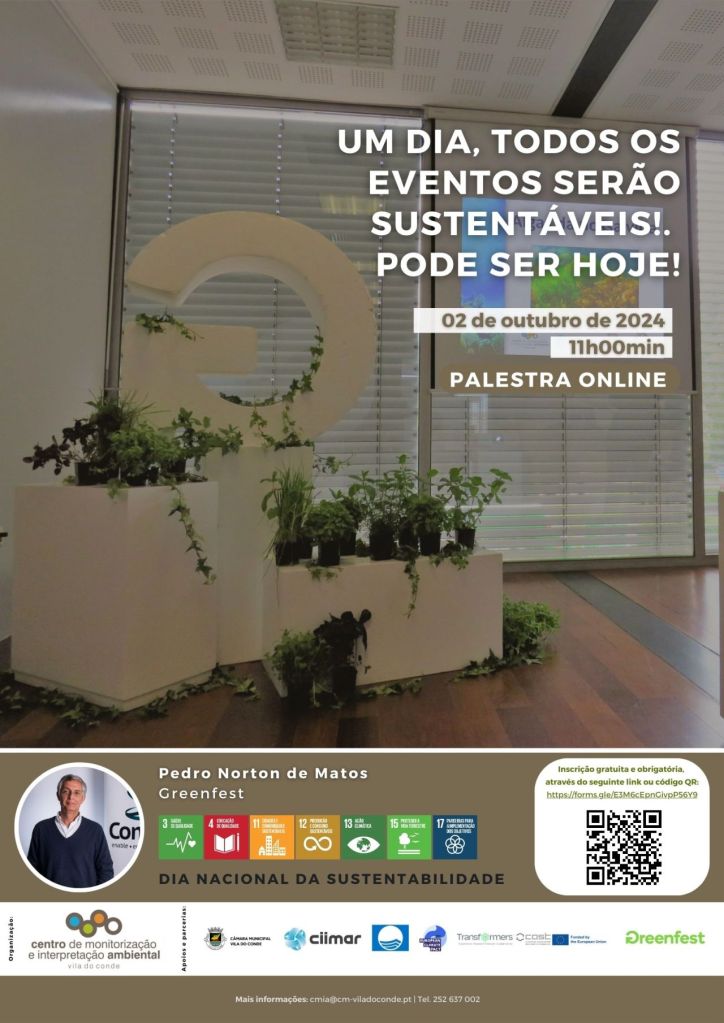
As an Ambassador for TransformERS in Portugal, our colleague Cristina S. C. Calheiros from the Centro de Monitorização e Interpretação Ambiental (CMIA), Vila do Conde, Oporto, Portugal is promoting the Action through a series of Online lectures. Registrations are free and mandatory, and they are disseminated using our current main social media channels. CMIA is a municipal facility coordinated by the Interdisciplinary Center for Marine and Environmental Research that aims to contribute to the development of environmental education and monitoring actions.


Representation at International Conferences
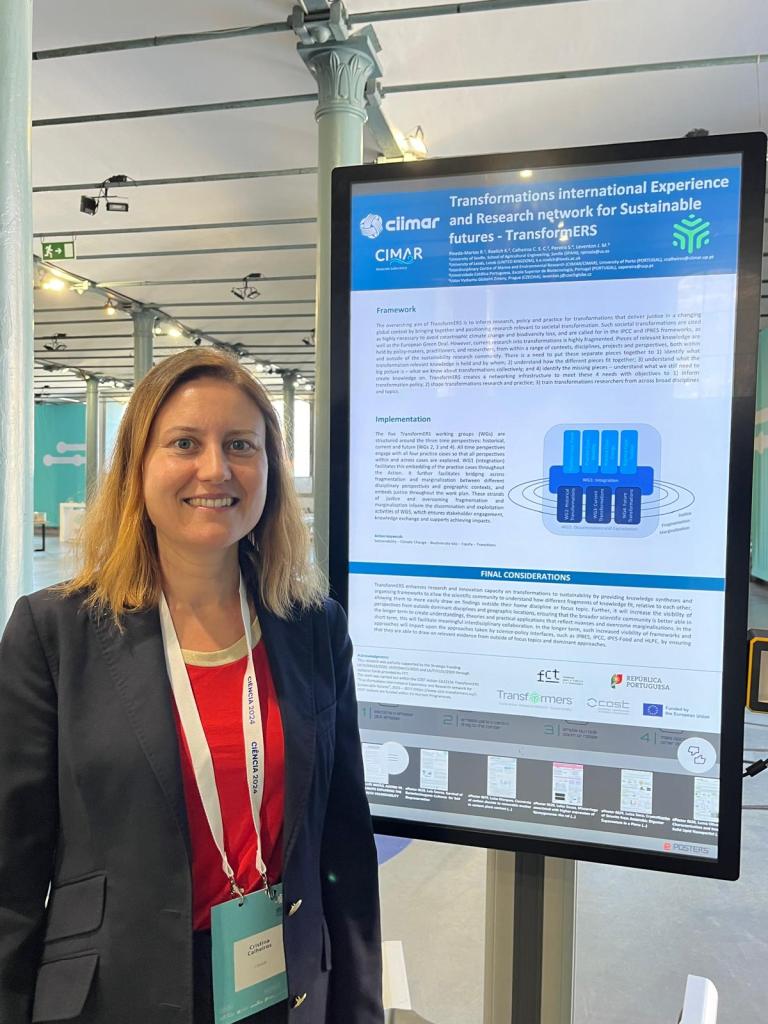
As presented in Riga, the TransformERS Action was part of the Partners from the NBS Summit Urban Edition — Discussing Nature-Based Solutions for Sustainable Urban Development, May 23rd-24th 2024, Super Bock Arena, Porto, Portugal. We also participated with a Poster: Transformationsinternational Experience and Research network for Sustainable futures – COSTAction TransformERS.
Representation at National Conferences
Participation in CIIMAR with a Poster: Transformations international Experience and Research network for Sustainable futures – COST Action TransformERS (pdf).

Promotion of the Action at the IEES Colloquium
Rocío Pineda-Martos took part in Fantastic Cycles and how to take them (with Ecological Engineering), an online colloquium on closing cycles in circular cities in 2023, organised by the Master Research Unit “Ecological Engineering & Renewable Energy” of ZHAW (Zurich University of Applied Sciences), with support of the IEES (International Ecological Engineering Society). Bio-solar green roofs in cities: Energy, biodiversity and circular economy in the urban built environment.
Promotion of the Action at Regional trainings
Rocío also helped highlight the importance of the COST Action TransformERS in the training provided on Energy Efficiency in Buildings associated with the Installation of Green Roofs and Vertical Greening Systems in its chapter on European policies. This training was organised by several Professional Colleges of Technical Architecture financed with European funds.
Training School & Conferences
Sustainability Transformations and Epistemic Injustice
- In this training school, we will explore dynamics of epistemic injustice, that is diverse considerations that lead to the marginalisation of certain voices, kinds of knowledge, ways of knowing while privileging others. And this in relation to research, action, and policy about sustainability transformations from local (e.g., in specific initiatives, local or national policy) to regional (e.g., in relation to EU policies) and global (e.g., global assessment programs).
- The Training School will focus on specific axes of epistemic marginalisation, in different contexts and on multiple scales. Some examples of contexts will include decolonisation where concerns, world views, theory and evidence from non-western individuals are foregrounded, or disability, where the experiences and knowledge of disabled people is recognised in research on sustainability transformations.
Conferences of Interest
- Transformations/Earth Systems Governance conference, 18-21 August, 2025, Kruger National Park, South Africa. This year’s theme is Navigating Sustainability Transformations Towards Justice and Equity.
- Transformations TCX-York, 25-27 June, 2025, York, UK. This year’s theme is Organising for Transformation.
- International Society for Ecological Economics and Degrowth, 24-27 June, 2025, Oslo, Norway. This year’s theme is Building socially just postgrowth futures – linking theory and action.
- International Sustainability Transitions Conference, 24-26 June, 2025, Lisbon, Portugal.
- Alternet, 13-16 May, 2025, Aveiro, Portugal. This year’s theme is Achieving Transformative Change for Biodiversity.
- SRI Congress, 16-19 June, 2025, Chicago US and Online. This year’s theme will spotlight Pathways to Sustainability.
- Hamburg Sustainability Conference, 2-3 June, 2025. This year’s theme is Global Alliances for a Sustainable Future.








 SustainableCZ
Leave a comment