
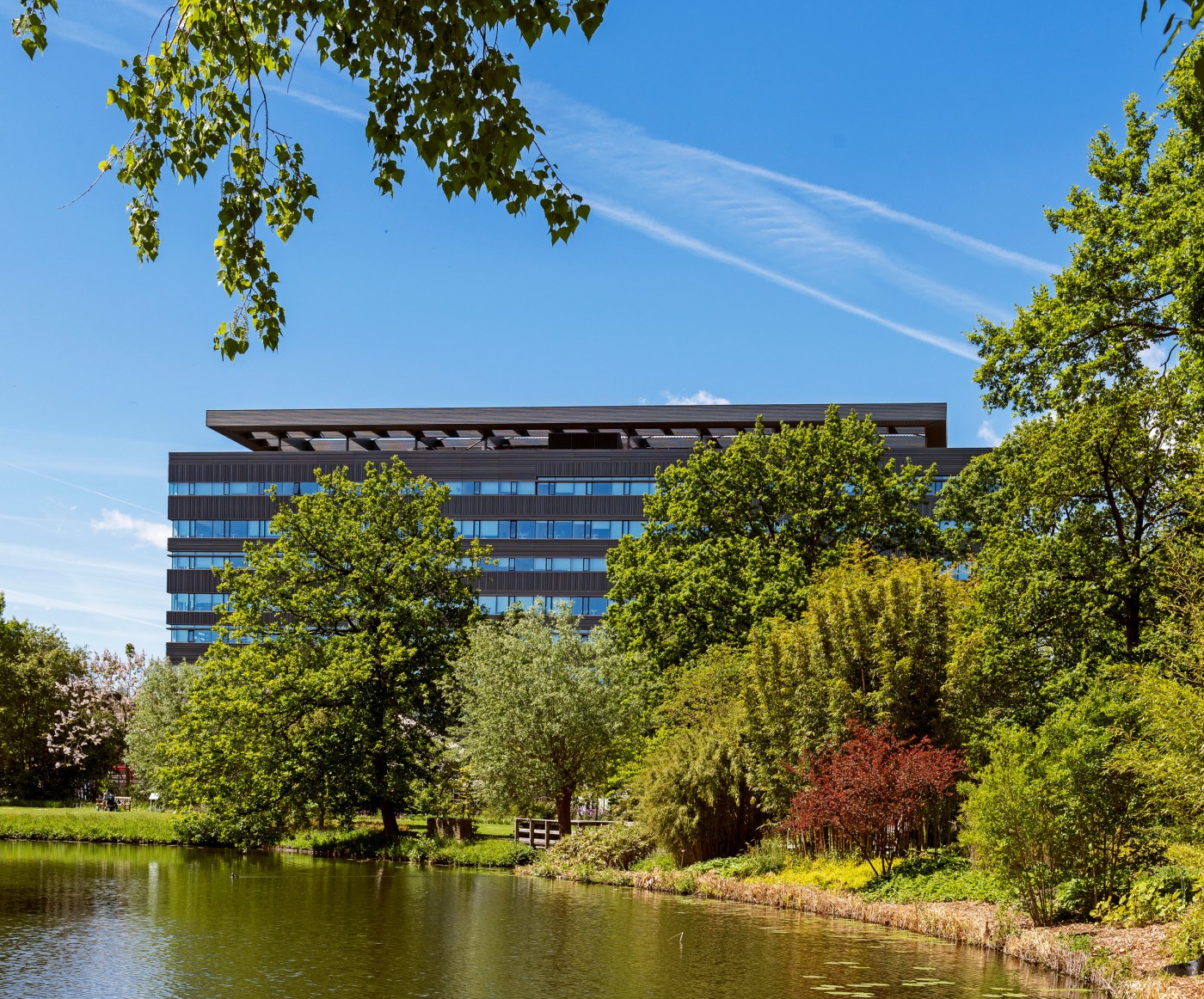
From 26 May to 20 June 2025 I had the opportunity to spend four weeks at the Faculty of Geosciences at Utrecht University, where I was hosted by the Spatial Planning Group led by Prof. Niki Frantzeskaki. This research stay was made possible thanks to the TransformERS COST Action (CA22156), under which it was awarded as a Short-Term Scientific Mission (STSM).
Building on the IPBES Transformative Change Assesmsent
The primary objective of the research visit was to revisit and further develop specific findings from the IPBES Transformative Change Assessment (TCA), with a closer focus on cities. I delved into Chapters 4 and 5 of the IPBES TCA with a team from the Urban Planning Group, where barriers and strategies for transformative change in connection to governance challenges, social inequalities, and policy fragmentation are highlighted. Next, I gathered and analysed insights from additional literature that address these topics in urban settings, focusing on particular challenges such as policy incoherence and institutional misfits. A co-authored paper led by Niki Frantzeskaki is being drafted and is expected to be submitted later this year.
Research, events, and networking
Another motivation for this research stay was the many opportunities for networking and exchanging ideas. In the first days, I presented my previous and ongoing work at a seminar for the Department of Spatial Planning, which was also attended by colleagues from the Copernicus Institute for Sustainable Development. The conversations that followed revealed mutual interests and synergies around themes such as social-ecological systems transformations, climate change governance, nature-based solutions (NBS), and urban planning.
In addition to regular meetings with researchers from the Spatial Planning Group, I have consulted and exchange ideas with numerous researchers. These included Dr. Erich Wolff, who shared insights from research on flood-risk management, NBS in informal settlements, and the ongoing research on climate resilience through widespread adoption of NBS across regions and communities (project Cardimed); Dr. Katharina Holscher, who works on mainstreaming NBS and urban climate governance; Prof. Jochen Monstadt, an urban transformation scientist; Anouk Fransen and Dr. Jeffrey Blackwatters, who are involved in research on NBS from a landscape perspective (project Naturescapes); Dr. Dries Hegger, who focuses on climate adaptation and water governance; Dr. Martijn Kuller, who specializes in developing GIS-based tools for urban planning and NBS; Dr. Liping Dai, a legal scholar interested in urban greening in light of the Nature Restoration Law; or Dr. Giuseppe Feola, who focuses on post-growth and food systems; among others.
Beyond the daily activities, attending several events enriched my experience in Utrecht. I participated in the ‘Sustainability Dialogues‘ at Utrecht University, which are regularly held to bring together researchers from multiple disciplines to share perspectives on society and the environment. Another highlight was the ‘Nature-Based Solutions Day’, where panel discussions with experts explored legal and policy frameworks for urban NBS, followed by short presentations and poster sessions by PhD candidates.
Final reflections
I believe that this stay has enriched the foundations for future cooperation between CzechGlobe, Utrecht University and the TransformERS network. In parallel to the drafting of a scientific paper on the challenges of urban transformation and the discussion of another potential paper, ideas for future joint proposals were discussed, especially in anticipation of the Horizon Europe 2026 calls and similar EU funding schemes.
My stay in Utrecht was not only academically but also personally enriching and I look forward to continuing the discussions and hopefully also collaborations on highly important topics.









 SustainableCZ
Leave a comment