

Thanks to the wonderful work of and support from the Transformers COST Action (🔗), I recently had the opportunity to participate in two consecutive events, both focused on transformative change for sustainability. Both allowed me to broaden my experience, my views, the community with which I interact and work, and finally to broaden the way I acknowledge, listen to, absorb and use knowledge.
In fact, the first event I attended, was a 3-day Training School, organised by members of the Transformers COST Action, on “Sustainability Transformations and Epistemic Injustice”, held at the University of Leeds, UK.
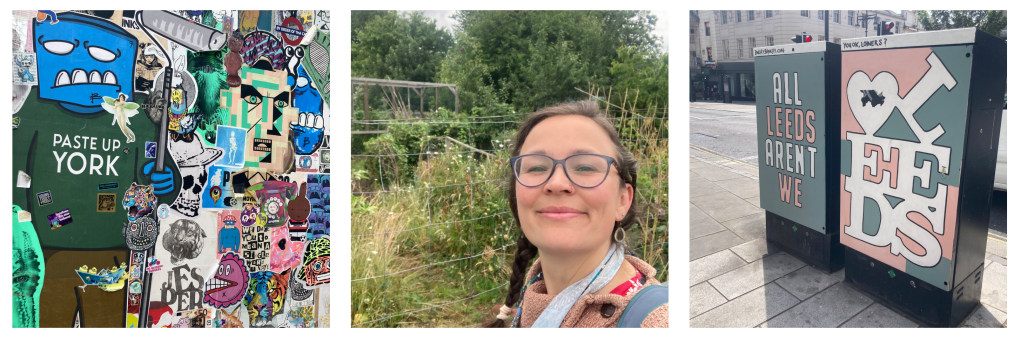
The purpose of this Training School for early-career researchers, was to encourage us to explore what and whose perspectives and knowledge are shaping the theories and practices we use on our journeys towards sustainable transformation. We thought about how we might recognise, challenge, and change the injustices that silence or sideline other ways of knowing.
From one perspective, epistemic injustice can be thought of as the processes through which some forms of knowledge are excluded or devalued while others are privileged. However, even throughout this Training School, all participants and the organisers themselves still grappled with the concept of epistemic injustice and how it can be defined, and addressed. We often joked about how that was a form of epistemic injustice in itself!
Through a combination of talks and discussions (across contexts and scales, from local initiatives and national policies to EU-level frameworks and global assessments), and creative workshops, we explored various specific forms of epistemic injustice: such as those linked to colonial legacies, disability, or other structural or systematic barriers.
More than simply the intellectual stimulation and opportunity to critically reflect on how our own research practices may sustain or disrupt patterns of epistemic injustice, I was also blown away by the powerful effect of using some very experimental, imaginative and creative spaces, for practising more inclusive, respectful and just research and knowledge-sharing. In this way, it wasn’t only about what we were doing, but how we were doing it. I thank the organisers (Katy Roelich & Robin Styles – University of Leeds; Guido Caniglia – University of Helsinki; and Julia Bentz – University of Lisbon) for providing such an incredible space to get our diverse group of participants talking, thinking, sharing and learning together and also apart, as individuals…however we felt best served us at different times of the day…
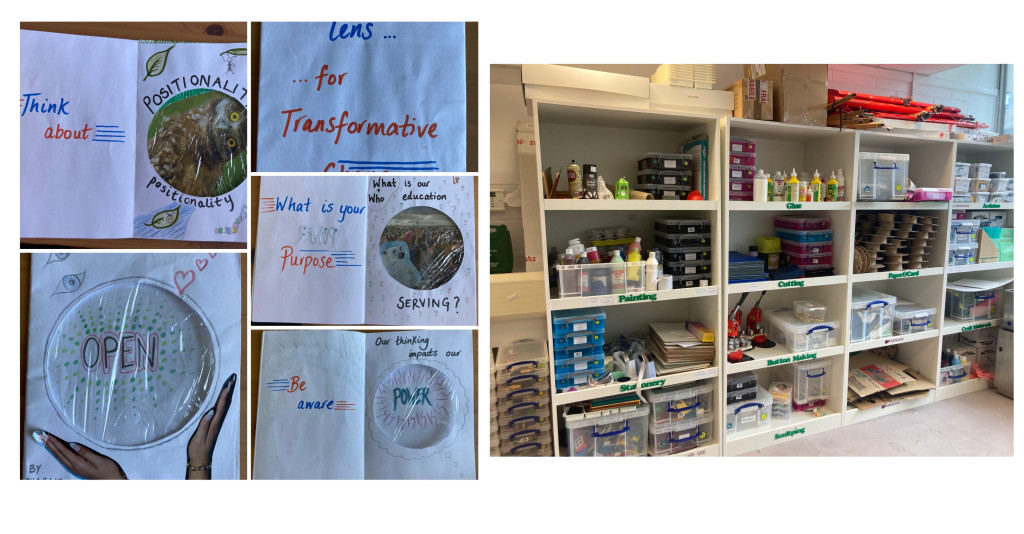
My main take-home messages from the Training School:
- Personal reflections are important.
- Active listening is critical.
- Accountability and the creation of accountable spaces for participation is not only essential for ensuring safety and meeting one’s needs, but also for success – in creating spaces for all to participate to the best of their ability.
- Diversity of deliberation and reflective/reflexive practices are powerful (e.g. the power of arts and creativity and, simply, using your hands!).
With just one evening to digest all of this, I then travelled across to the University of York (generously supported by a conference grant from the Transformers COST Action) to participate in the TCX-York “Organising for Transformation” conference, led by the Transformations Community. This was the second time the Community was running such an event here in Europe, the first taking place in Prague, 2023, hosted by ourselves, CzechGlobe. With a slightly different format to that Prague meeting, the TCX-York conference used a series of spark talk sessions and experiential practice sessions to explore three integrated themes:
- Inner transformation for effective leadership
- Transformative governance for a sustainable, just and equitable future
- And Transformation-focused evaluation and learning
As well as the talks, practice sessions and a few plenaries, the conference also managed to squeeze into its packed programme, an example context of interest (food systems transformation), by which participants followed case studies and together with facilitators, worked to identify case-specific pathways for organising for transformation.
At this conference, as part of the session on “Organising for a sustainable planet”, I was invited to present some of my work on human-nature connection in early childhood. I talked to a room full of researchers and practitioners (and pracademics!), from a whole range of backgrounds, about the importance of improving our understanding of how human-nature connection develops right at the beginning of life. It was thrilling to see how, although we all had the same ultimate goal in mind, there was support and interest for such a plurality of issues on which to focus in order to achieve that goal, but also so much we could learn from each other in sharing our perspectives on such a diversity of issues. Originally, I wasn’t even sure I had been put in the “right” group for my spark talk! “Human-nature connection in early childhood” and “Organising for a sustainable planet”… but we all subconsciously identified the connections between topics, and one could visibly see how participants enjoyed exploring new parallels and relationships across different contexts and examples. Making the links and interweaving ideas just seemed to happen organically. It was one of those amazing conferences, when you almost felt you didn’t need to panic over planning which sessions you would attend: there was no wrong session to pick!
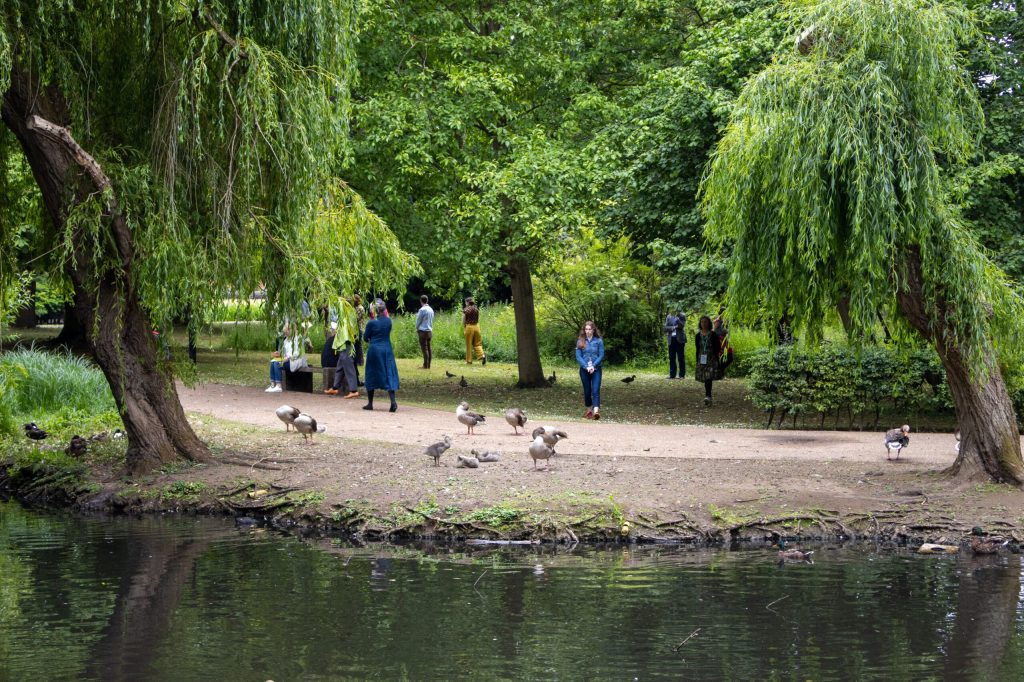
Similar to how I described the Training School above, there was so much fascinating work that I could draw upon in trying to summarise the TCX-York conference, but for now, I want to just share the key messages I brought home with me:
- This conference reminded me that I could sit at home and read books and papers about all of this amazing work, but living, breathing, walking and doing it with my bare hands, with others alongside me and feeling their energy….wow, that was a lot more powerful!
- The power of the pause is real: this relates to one of my earlier blogposts about engaging our hearts as well as our heads in our work. Many of the talks, sessions and plenaries, and indeed the frequent presence of the convener and shamanic elder, Twobirds Cunningham, invited participants to pause, to connect with their innermost self and move forwards throughout our interactions at the conference, slowly, mindfully and with our true values there to guide us.
- Finally, (and this is interesting because it brings me full-circle to the theme of the Training School in Leeds), at this conference, I learnt about the importance of including a plurality of knowledges in our work; the importance of including perhaps non-traditionally-academic forms of knowledge into academia through non-traditionally-academic ways. Learning more about this helped me to also remind myself to remain open to other perspectives and disciplines; to not shy away from them, whilst under the influence of feelings of ignorance or imposter syndrome; to not commit any epistemic injustices myself.
I thank the organisers and fellow participants at TCX-York and at the Training School in Leeds, for providing such an amazingly welcoming openness for all perspectives and disciplines. It’s personally given me great confidence, a strong desire to continue working within such a community, and quite a sacred hope to hold on to in our efforts towards transformative change for sustainability.







 SustainableCZ
Great detailed description of the York trainining School insights. I enjoyed reading it. DR. Zvi Weinstein WG1
LikeLike