

From 29 September to 1 October 2025, the interdisciplinary research community engaged in archetype analysis convened for the 8th International Workshop on Archetype Analysis in Sustainability Research. Hosted at the Thünen Institute of Biodiversity in Braunschweig, Germany, the event brought together around 40 researchers, providing a dynamic forum for exchanging and advancing ideas at the intersection of sustainability science, theory, and practice.
A central focus of the 2025 workshop was the application of archetype analysis to sustainability challenges including land systems and resource governance, climate change and climate governance, and policy and decision-making transformation. Over three days, participants shared and discussed novel research spanning empirical studies, theoretical contributions, and methodological innovations. The intensive program featured full paper presentations, short pitches, and themed breakout sessions, fostering lively debate and collaboration.

The seven workshop sessions revealed the range of ways archetype analysis is being used to tackle real-world sustainability challenges. Researchers shared work on land and resource governance, from rural redevelopment and farmland protection in China to forest and mangrove conservation in Latin America and Europe, and adaptive grazing and natural pest control in agricultural landscapes. Others examined how archetypes can help understand and guide global transformations, whether through mapping biodiversity and food systes, analyzing national climate policies using text mining, or exploring urban climate action and desertification resilience. Some presentations also pushed theoretical and creative boundaries, linking archetype thinking to social and emotional narratives in ecological restoration and to the dynamics of governance and collective action in shared resources.

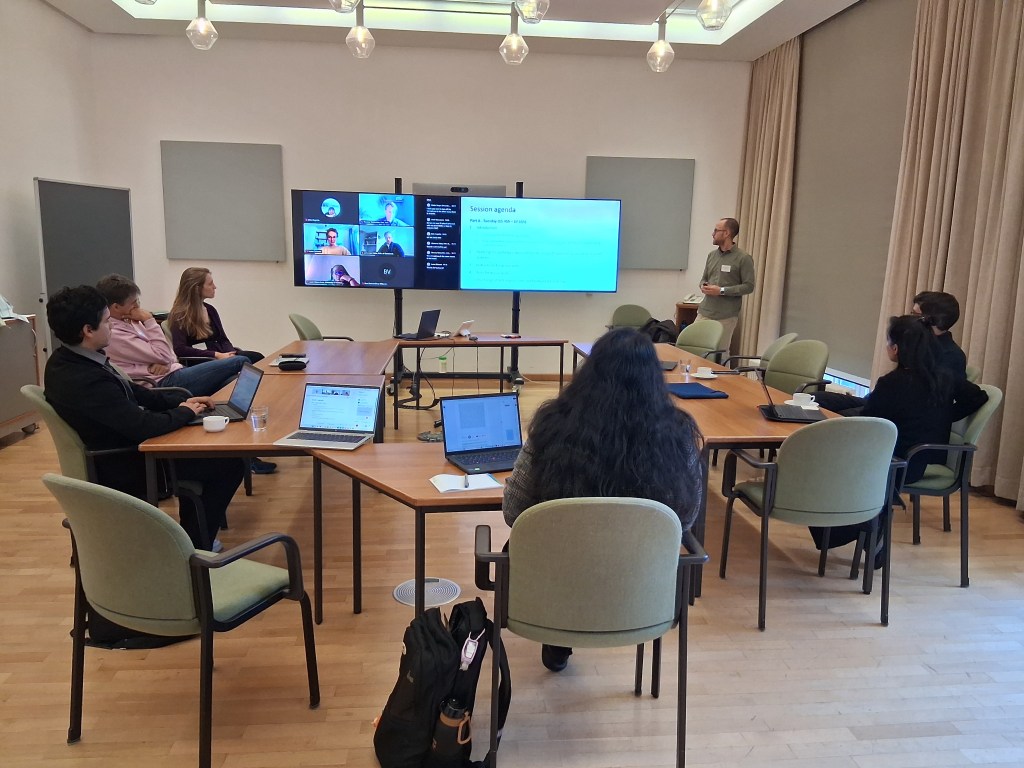
The five breakout sessions added an experimental dimension, exploring how artificial intelligence and text mining can enhance archetype research, revisiting agrarian challenges in Africa through an equity lens, and identifying patterns that characterize regenerative social-ecological systems. Other discussions reflected on how to keep the concept of “archetypes” meaningful and rigorous, and how to combine different policy and conservation management approaches for better biodiversity outcomes.
Together, these discussions demonstrated how archetype analysis is emerging as powerful integrative framework, linking diverse data, methods, and perspectives to better understand and address sustainability challenges. The workshop strengthened theoretical and empirical foundations and inspired new collaborations that will shape forthcoming research. It marked an important moment for the archetype research community, strengthening a shared commitment to advancing sustainability science through collaboration, innovation, and real-world impact.
Photos © Erika Angarita Amaya










 SustainableCZ
Leave a comment