

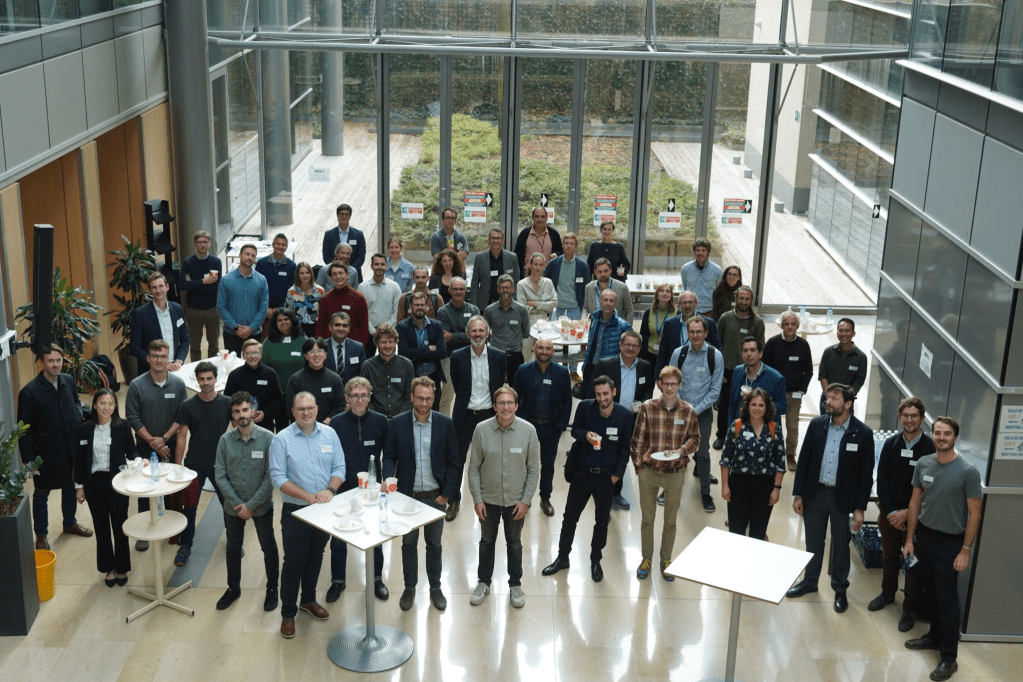
At the European Climate and Energy Modelling Platform conference, held on 16-17 October 2025 in Brussels, researchers from CzechGlobe (Global Change Research Institute of the Czech Academy of Sciences) co-organised and led a special session titled “Mainstreaming Reflexive Practices in Systems Modelling Approaches”. The event formed part of the conference’s overarching theme, “European Energy Transition and Society: Moving Towards Implementation”.
The workshop at the ECEMP2025 , led by Abhigya and Vojtěch Gerlich, engaged participants in a practical exercise exploring how personal values, disciplinary backgrounds, and institutional settings shape the way models and scenarios are built. Using the EU’s Fit for 55 policy framework as a reference, participants worked through three alternative energy transition pathways – focused on electrification, hydrogen and carbon management, and coordinated diversification – each illustrating different strategies and trade-offs in achieving Europe’s 2030 and 2050 climate goals. The conceptual framing of the workshop was inspired by traditions of reflexivity in anthropological theory and practice, as well as feminist science studies.
We invited the participants to a role-play exercise where they adopted critical stakeholder positions pertinent to energy sector modelling – such as an EU Commission analyst, NGO policy officer, industry lobbyist, and grid operator. This exercise revealed how differing priorities and institutional logics influence what counts as “feasible”, “realistic”, or “desirable” when describing scenarios and pathways for sustainable energy systems transitions. We shared a reflexivity worksheet that encouraged the participants to reflect on their own positionality, as shaped by the roles they assumed– asking whose voices were missing, which assumptions about the future guided their choices, and who benefits or loses from specific modelling decisions.
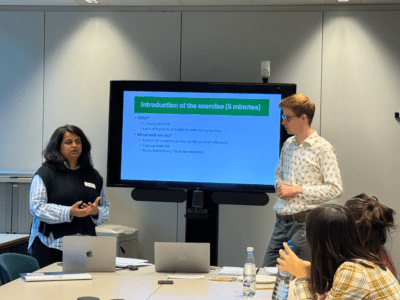
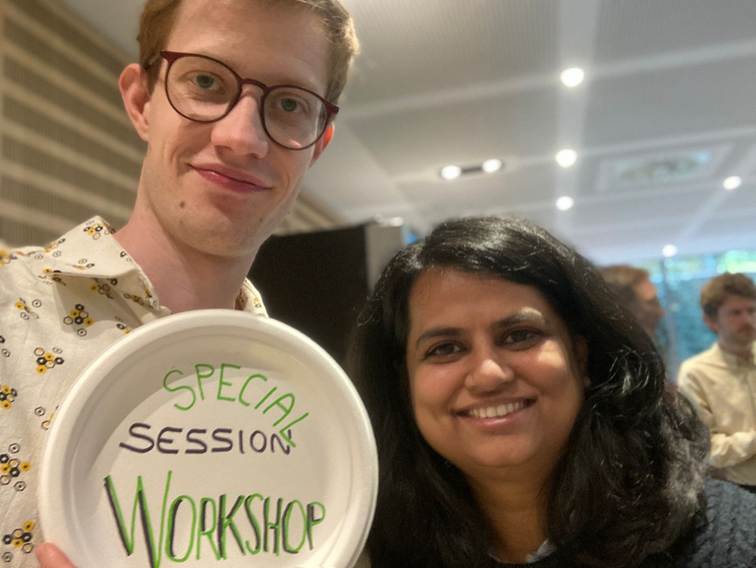
The session concluded with a discussion on how reflexive practices can be systematically integrated into modelling processes – through transparent documentation of assumptions, interdisciplinary collaboration, and participatory scenario design. The participants also shared their experiences of attempts to incorporate some of these methods in their existing work.
By bringing social-scientific reflection into the technical domain of energy modelling, the CzechGlobe workshop contributed to ECEMP’s mission of bridging quantitative and qualitative approaches to Europe’s energy transition. The workshop underscored that improving energy models is not just about refining data or algorithms – it is also about recognising the human and institutional dimensions of modelling itself. Reflexivity offers a way to make modelling not only more transparent, but also more socially robust and responsive to diverse perspectives.
This conference intertwined with another project of our department, the SSH CENTRE project. Our partner from Anglia Ruskin University (ARU), Davide Natalini, was co-chairing this event. The conference’s focus on integrating SSH into energy and multi-system modelling aligns with Davide Natalini’s previous work, particularly his literature brief titled “Modelling and Social Sciences & Humanities: Integration of Social Insights into Technical Models”, available in the publication “A Review of the Climate-Energy-Mobility Landscape through 10 Social Sciences and Humanities Literature Briefs” .
Authors: Abhigya, Vojtěch Gerlich









 SustainableCZ
Leave a comment