
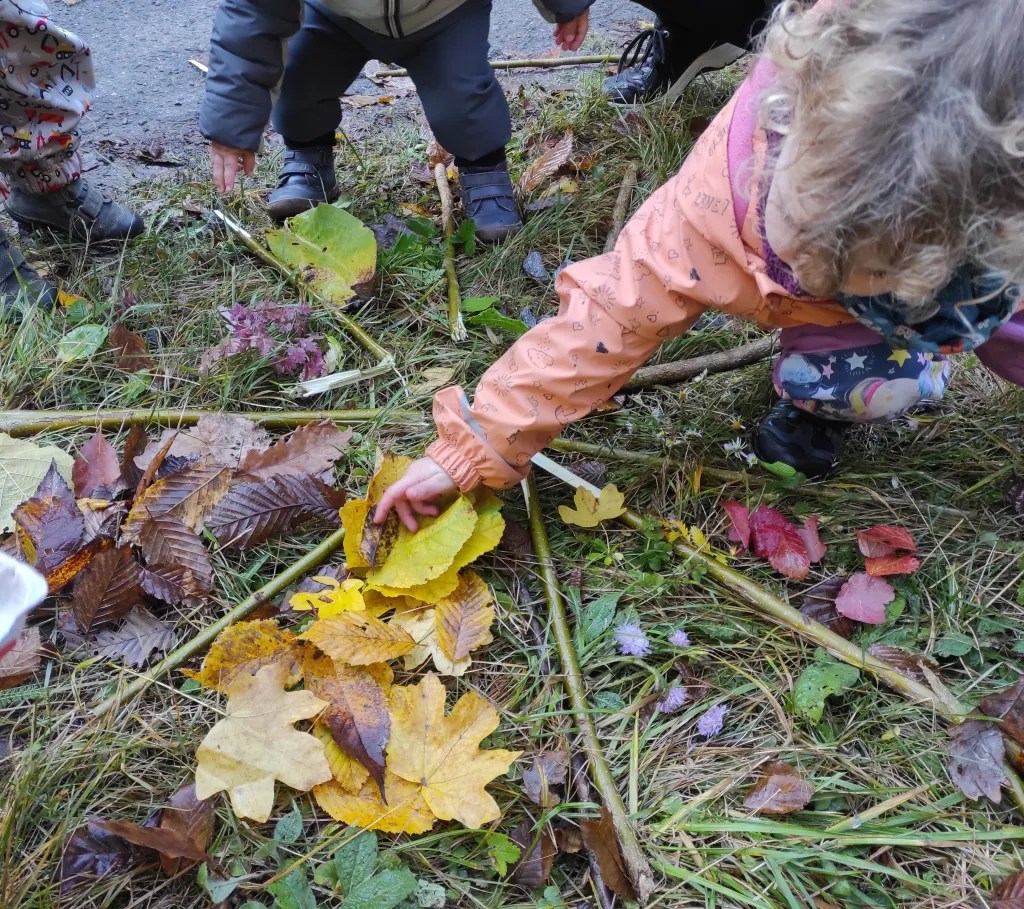
Improving our understanding of how human-nature connection develops in the first formative years of a child’s life, could be a critical step towards ensuring our next generation is prepared to face our current and future environmental challenges. This is an argument I have made in previous blogposts (🔗) and in publications currently under review (which I look forward to sharing when they are published). In this post however, I want to share some reflections from some initial work that seeks to contribute to this improved understanding.
Towards the end of 2025, I had the privilege (and challenge) to conduct a small pilot study funded by an internal grant from CzechGlobe (CzeGGA grant). This project was called RAISE-CNC – Refining Research Approaches for Studying Early Childhood Nature Connection. If I really wanted to contribute to our understanding of how human-nature connection (HNC) develops in the early years (0-7 years), then where should I start? What questions do I need to ask?
Which methods would be best for monitoring and measuring the development of HNC in the early years? From whom should we collect this data to ensure robustness and reliability? How should we collect this data ethically, and within tight time and funding constraints? How can I exemplify the significance of specific early childhood experiences in the development of HNC? What works and what doesn’t for the researchers trying to answer these questions, and for the practitioners or even parents, trying to nurture the development of HNC in their children?
These are the kinds of questions I have been asking in the RAISE-CNC project. But in such a small, 5-month timespan, I haven’t been able to answer those questions definitively. However, I have been able to gain a valuable insight from this pilot study, into how I might go about answering these questions, in more robust and comprehensive future research. This pilot study used a mixed-methods design with a nationwide correlational online study in the Czech Republic and a quasi-experimental in-person case-study in a small town in South Moravia, to explore a variety of approaches. With the nationwide online survey, we are running exploratory correlational analyses between variables connected to specific early childhood experiences/conditions and various measures of child HNC. Some of these variables have been chosen based on findings from other studies, and others have been chosen more creatively, with inspiration from related developmental psychological theories. We have also incorporated a strong triangulation approach in this pilot study: in the online questionnaires we have used two different HNC measures for parents and three different measures for children. Some of these measures have not been used in a Czech context before and others have never been administered in an online survey versus in an in-personal interview.
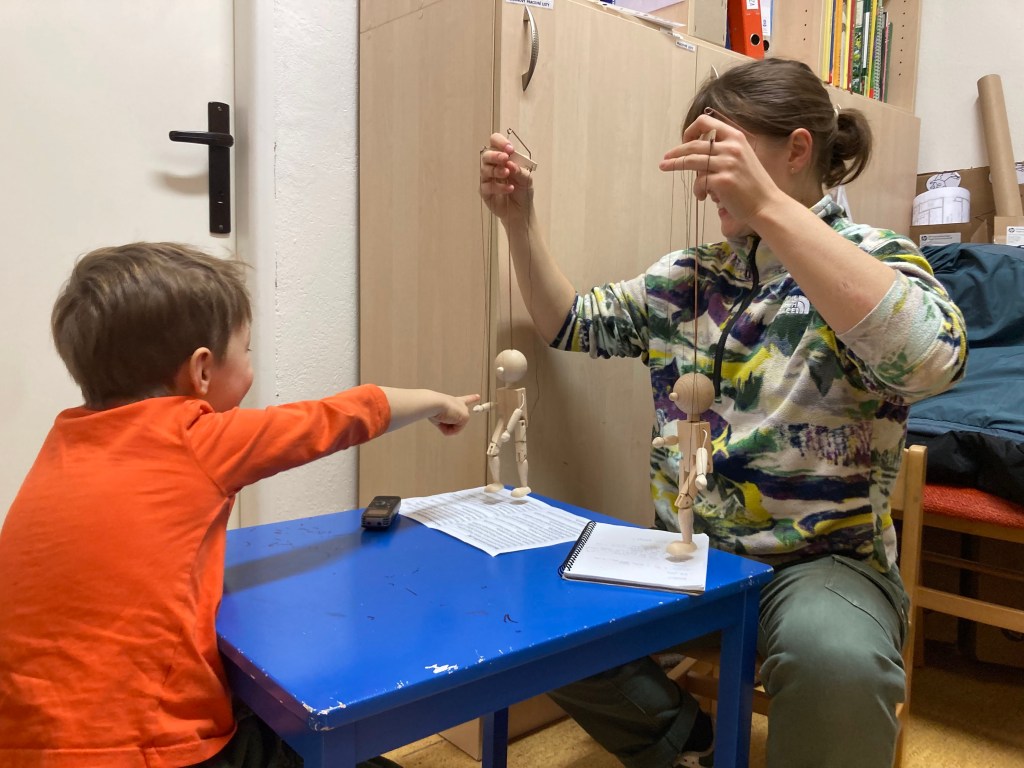
In the quasi-experimental in-person case study, we had some space through interviews with children, to test one of the HNC-measuring tools in-person and online, to validate the use of such a tool in digital format. Why might this be useful? Administering an online survey could mean reaching a much wider sample in much less time in future surveys.
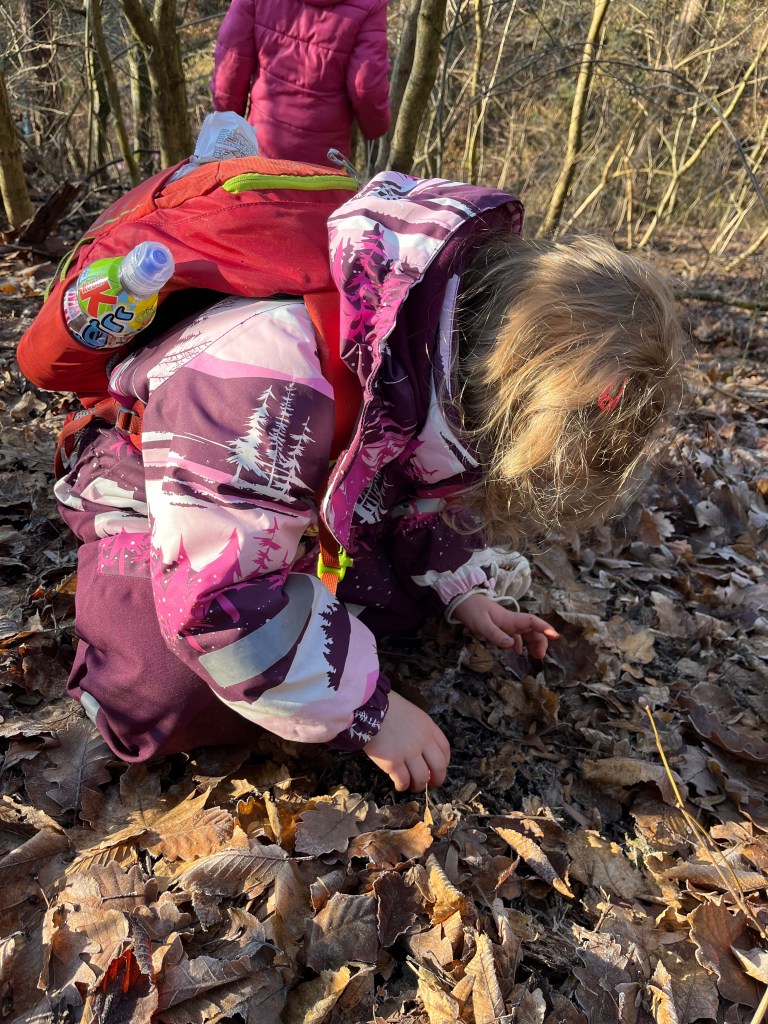
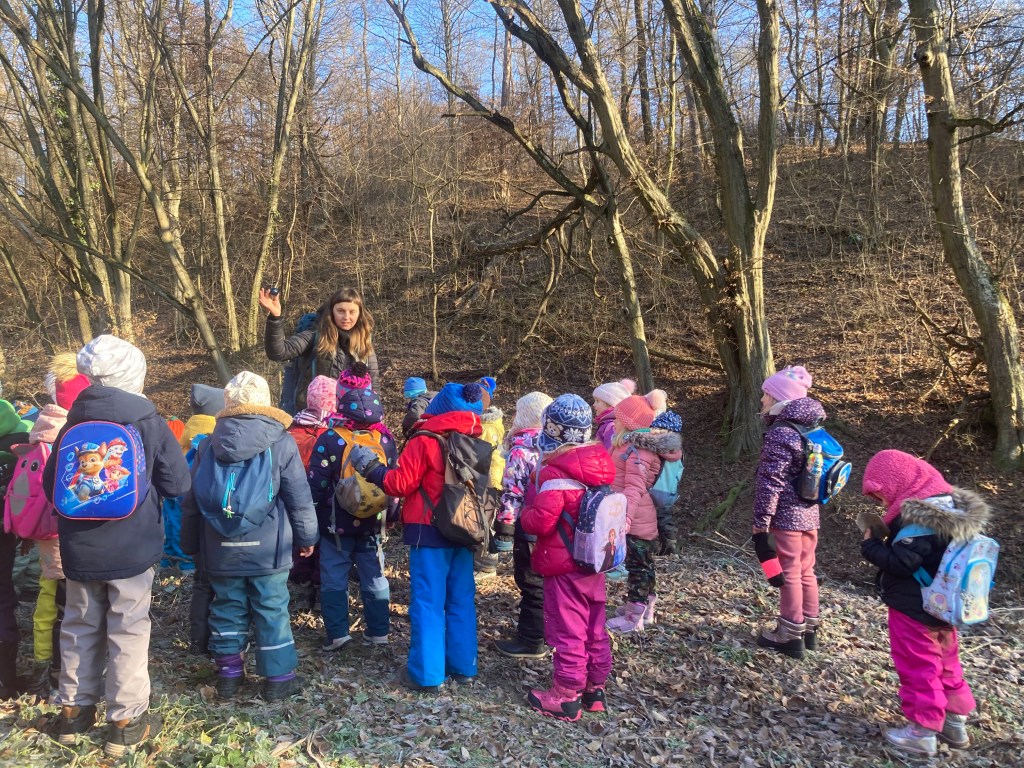
With our case-study of 28 preschoolers, we also carefully designed a morning outdoor experience, with qualified forest kindergarten guides, that would offer children what we believed to be the ideal settings for tapping into their own connection with nature, particularly the emotional component of this connection. We could then perform some observational analysis during this outdoor experience to help us understand how children were interacting with, in and for their natural surroundings. This more ethnographic approach would arguably be of more value over a longer space of time – but it was still valuable experience to test this technique in these pilot study settings.
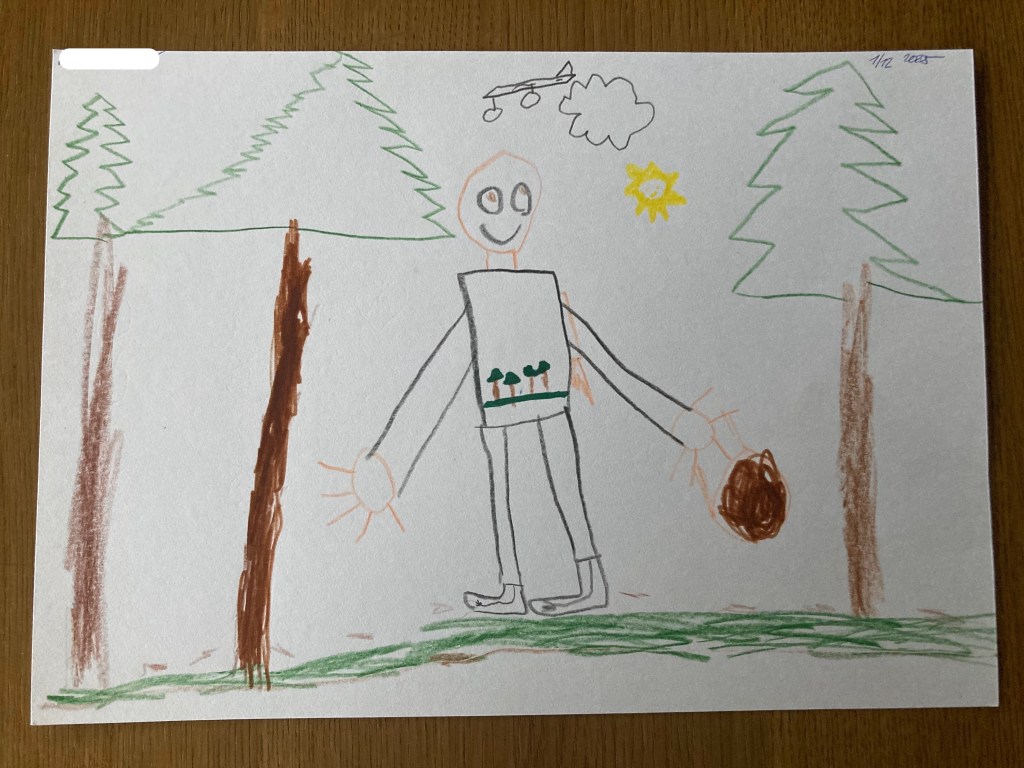
Finally, we set up a pre-post-testing study by asking children to draw a picture before and after they went on their morning outdoor experience. Children were given a prompt: “Draw yourself in nature. If you can, try to show how you feel when you are there in nature”. Later in-person interviews also allowed us to ask children to explain their drawings to us – to provide an oral narrative of what they drew and why – to help us in how we interpreted these drawings. This was used as a measure of the impact of this outdoor experience on their estimated level of HNC. Admittedly, we wouldn’t expect such a measurable impact to occur after just one morning’s experience. However again, here we had space to explore with this approach – to learn how it worked (and how it didn’t!).
Analyses are still ongoing, so in this blogpost, I won’t be outlining detailed methodologies and results – I look forward to doing that in future publications and posts! Rather, I would like to briefly reflect on what the practical fieldwork and running of this project has taught me:
- That “action research” is fulfilling and enlightening.
Even in such a small pilot study, as well as collecting data from children in the in-person part of the project, I was also able to design this to make it beneficial for these children and their teachers. Indeed, one of the goals of organising the outdoor experience was to give something back to this kindergarten, for their involvement. Teachers were keen to learn more about what they can do, in a practical sense, for improving outdoor nature experiences for their children.
- That ethical clearance procedures are not only a moral obligation, but can also be inspirational for research design.
I conducted a thorough ethical clearance procedure for this project, using guidance from the most recent EECERA ethical code for early childhood researchers. This, together with being a parent and teacher myself, all helped me to understand how to make this research work for and with children – understanding how to communicate, to be respectful, supportive and most importantly, how to listen.
- That all is not lost when things don’t go to plan.
Very often the perfectly designed research project is not always possible, or compromises need to be made due to time, financial or other constraints or unexpected changes. We, as researchers, need to remain aware and transparent about the effects such compromises might have, and still celebrate the learning opportunities.
- That all researchers need to “live and breathe” their data before they can really understand it.
On a personal level, this project was an incredible opportunity to take all the reading and reviewing that I have been doing for the past 1.5 years on this topic, and to bring it all to life: to better understand these methods I have been reading about and to better understand the children for whom I do this work.
- That yes, doing research with very young children is not straightforward, but to me, that is not a reason to not do it.
As we said at the beginning: improving our understanding of how human-nature connection develops in early childhood, could be critical for sustainability; There is a lot to be gained with this improved understanding, so I don’t think we should be afraid to try and gain it.
A huge thank you to everyone who contributed to this project so far, and a thank you to the CzeGGA grant for making it happen. I look forward to sharing some more research outputs in the future.







 SustainableCZ
Leave a comment