
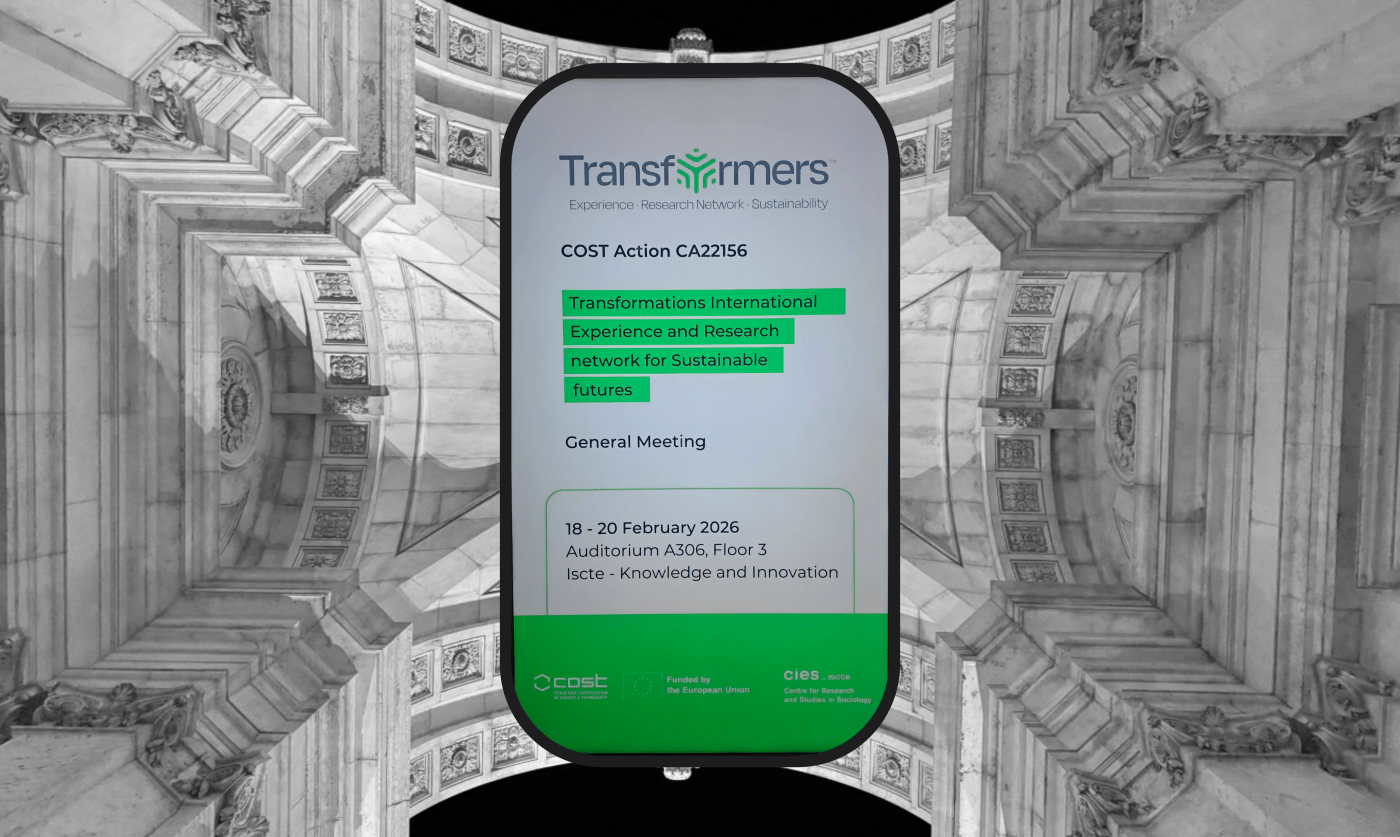
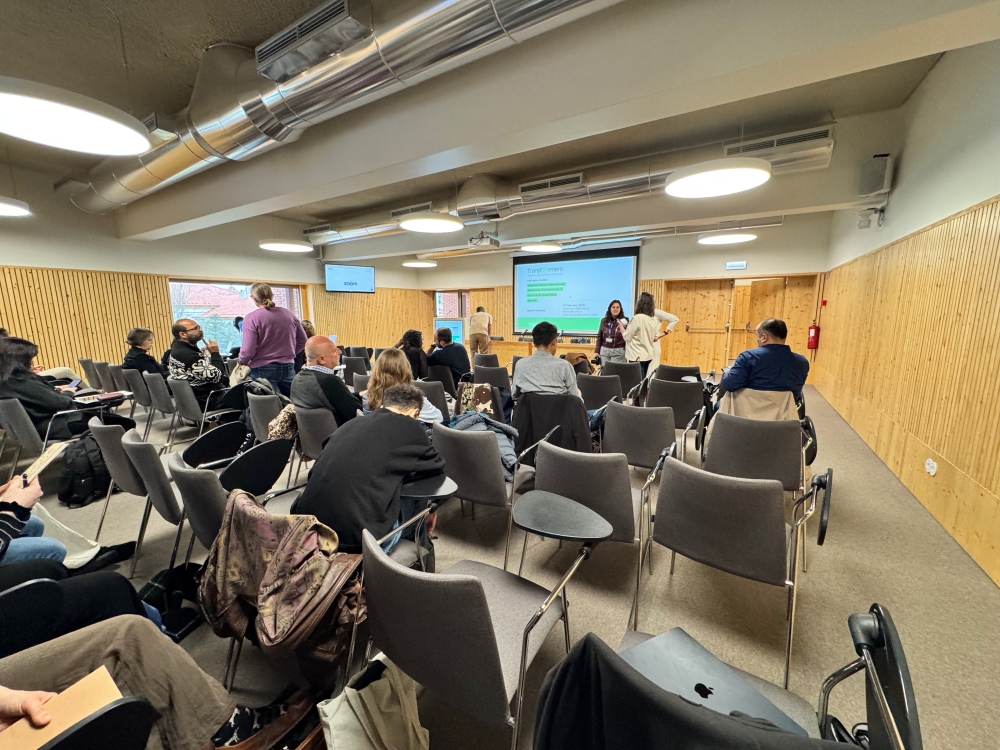
On 18 February 2026, authors contributing to the upcoming TransformERS edited volume gathered in Lisbon for an intensive one-day workshop. The meeting brought together researchers and practitioners from across Europe and beyond who focus on different dimensions of sustainability transformations.
The aim of the workshop was twofold: to provide constructive peer feedback on draft chapters and to collaboratively explore how the individual contributions could be structured into a coherent book. The planned book is one of the key outputs of the TransformERS COST Action, which focuses on advancing knowledge and practice related to just sustainability transformations. In particular, the volume aims to address an important challenge in transformation research: the fragmentation and marginalisation of knowledge. Research on sustainability transformations often develops within disciplinary or regional silos, while knowledge from certain communities, sectors, or cultural contexts remains underrepresented. The book therefore seeks to bring together diverse perspectives and explore how integrating overlooked or marginalised knowledge can strengthen the understanding and practice of societal transformations.
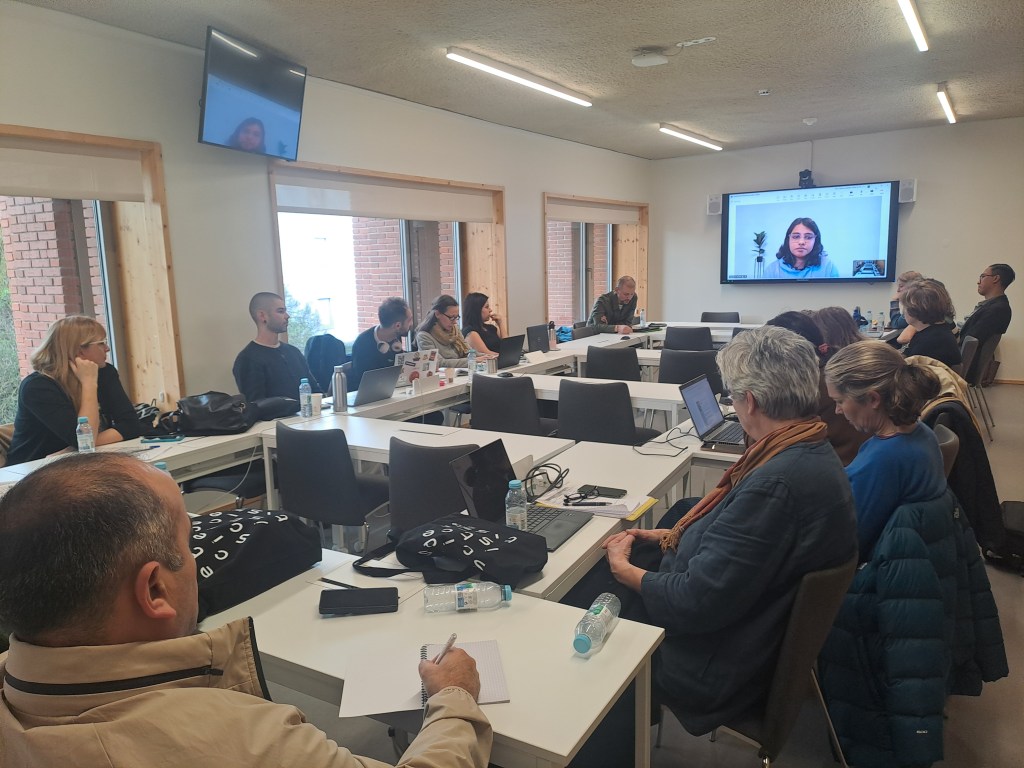
Prior to the workshop, each author prepared a draft chapter of approximately 3–4,000 words. Participants were asked to read two other contributions in advance and provide structured feedback as discussants during the meeting. The Lisbon workshop thus functioned as a collaborative peer-review process, allowing authors to refine their arguments and clarify how their work connects to the broader objectives of the volume.
The discussions revealed several emerging thematic clusters that may shape the final structure of the book. Some chapters explore conceptual and theoretical perspectives on epistemic injustice, examining how certain forms of knowledge become marginalised in sustainability debates. Others focus on case studies of transformative initiatives emerging from contexts that are often underrepresented in the literature, such as community-led environmental action or transformation processes taking place outside Western Europe. A further group of contributions presents methods, frameworks and practical approaches designed to integrate different types of knowledge in sustainability research and practice.
My own contribution to the volume focuses on the role of transdisciplinary citizen science as a way of bridging fragmented knowledge systems. Drawing on experiences from the Golf Vinoř Citizen Science project near Prague, the chapter explores how collaboration between scientists, local communities and practitioners can generate new shared understandings of landscapes and ecosystem services. Rather than simply collecting data, such initiatives can help connect different perspectives – scientific, local and experiential – and support more inclusive approaches to sustainability transformations.
One of the most valuable aspects of the Lisbon meeting was the opportunity to see how these different perspectives complement each other. While the chapters originate from diverse disciplinary backgrounds – including environmental sciences, social sciences, humanities, governance studies and practitioner experiences – the discussions highlighted common challenges and opportunities related to knowledge integration. Participants also worked together to identify possible ways to structure the book so that it becomes accessible not only to researchers but also to practitioners and policy actors engaged in transformation processes. Ensuring that the contributions remain readable and relevant for a broad audience is an important ambition of the editors.
Following the workshop, authors will revise their chapters based on the feedback received in Lisbon. The next phase will involve further editorial work to refine the thematic structure and strengthen connections between chapters. The forthcoming volume promises to provide a diverse collection of perspectives on how fragmented and marginalised knowledge can be recognised, connected and mobilised to support sustainability transformations. By bringing together insights from different contexts and disciplines, the book aims to contribute to a more inclusive and practically relevant understanding of transformative change.







 SustainableCZ
Leave a comment