
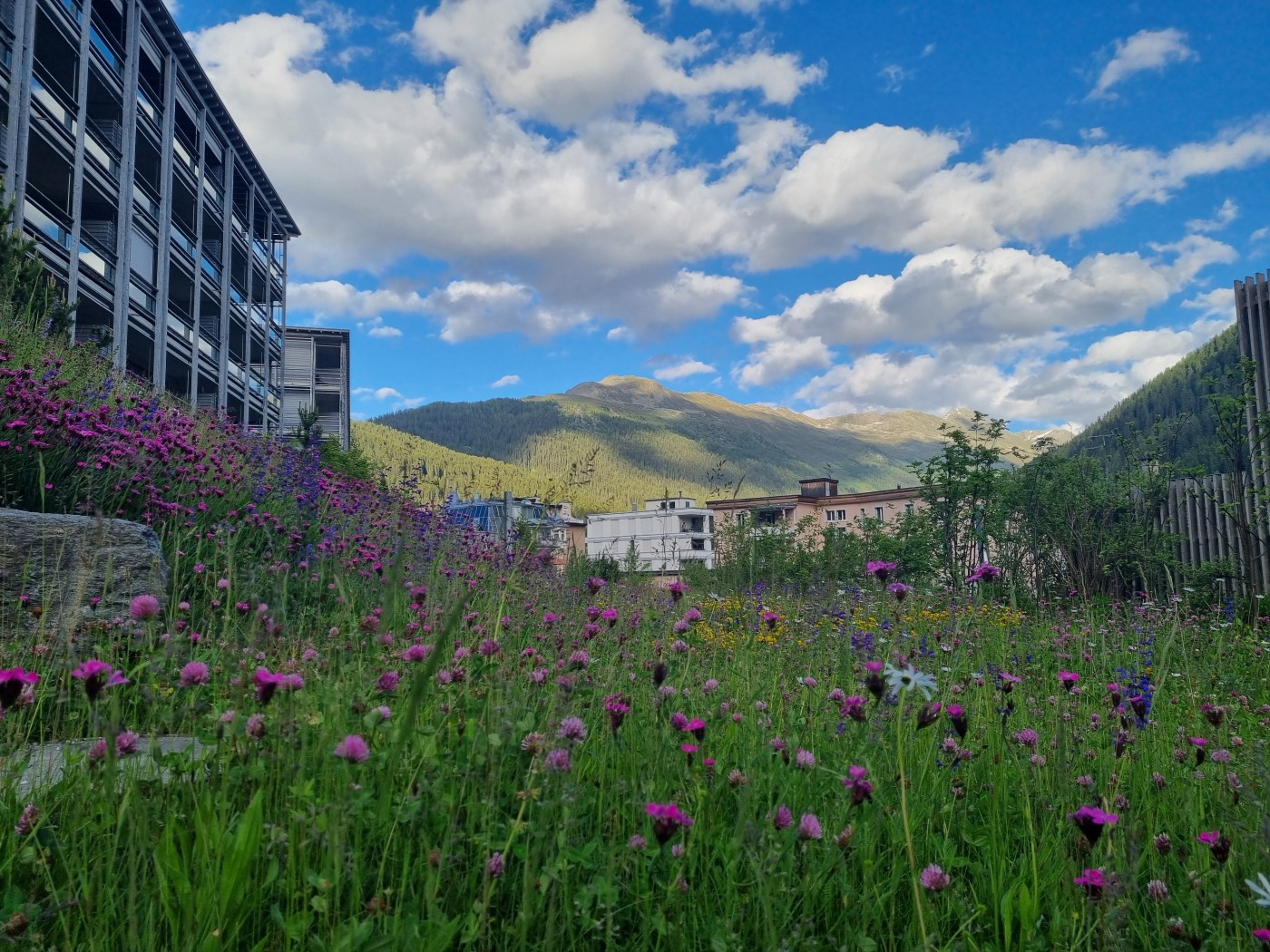
In June 2026, a group of researchers from CzechGlobe 🔗 travelled to Davos, Switzerland, to take part in the World Biodiversity Forum 2026 🔗, held from 14–19 June under the theme Leading Transformation Together. The biennial forum brings together researchers and practitioners from science, policy, business and society to exchange knowledge and explore solutions to biodiversity loss and related sustainability challenges. The Department of Social Processes and Sustainability was represented at the conference by Tereza Prášilová Chábová, David Stella, Vendula Kubušková, and the head of the department, Julia Leventon, who contributed to different sessions throughout the week.
Presenting Our Research in Davos
On Wednesday, 17 June, Tereza Prášilová Chábová presented preliminary findings from the Horizon Europe project AGRI4POL in the session Acting on the IPBES Call: Knowledge, Power, and Practice for Transformative Change Related to Biodiversity. Her presentation, Transformations to pollinator-friendly agriculture: Navigating multiple needs and wishes in diverse European farming systems, explored what a transition towards more pollinator-friendly agriculture may require across different European contexts. Drawing on focus groups with farmers, advisors, NGOs and public authorities in Czechia, France, Italy, Spain and Switzerland, the research examines how different stakeholders perceive the social, economic, agronomic and environmental co-benefits and trade-offs associated with pollinator-friendly farming practices, as well as the practical challenges surrounding their implementation.
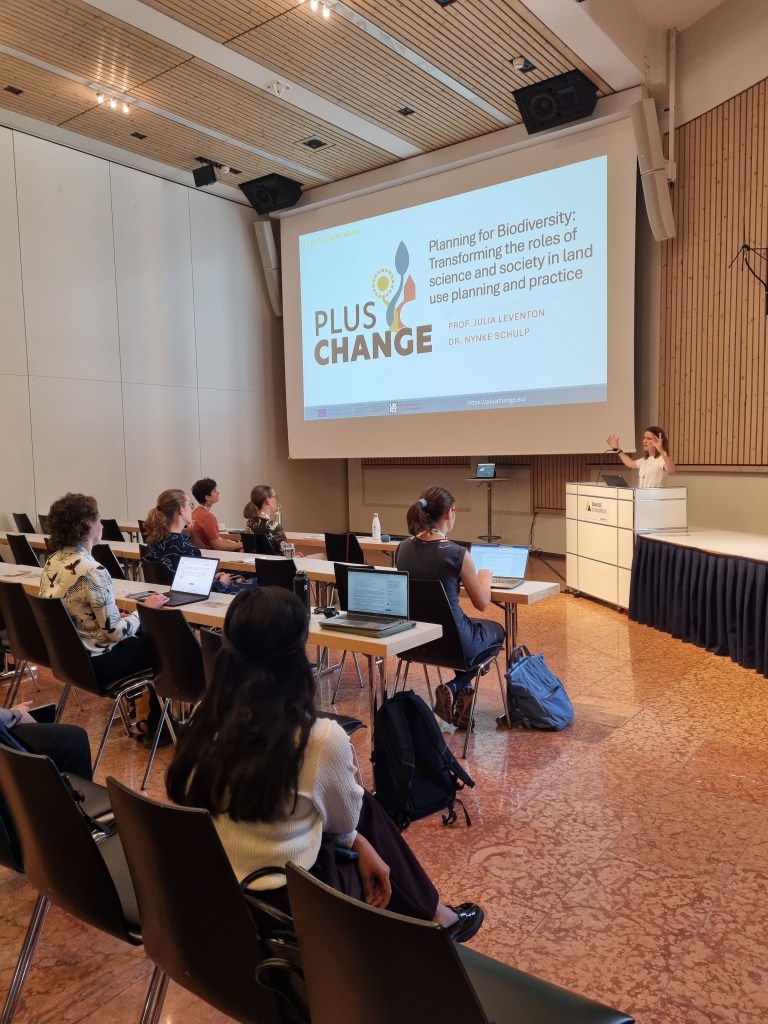
On Thursday, 18 June, Julia Leventon convened the session Planning for Biodiversity: Transforming the roles of science and society in land use planning and practice, which explored how spatial planning can contribute to biodiversity-positive and socially just transformations. Within the session, she presented Planning Land Use Strategies for Transformative Change in a Changing World, drawing on experiences from the Horizon Europe PLUS Change project. Her presentation examined land use planning as a space where scientific knowledge and democratic processes come together in decision-making, and how these decisions can contribute to objectives related to biodiversity, climate change and social well-being. Based on work with 12 practice cases across Europe, she highlighted three interconnected tensions shaping the role of planning in transformative change: scale, data and politics. These concern the mismatch between local innovations and wider policy trajectories, the limited reflection of local dynamics in large-scale datasets used for decision-making, and the way questions of power, responsibility and politics can become hidden within technical processes.
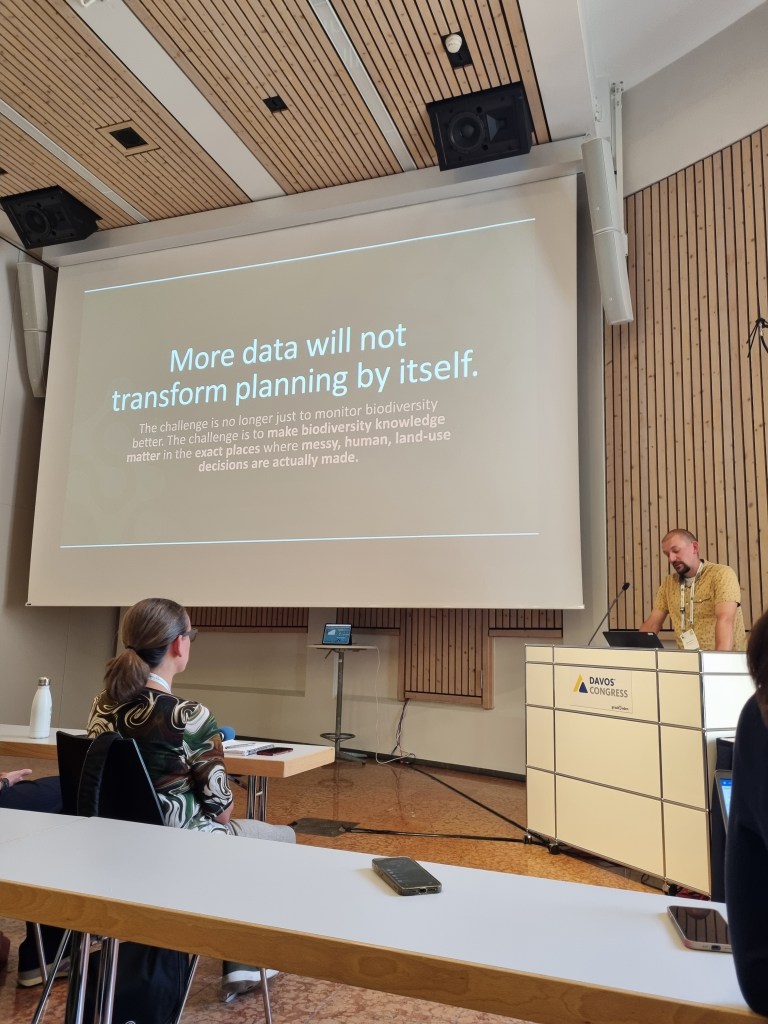
Within the same session, David Stella presented work from the ENABLElocal project in a presentation titled More Data, Less Decision? Why Biodiversity and Decision-making Fails Without Local Realities, Institutional Fit, and Plural Values. The presentation challenged the assumption that more or better biodiversity data automatically lead to better land-use decisions. Drawing on work in three living labs in Czechia, Germany and Sweden, the research shows that biodiversity data are often already available, but their use in practice is constrained by institutional fit, governance frictions and mismatched value systems, as well as by political, legal and social contexts. Based on stakeholder workshops, interviews and a cross-case survey, the project examines how local authorities, NGOs, land managers and regional agencies integrate biodiversity data into conservation and land-use decisions. The presentation also highlighted the importance of participation, local knowledge and plural values, and considered how biodiversity governance can become more context-sensitive, participatory and better aligned with local realities.
Reflections and Takeaways from the World Biodiversity Forum
Beyond presenting our own research, the World Biodiversity Forum also offered plenty of space for discussion, exchange and reflection. Looking back at the conference, our colleagues reflected on the conference in different ways.
For David Stella, one theme resonated throughout this year’s World Biodiversity Forum, regardless of whether it emerged during plenary sessions, parallel presentations, or informal discussions over coffee: biodiversity research must become more actionable. While scientific knowledge on biodiversity continues to expand at an unprecedented pace, there is growing recognition that generating more evidence alone will not halt biodiversity loss, no wonder… The real challenge lies in ensuring that this knowledge reaches those who make decisions on the ground and can be translated into meaningful action. Researchers repeatedly stressed the need to design studies with implementation in mind, to engage stakeholders from the outset, and to better understand the social and institutional contexts in which biodiversity decisions are made.
Closely linked to this discussion was an evolving view of the role of scientists themselves. Rather than acting solely as producers of knowledge, researchers are increasingly expected to become knowledge brokers—individuals who connect different knowledge systems, facilitate dialogue among diverse stakeholders, and help translate scientific evidence into forms that are relevant and usable for policy-makers, practitioners, land managers, and local communities. This shift does not diminish the importance of rigorous science; instead, it broadens its societal role. As several speakers noted, the impact of research should no longer be measured only by publications and citations, but also by its ability to foster collaboration, build trust, and support real-world decision-making. This perspective aligns closely with emerging discussions on transdisciplinary research, co-production of knowledge, and the growing recognition that effective biodiversity conservation depends as much on communication, translation, and relationships as it does on scientific discovery itself.
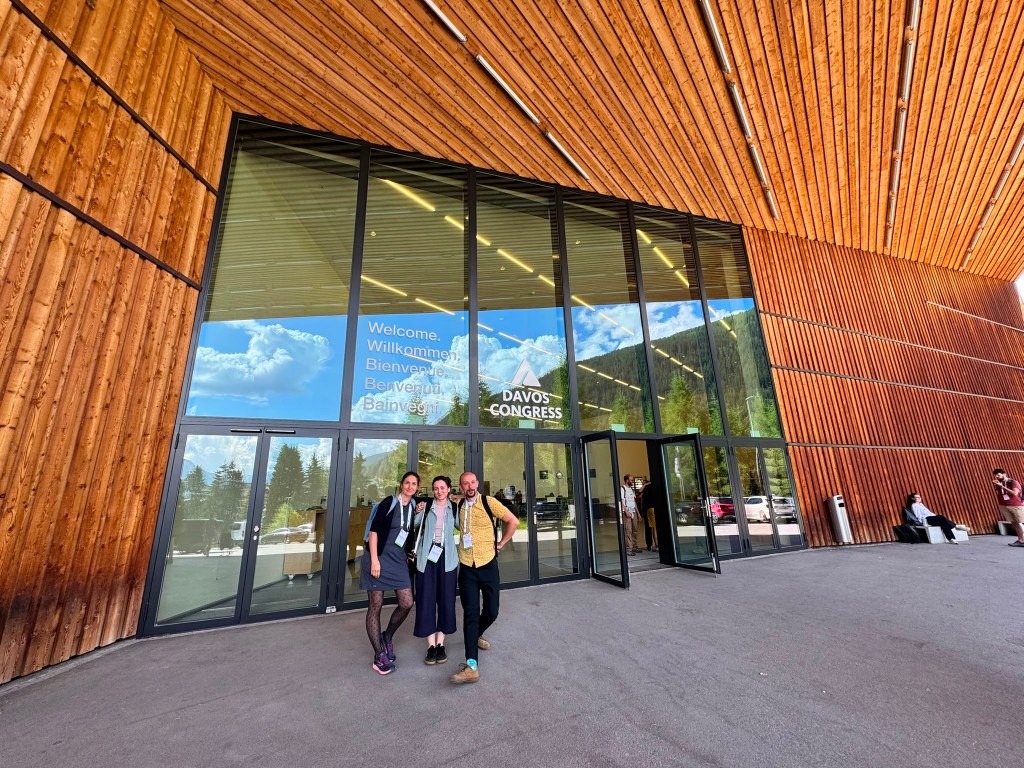
Vendula Kubušková reflected on the forum from the perspective of attending her first scientific conference:
I would like to highlight three workshops in particular that left a lasting impression on me.
1. From Mainstream Biodiversity Awareness to Mainstream Biodiversity Action
The first part of the workshop focused on different forms of leadership (society, organizations, and individuals) and on positioning oneself along the spectrum between personal perspectives, social norms, social agreement, and the influence of others’ opinions.
The workshop included inspiring examples and valuable reflections about how I, as an individual, can serve as a catalyst for change, promote greater engagement, and influence both my immediate and wider surroundings. I would summarize the main personal message of this workshop as: Encourage your personal potential.
2. Biodiversity through Shared Dialogues: Linking Scientists, Stakeholders and Policymakers
According to its description, this workshop was supposed to focus on how to communicate scientific findings effectively to the public and various audiences. A few practical recommendations were presented, emphasizing that communication methods should always be adapted to the audience, the purpose of the message, and the scope of the topic. This also applies to defining biodiversity and other commonly used concepts, which often encompass a broad range of meanings but sometimes require simplification and a narrower focus for effective communication.
3. Art as an Icebreaker
This workshop featured highly unexpected content. Three speakers who either came from, or were closely connected with, Indigenous communities (Canadian First Nations and the Sámi people) shared their personal stories and discussed the connections between ancestry, cultural traditions, symbols, and traditional ceremonies in contemporary society.
Overall, I can say that it was a valuable experience. It broadened my perspective on biodiversity, enriched it with insights from Indigenous communities that one would not normally encounter, and highlighted the importance of connection with nature, our roots, and the spiritual and cultural dimensions of life. Based on the panel discussions and my overall impressions, I would summarise the key messages as follows:
- View issues from a broader, global perspective rather than focusing solely on details.
- Be open-minded and generous in seeking common ground and solutions.
- Be willing to change your perspective.
- Surround yourself with inspiring and positive people, and allow yourself to be energised by their enthusiasm.
- Practical implementation of actions is needed.
- Coalitions and cooperation across sectors are essential.







 SustainableCZ
Leave a comment