

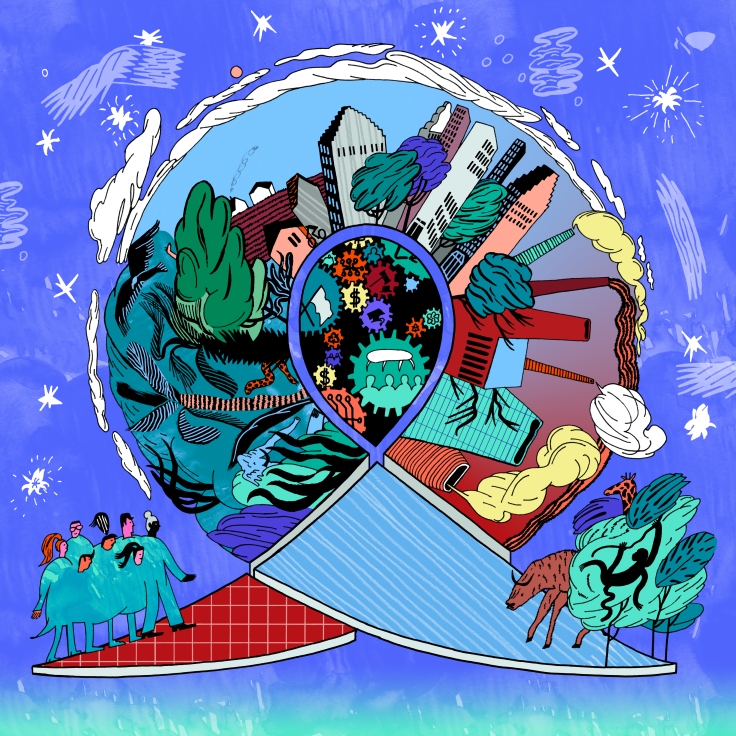
As we grapple with biodiversity loss 🔗 , climate change, and growing social inequalities, one question becomes increasingly important: what does transformative change actually look like in practice? A new policy brief from the BIONEXT project 🔗offers some insights by exploring not only where we want to go, but also the mechanisms that can help us get there.
The BIONEXT project generates evidence to better understand biodiversity loss and demonstrates how biodiversity underpins every aspect of life. Through extensive research and stakeholder engagement, BIONEXT co-developed three distinct futures and transformation pathways for a nature-positive Europe that connect biodiversity, water, food, energy, transport, health, and climate. Each pathway represents a different way of valuing nature and imagining societal transformation over the years 2030, 2040, and 2050.
Looking beyond individual solutions: Three pathways to a nature-positive future
The new policy brief Enabling a Nature-Positive Europe Pathways and Mechanisms of Transformative Change, focuses on a key insight: transformative change is rarely triggered by a single policy, technology, or intervention. Instead, it emerges through combinations of actions that enable or reinforce one another over time. Drawing on the analysis of 634 actions identified across three pathways, the policy brief presents recurring pathway mechanisms that help to achieve transformation. These mechanisms explain how governance reforms, economic incentives, social innovation, cultural shifts, or community action interact to create lasting change.
The first pathway, Nature as Culture (Dòigh Nàdair), highlights the importance of reconnecting people with nature through local stewardship, social equity, and community-led governance. Imagine local communities gaining greater control over forests, farmland, or rivers and managing them through regenerative practices that support both biodiversity and local livelihoods. In this future, rural revitalisation and ecological restoration reinforce each other.
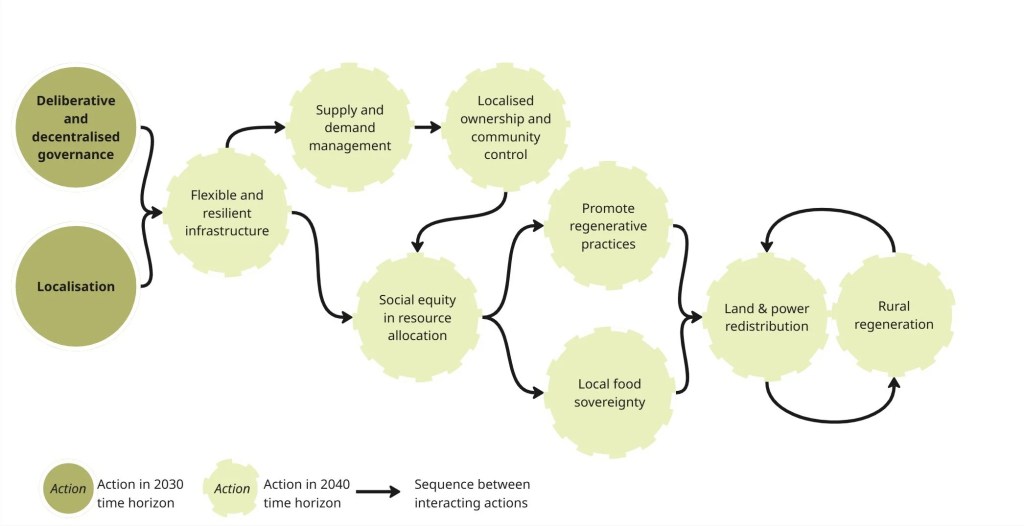
Figure: The Nature as Culture – Dòigh Nàdair pathway mechanism.
The second pathway, Nature for Nature (NaturAll), places nature’s intrinsic value at the centre of decision-making. Here, stronger environmental laws, biodiversity-centred institutions, and regenerative food systems gradually reshape the economy. A practical example might be agricultural policies that reward farmers for restoring pollinator habitats and improving soil health, while local food systems reduce environmental pressures and strengthen community resilience.
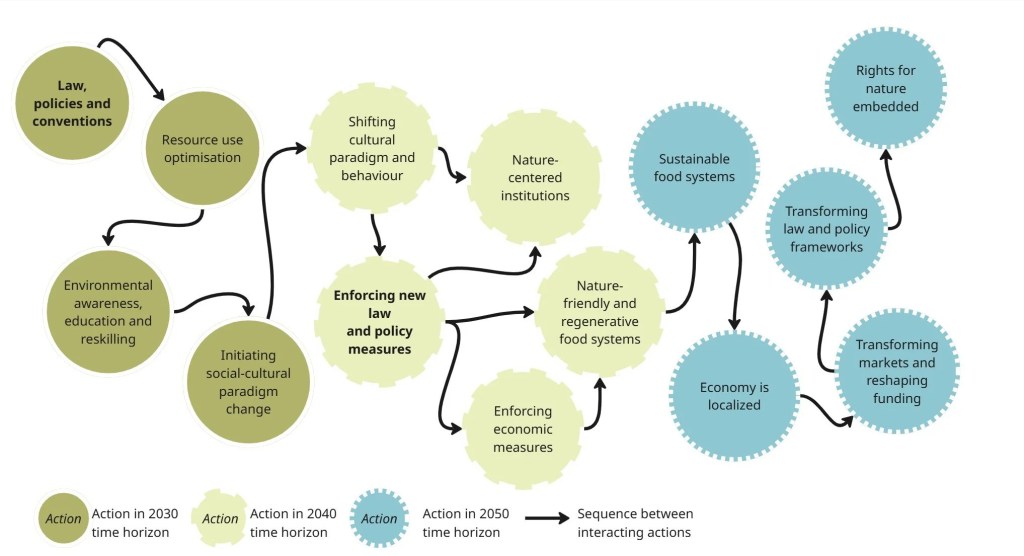
Figure: The Nature for Nature – NaturAll pathway mechanism.
The third pathway, Nature for Society (Return to Nature), focuses on the benefits that healthy ecosystems provide to society. It emphasises circular economies, nature-based solutions, and integrated resource management. Examples include cities investing in green infrastructure to reduce flooding and heat stress, healthcare systems promoting access to nature for preventive health benefits, or businesses adopting circular production models that minimise resource use and waste.
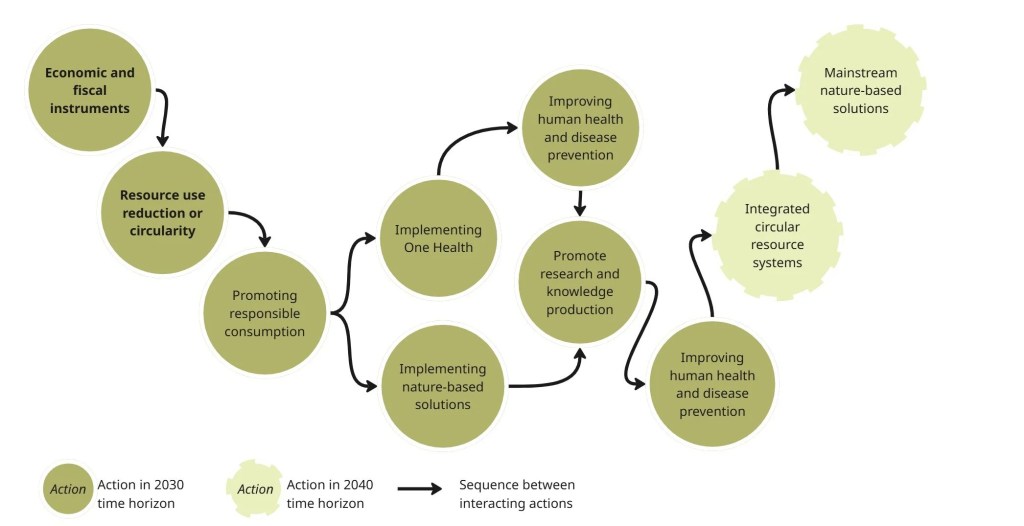
Figure: The Nature for Society – Return to Nature pathway mechanism.
Despite their different starting points, all three pathways reveal consistent messages: Transformative change is fundamentally enabled by governance. Strong institutions, effective policies, inclusive participation, and long-term societal commitment are far more important than technological innovation alone. The pathways also demonstrate that biodiversity, food, water, health, energy, and social equity cannot be addressed separately. Sustainable futures depend on connecting these systems and recognising their interdependencies.
The final stretch for BIONEXT project
This policy brief represents one of the final outputs of the BIONEXT and offers an important glimpse into ongoing research on transformative change mechanisms. A more comprehensive scientific publication examining these mechanisms in depth is scheduled for release next year. As BIONEXT enters its concluding phase, the project leaves behind not only visions of desirable futures, but also practical insights into how Europe can move from ambition to action. Understanding the mechanisms of transformation may prove just as important as defining the destination itself.



This work was co-funded by UK Research and Innovation (UKRI) under the UK government’s Horizon Europe funding guarantee 10039588.








Leave a Reply