
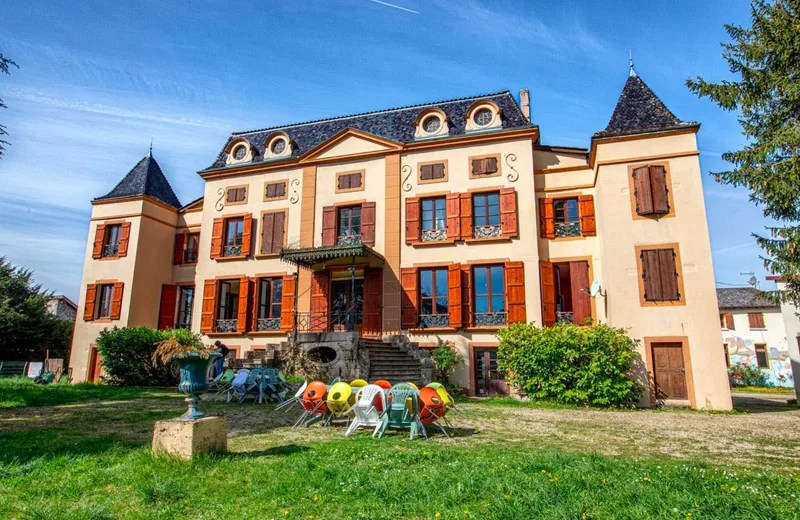
I am not a fiction writer. This became particularly apparent when, thanks to the support of CzechGlobe, I found myself at a château in Chardonnay, France surrounded by people who, in many cases, actually were writers.
In June 2026, I had come for a SHiFT COST writing retreat with a difficult task for a scientist: to write stories exploring how societies might transform towards more just and sustainable futures. The event took place at the Château de Montlaville, an arts venue set amongst the vineyards in the very heart of the Chardonnay. During the retreat, we worked with different approaches to storytelling and discussed texts by Ursula K. Le Guin and Viktor Shklovsky, thinking about how changing perspective can make familiar problems appear differently.
I used the opportunity to experiment with an issue that also interests me as a researcher: how people make sense of environmental problems, whom they trust, and how they can become involved in decisions affecting their communities. The result was a short story about a Ugandan community facing an expansion of a phosphate mine. It draws loosely on my previous ethnographic research on mining in Czechia and development work in Uganda, but moves both experiences into a fictional setting to ask how access to information and public deliberation might contribute to transformative change.
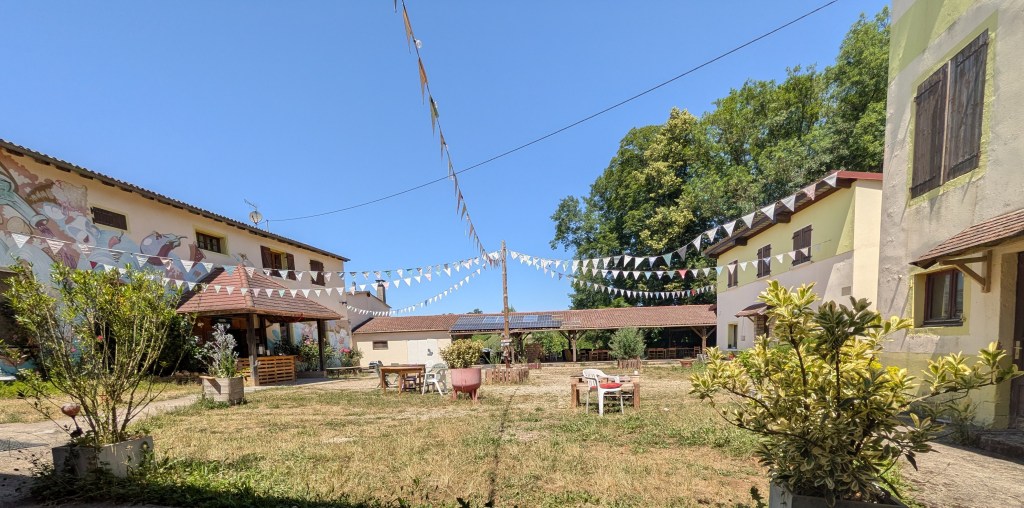
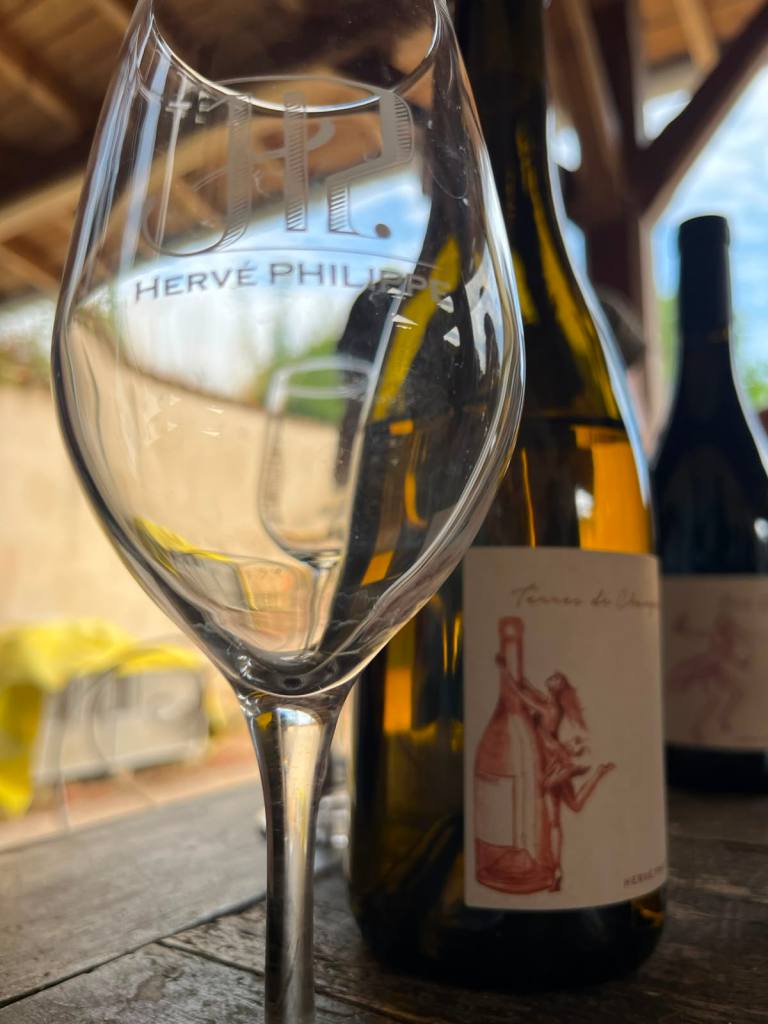
Left: the château courtyard; right: as this is a region renowned for its wine, we went for wine tasting (a pleasant experience even for me, as an abstinent!)
Being among experienced writers was intimidating at times, but that was precisely part of the value of the retreat. The stories that emerged are genuinely different from one another – and, I think, remarkably good.
The surroundings made the experiment easier. Our château was beautiful without being conventionally luxurious: an old house, a large garden, simple rooms and an atmosphere that felt organic rather than polished. It was a very pleasant place to disappear into a text for a few days.
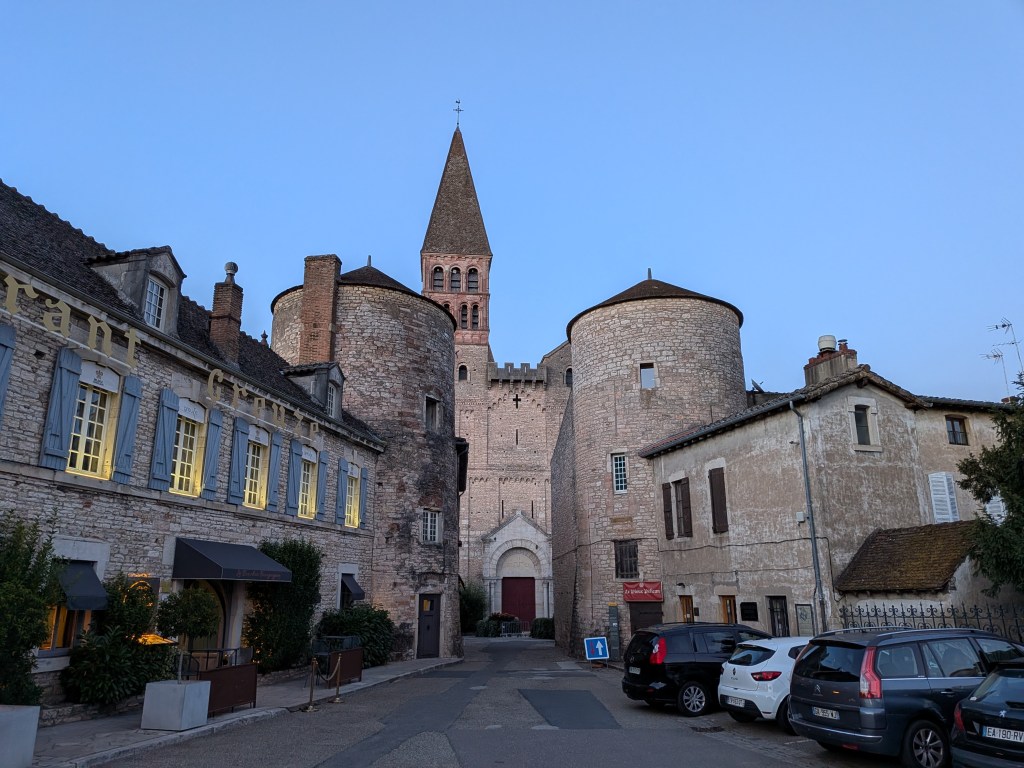
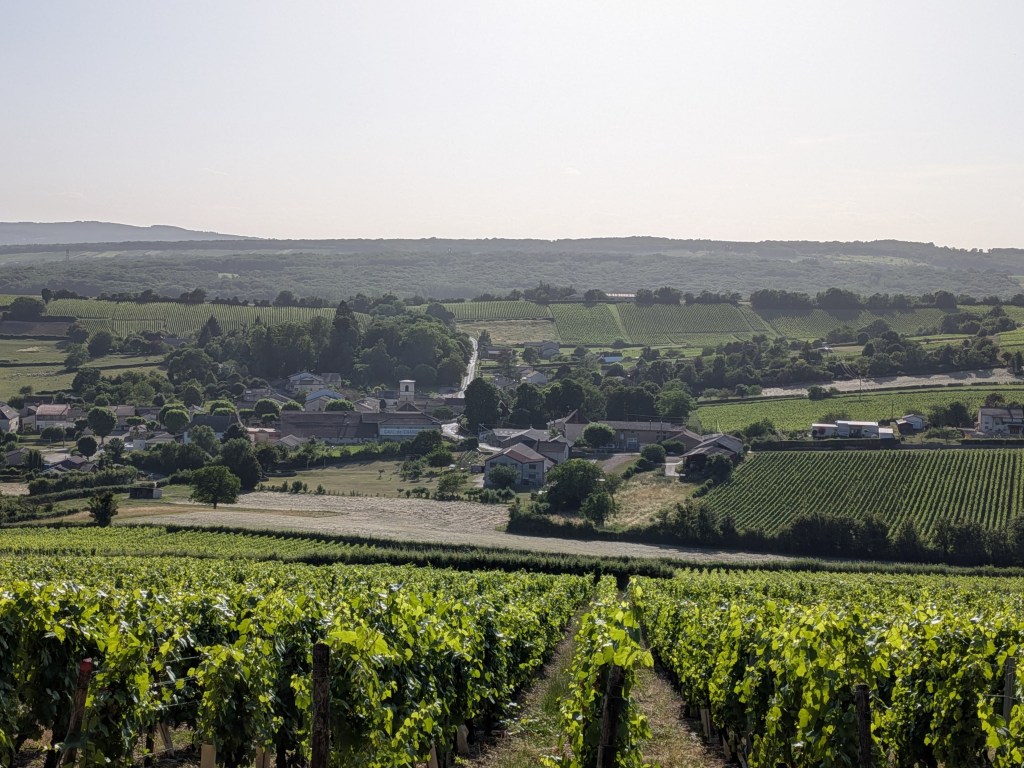
Left: Abbey of Saint Philbert in nearby Tournus; Right: View of Chardonnay village.
Getting there was another small experiment. I travelled between Prague and Chalon-sur-Saône by bus – roughly 17 hours each way – rather than flying. On the first and last nights of the journey, I slept in a tent. Neither choice was particularly efficient, but both made the journey more memorable. And for a retreat devoted to imagining sustainable futures, I was happy that my way of getting there was reasonably consistent with what we were writing about. And the choice to sleep at a campsite enabled some unexpected experiences: while swimming in the Saône in the June heat, I saw a kingfisher. On my way back, I also met a person travelling on a solar tricycle – an adventurer who had constructed the vehicle himself and travels about 150–200 km per day, cycling with the help of the solar panel above him. I am glad for these encounters.
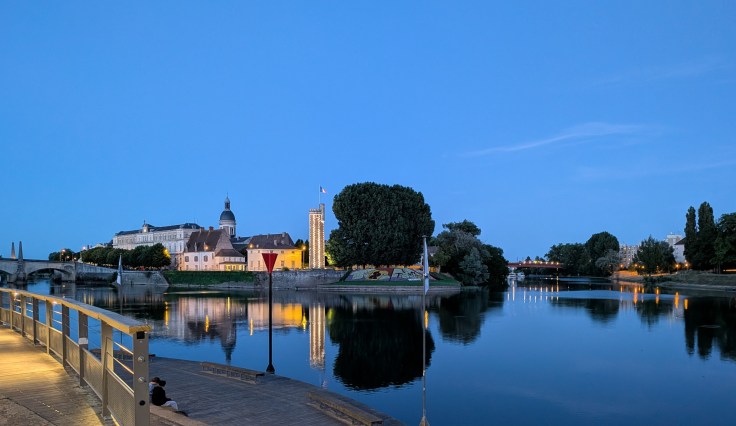
Chalon-sur-Saône
The resulting collection, The World We Cannot Map, is now published. My contribution (page 20-23) is one attempt to use fiction for something I normally approach through ethnography. Naturally, I hope you will read my story. But you should not stop there: the collection is full of original and unexpected pieces, including several by professional writers, and well worth discovering.
Read the collection of (really!) short stories here!
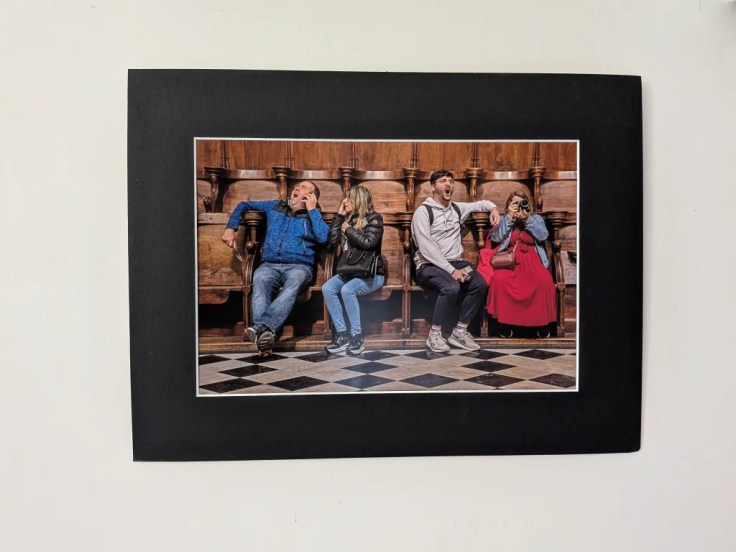
One of the many works of art on the grounds that caught my eye – tourists in their natural habitat.







Leave a Reply