
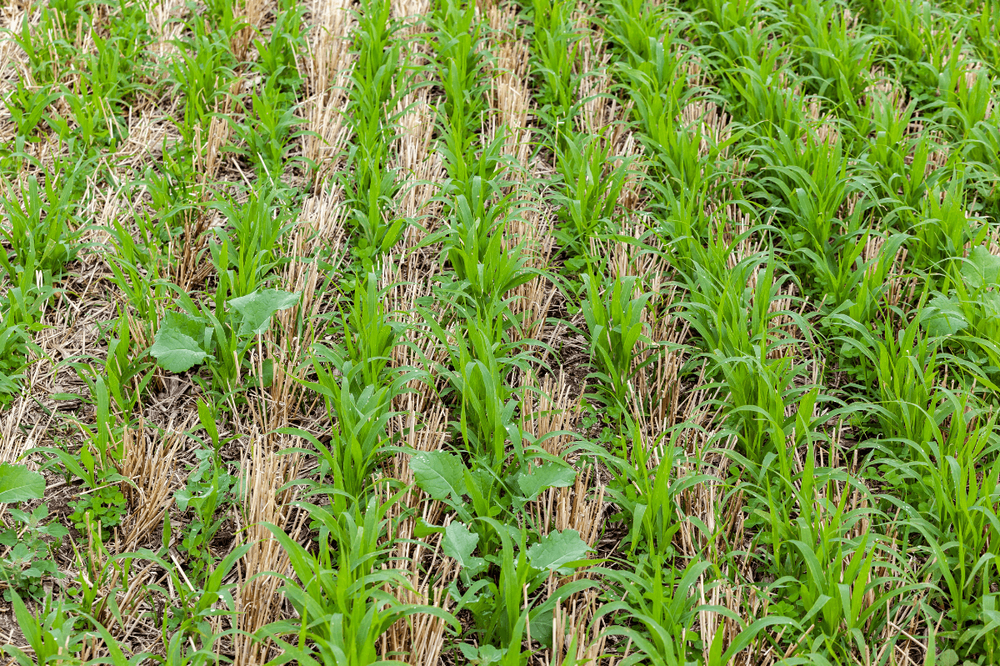
A focus group on the co-benefits and trade-offs of pollinator-friendly farming (PFF) was held in Prague in February 2026 and was organised by researchers from the Department of Social Processes and Sustainability at CzechGlobe. It was one of a series of parallel focus groups that were conducted in five case study countries – Czechia, France, Italy, Spain and Switzerland – exploring stakeholder perceptions of co-benefits and trade-offs of PFF measures in local contexts.
Agri4Pol project background
Threats to pollinators and pollination services are recognised worldwide as jeopardising ecosystem functioning and the benefits that pollinators provide to people. Intensive agricultural practices and prevailing crop-breeding approaches place pressure on pollinator biodiversity and the yields of many economically important European crops that depend partly or fully on insect pollination. There is therefore a need to transform agriculture in ways that support crop yields and food security while avoiding impacts that undermine the natural foundations on which agriculture depends. The AGRI4POL project aims to promote the transformation of agriculture from a source of pressure on pollinators into a positive force for restoring and managing pollinators and pollination services that support agriculture and provide wider benefits to ecosystems and people. AGRI4POL takes an interdisciplinary and transdisciplinary approach to support this transition towards sustainable pollinator-friendly farming (PFF). More in a previous blog here.
Focus groups on perceptions of co-benefits and trade-offs of PFF
The Department of Social Processes and Sustainability at CzechGlobe contributes to Work Package 1, focusing on Multi-actor co-design of research and end-user options for promoting pollinator-friendly farming. Within one of the tasks, we lead work examining how socio-economic contexts shape desired co-benefits and perceived trade-offs of pollinator-friendly farming. Co-benefits refer to additional positive outcomes beyond pollination support, while trade-offs refer to possible negative outcomes, both of which may occur across environmental, agronomic, economic, and social domains, as well as across space and time.
Because these co-benefits and trade-offs are perceived differently across regions, farming systems, and socio-economic contexts, stakeholder perspectives are central. Policymakers, farmers, practitioners, NGOs, beekeepers, and other actors influence which measures are advocated, implemented, or carried out in practice. Adoption therefore depends not only on documented impacts, but also on how stakeholders understand and value them.
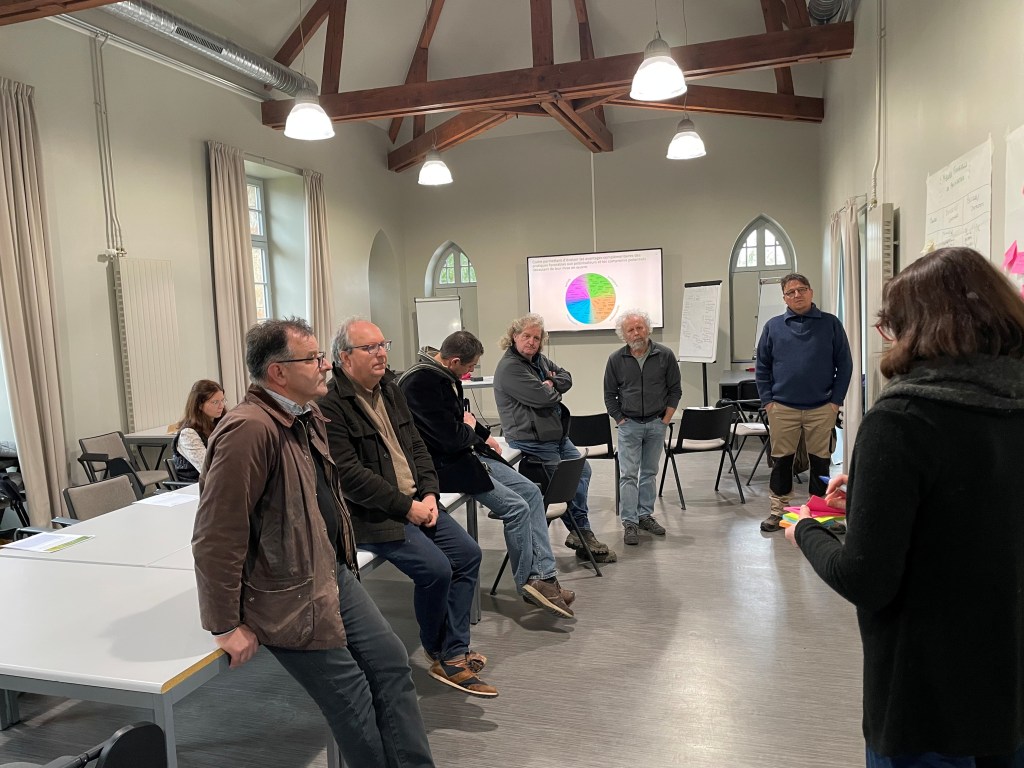
Examining these perceptions was the exact purpose of our (sub-)national focus groups. At the beginning of 2026, focus groups were conducted in five case study countries: the Czech Republic, France, Italy, Spain, and Switzerland. They were organised by the respective Agri4Pol partners – CzechGlobe, INRAE, UNIPD and CIA, Paisatges Vius, and AGRIDEA – and brought together between 7 and 15 participants in each country.
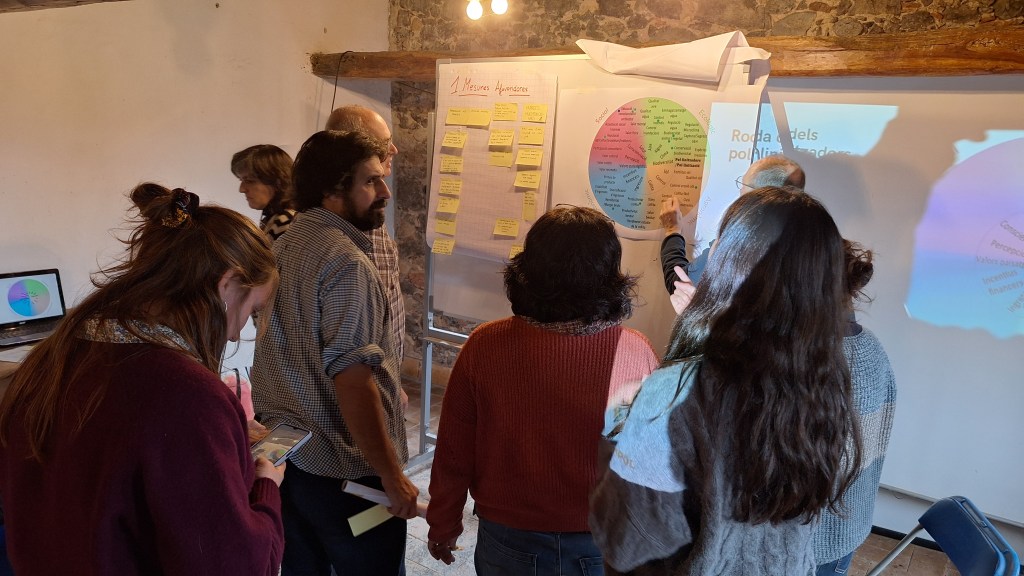
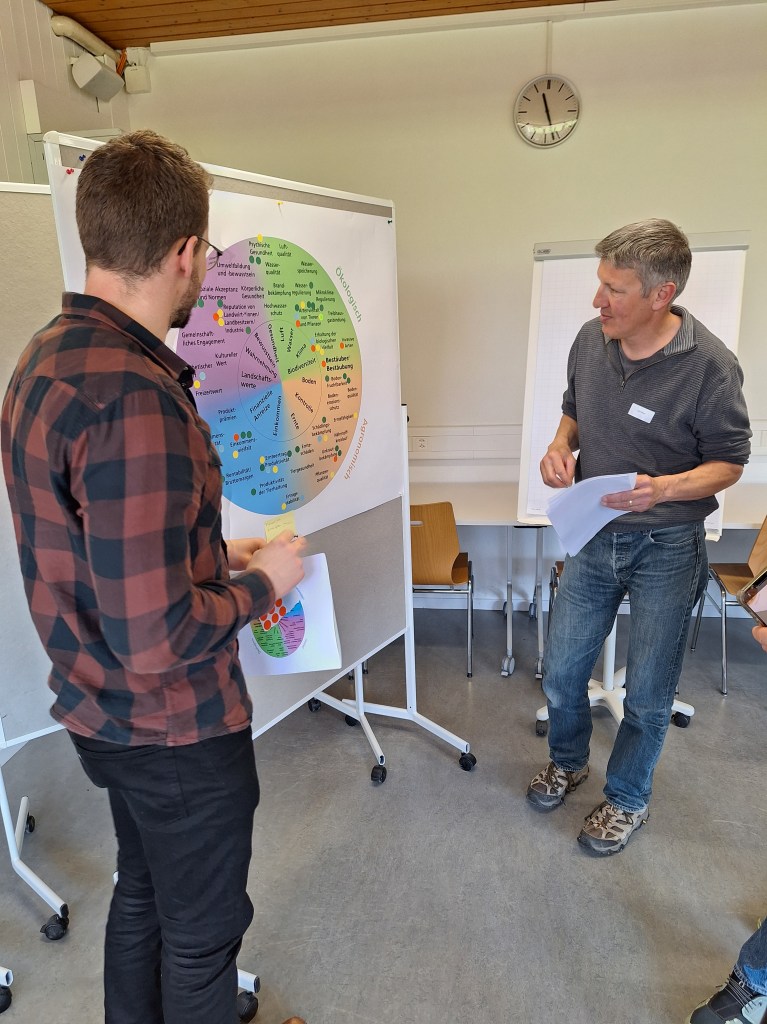
We initially developed a framework representing a broad range of possible co-benefits and trade-offs based on a literature review, input from AGRI4POL researchers, and discussions during a European-level workshop. The resulting Framework for exploring the perceived impacts of pollinator-friendly farming was the key tool used by all partners during the focus groups, which is essentially a set of aspects that can support structured discussion and reflection on how different stakeholders perceive the impacts of pollinator-friendly farming measures. The aspects in the framework are grouped into four “fuzzy sectors” (i.e. an aspect might fall into more sectors at the same time): social, ecological, agronomic, and economic. We will soon be publishing our framework on Zenodo, so keep an eye out!
The focus groups were divided into main two sections discussing:
- Pollinator-friendly farming measures in the local context, including perceived impacts of these measures.
- Mapping of relevant policies and initiatives that influence how the measures are implemented in the national or regional context.
The collected data were then reported by all partners using a common template, along with general reflections on the focus group process. We are currently processing these reports to feed into a draft Report on Co-benefits and Trade-offs of Pollinator-Friendly Farming Solutions.
Focus group in Prague
Our focus group took place in February at Kampus Hybernská in Prague and was attended by nine participants representing various stakeholder groups, including public administration, NGOs, research institutions, beekeepers and farmers.
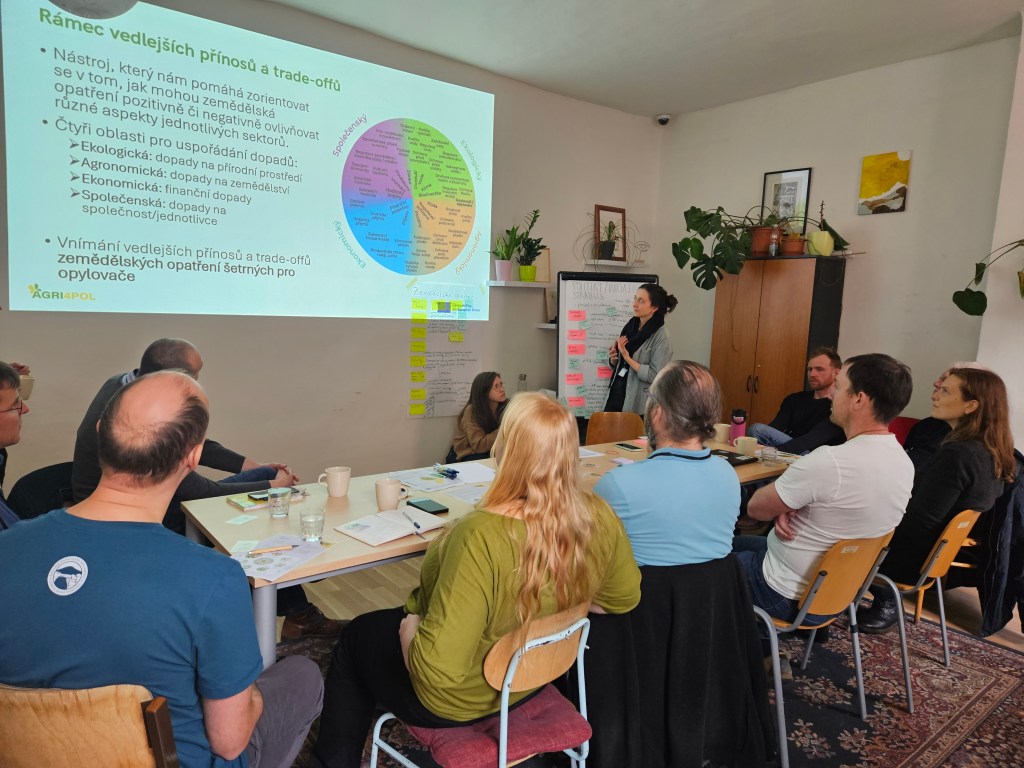
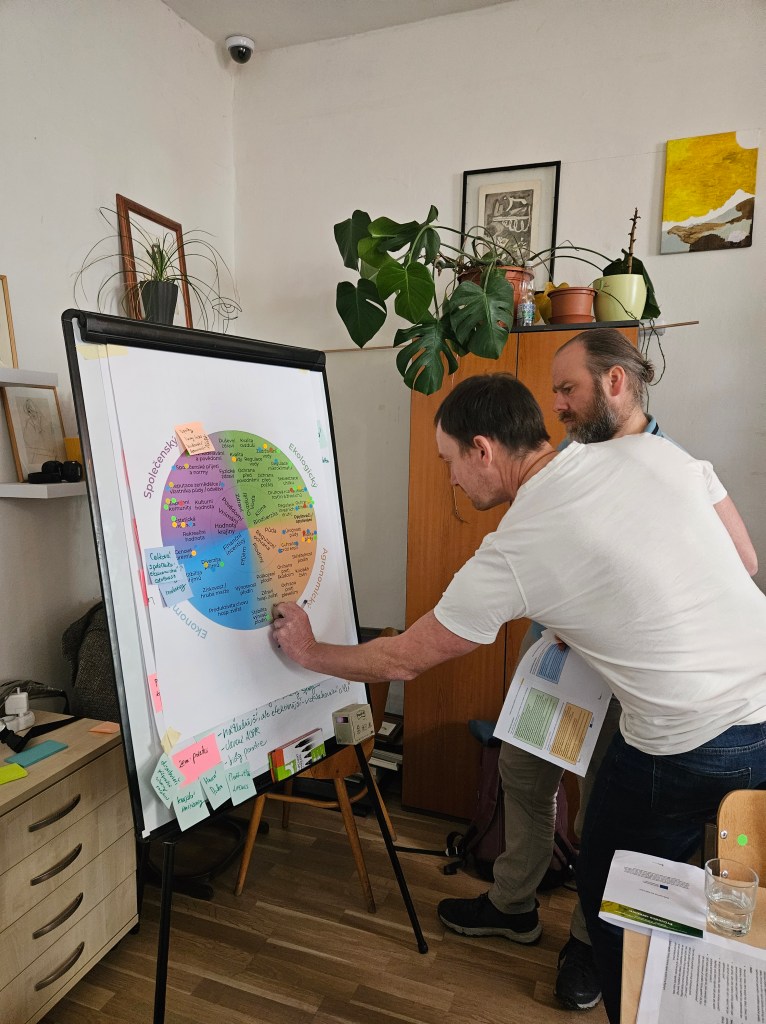
The discussion on the topic of pollinator-friendly farming measures was focused specifically on measures that, according to the participants, are used and known in the Czech context. We also discussed which measures are effective and which, conversely, do not work.
Participants stressed that no single measure is sufficient to support pollinators; rather, the most effective approach is to combine different measures to create a heterogeneous, mosaic-like landscape. They also emphasised that measures should not be applied uniformly across Czechia, as regional and local conditions strongly influence what is feasible and effective. Examples discussed included flower strips, intercropping, landscape features, adapted mowing regimes, pesticide regulation, and targeted interventions such as lapwing plots.
After a coffee break, the participants discussed policies, management plans and initiatives that influence whether and how pollinator-friendly farming measures end up being implemented. Most policies mentioned are linked to the Common Agricultural Policy (CAP) and represent its specific instruments at the national level. The CAP provides the overall framework, while specific measures, such as flower strips, the protection of Large Blue butterflies, the protection of the northern lapwing, and the management of extensive grasslands, are implemented through its second pillar.
This was followed by work with the Framework, focusing on participants’ reflections on the aspects as potential points of impact of PFF measures, their prioritisation in the Czech context, and a final testing exercise using a specific PFF measure selected by the participants. When reflecting on the positive impacts of PFF measures, stakeholders perceived the following co-benefits as the most important: species diversity of plants and animals, aesthetic value, water retention, biodiversity conservation, soil quality, and income diversity.
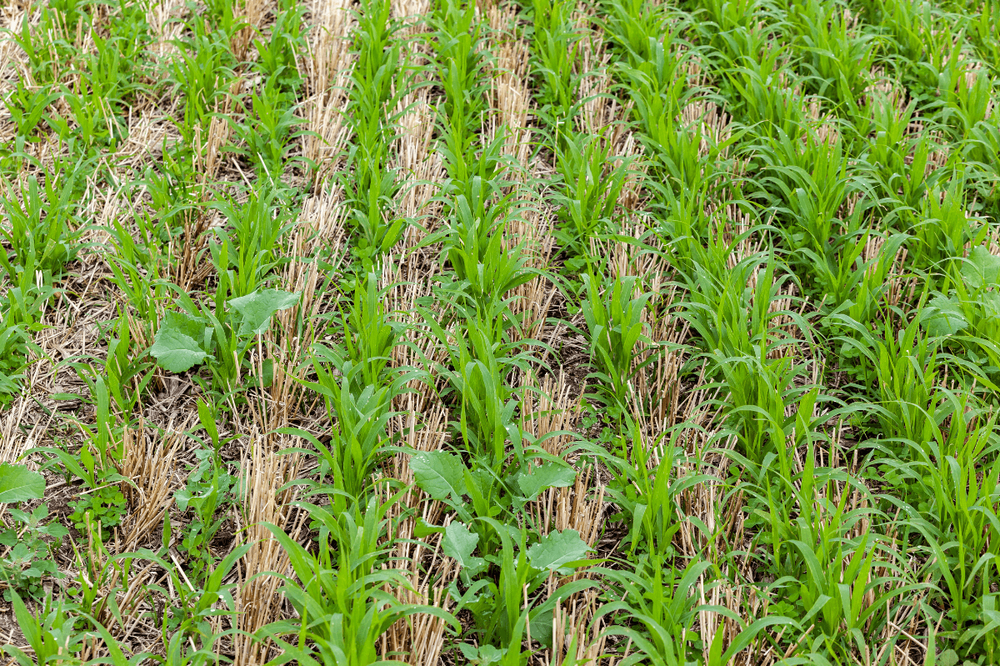
In this part of the focus group, we aimed to explore which aspects stakeholders consider important when assessing one specific PFF measure; in this case, the selected measure was intercropping. Most priority aspects were perceived as positively affected by intercropping, especially in the long term, although several impacts were discussed as mixed or strongly context dependent. For example, according to the stakeholders, intercropping may support long-term profitability and soil conditions, but its introduction can initially require considerable effort from farmers and may not bring immediate economic benefits. Impacts on aspects such as aesthetic value, farmer reputation, and community engagement were seen as more neutral or ambiguous, partly because public understanding of intercropping is perceived to be limited.
Overall, the focus groups showed that the framework is a valuable tool for stimulating discussion and for revealing how different stakeholders perceive the co-benefits and trade-offs of pollinator-friendly farming measures across social, economic, ecological, and agronomic dimensions.
Authors: Simona Zvěřinová, Tereza Prášilová


AGRI4POL receives funding from the European Union’s Horizon Europe research and innovation programmeunder grant agreement No 101181146 and The State Secretariat for Education, Research and Innovation (SERI). Views and opinions expressed are those of the author(s) only and do not necessarily reflect those of the European Union (EU), the European Research Executive Agency (REA), or the SERI.










Leave a Reply