
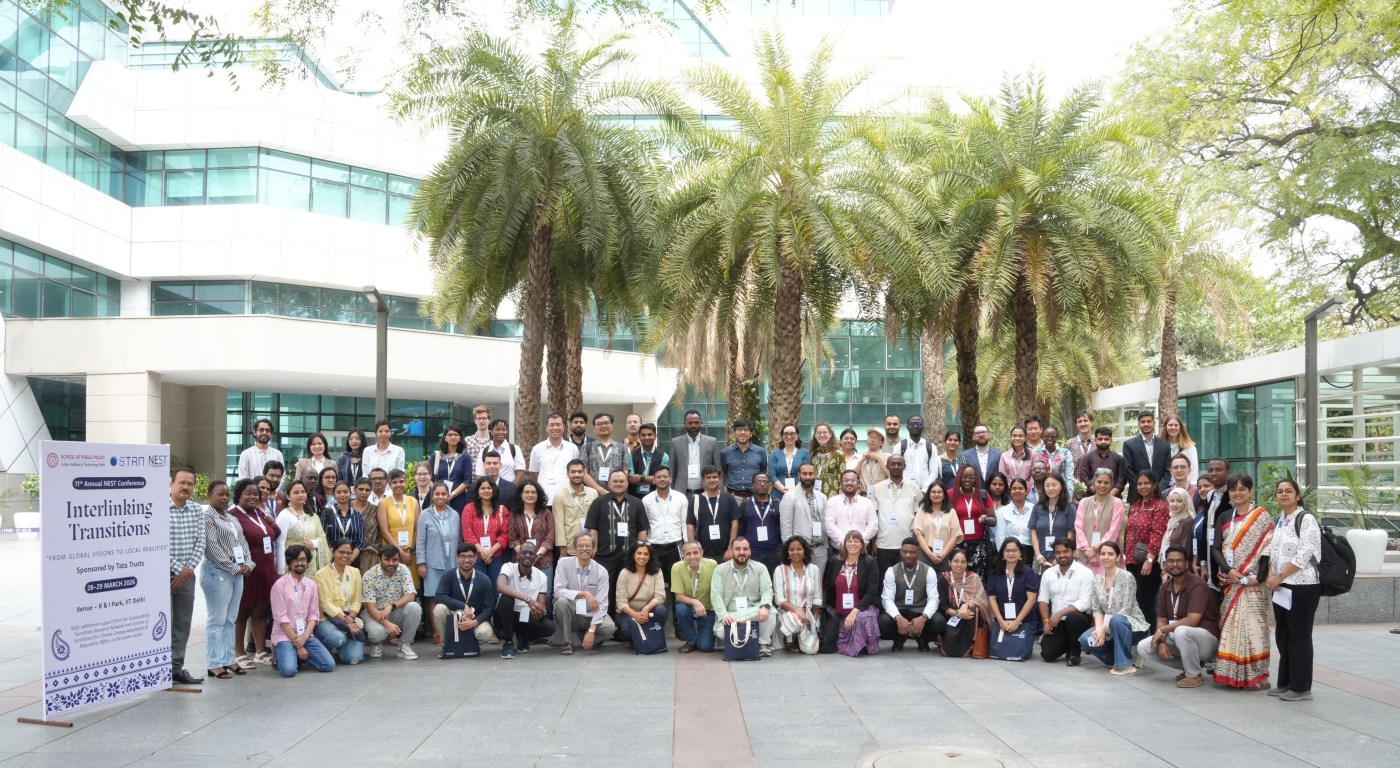
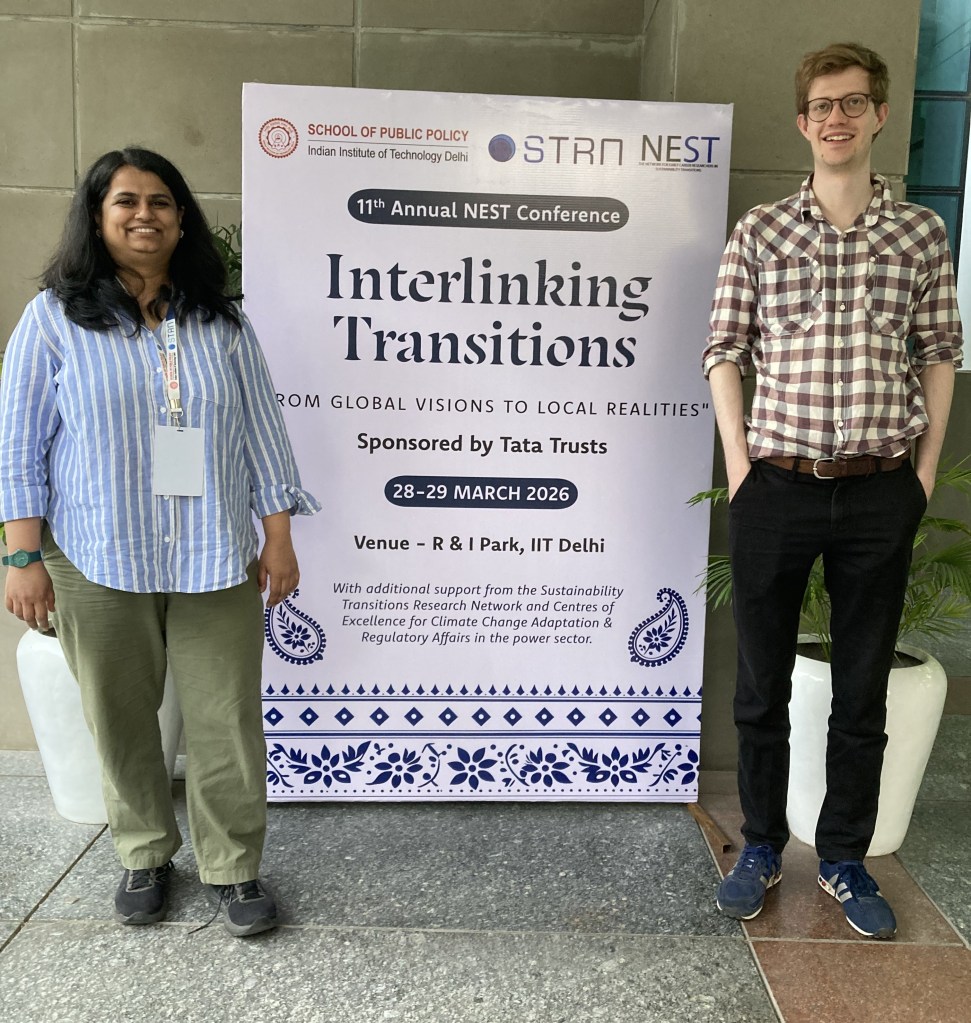
My colleague from Czech Globe, Vojtech Gerlich and I (Abhigya) spent the first three weeks of March 2026, simmering in unforeseen travel anxiety. The world had descended into chaos after the major powers began to engage in what now seems like a perpetual state of impasse, exposing the fragility of the world order and mocking all the efforts towards a sustainable world.
Thanks to the unflinching support of our employer CzechGlobe, especially our colleague Vendula, despite the travel disruptions, Vojtech and I found ourselves on the premises of my alma mater, the Indian Institute Technology, at the beginning of New Delhi summer. We had the opportunity to attend the Network of Early Career Scholars in Sustainability Transitions (NEST) conference. Graduate students from the School of Public Policy at IIT Delhi put together a vibrant two-day event that brought together a diverse group of participants, which signified a commitment to diversity with respect to geography, institutions, research orientation, career stages and disciplinary affiliation.
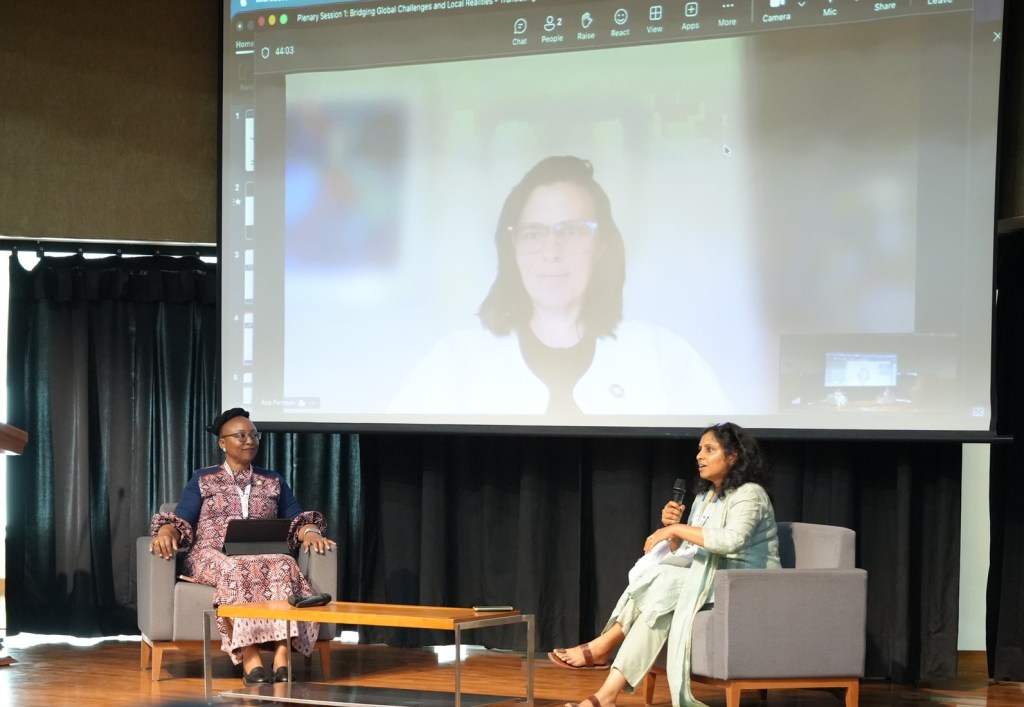
The conference began with a plenary session where we listened to a brilliant talk by Dr. Angela Lusigi, the resident representative from the United Nations Development Program (UNDP) India. Dr. Lusigi noted that one of the key challenges for sustainability research and governance is mediating between the scales, disciplines and power gradients where researchers, policy makers and governing bodies need to be adept at speaking the language of both planetary boundaries, as well as the village council. She offered three pieces of advice for researchers, especially those who have just begun to set foot on the tumultuous academic terrain.
She said that researchers must choose their problem(s) before methods. While there are many good methods, one must spend time on the field before starting research and let the texture of the problem guide the research and not the other way round. Secondly, she said it is imperative to pay attention to power, and literature that takes political economy seriously. Emphasizing the importance of transdisciplinary research, she underscored that instead of operating within a comfortable disciplinary home, it is fruitful for scholars to operate uncomfortably between worlds. To underline the importance of researchers’ positionality she went on to add that scholars must not underestimate the value of their own context, which is not incidental to their research, rather it is foundational to it.
The opening dialogue was followed by a two-day long program that packed sessions on diverse themes with widespread geographical foci, disciplinary breadth, theoretical framings, and methodological approaches. The sessions foregrounded the key debates on knowledge production around climate change ranging from knowledge politics and imaginaries in sustainability transitions, epistemic injustice, the role of state support, but also agency as espoused in community level governance models and collective action approaches such as agroecological initiatives.
It was a great learning experience for us to engage with research pertaining to different aspects of climate change, ranging from perceptions of solar energy in Africa to land tenure policies in the Himalayas. For instance, one team of researchers (Jose Antonio Ballesteros Figueroa, Pablo Villalobos, Techonologico de Monterey, Mexico, University of Sussex) discussed the importance of ‘situated’ sustainability transitions through the case of co-creations of ecological cookstoves in Mexico.
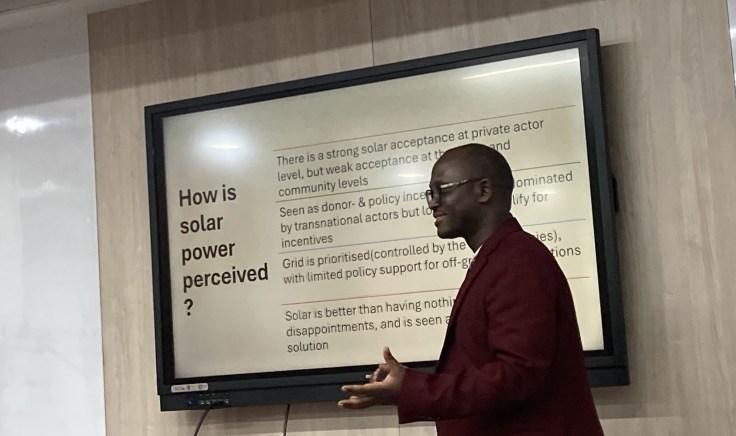
Another researcher spoke of bridging the gender gap in cycling, using systems thinking to identify leverage points for a gender equitable cycling future (Kassandra Moosbrugger, University of Glasgow, UK). Anatole Uwiragiye (Chalmers University of Technology, Gothenburg, Sweden; University of Rwanda) and his team delved into the effectiveness of solar photovoltaic (PV) policy targets in Rwanda. Archana Rani (Multanimal Modi College, Modinagar,India) discussed the relevance of farmers’ pressure groups in India amidst the highly globalised dynamics of agriculture. Vojtech and I (Czech Globe) presented our paper on the normative choices in food systems modelling in the session on ‘Politics and Pathways of Agri-Food Transitions’ that we have been working on this paper with our FoSTA Health colleagues.
The NEST team also put together a research methods workshop for early career researchers. During the workshop, Dr.Anshu Ogra from IIT Delhi introduced a methodological framework that she refers to as ‘Situated Knowledges for Instructional Mapping (SKIM)’. Dr. Kaveri Iychettira spoke of agentic modelling, and its significance for sustainability research.









Leave a Reply