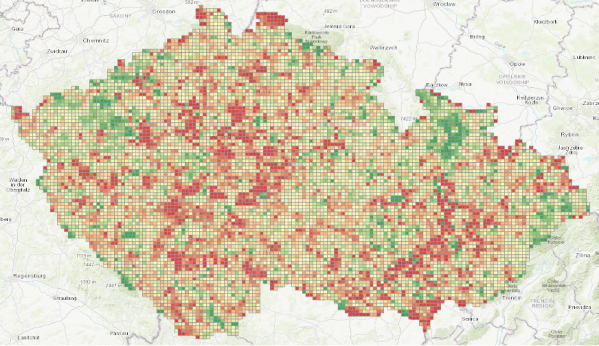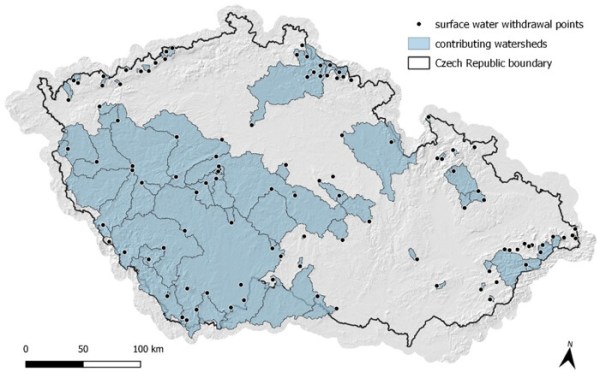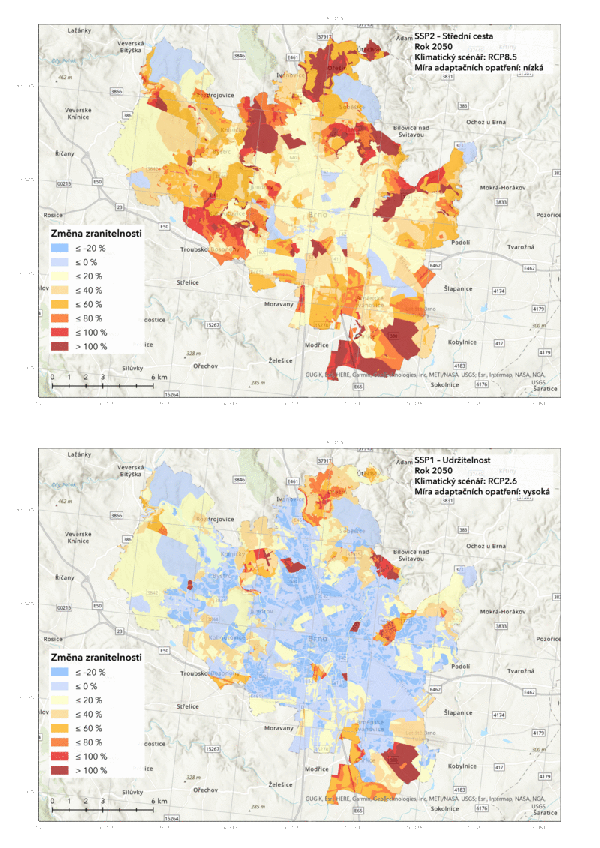
Extrémní projevy počasí jako vichřice, sucho nebo povodně se kvůli klimatickým změnám i v Česku stávají čím dál častějšími. Míra dopadů těchto katastrof závisí na resilienci, tedy odolnosti společnosti a její schopnosti se s podobnými událostmi vyrovnat a předcházet jim. Nová studie Národního institutu SYRI ukazuje, že je český systém snižování rizik katastrof zatím zaměřený především na tradiční krizové řízení... Continue Reading →
The 8th International Workshop on Archetype Analysis in Sustainability Research
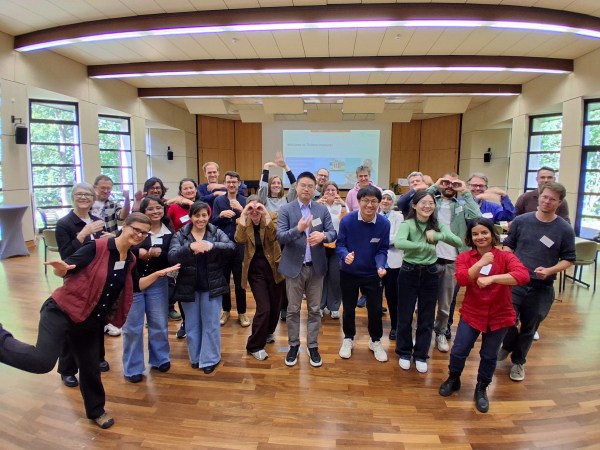
From 29 September to 1 October 2025, the interdisciplinary research community engaged in archetype analysis convened for the 8th International Workshop on Archetype Analysis in Sustainability Research. Hosted at the Thünen Institute of Biodiversity in Braunschweig, Germany, the event brought together around 40 researchers, providing a dynamic forum for exchanging and advancing ideas at the... Continue Reading →
Launching the IPBES Spatial Planning and Connectivity Assessment: Reflections from the First Authors’ Meeting
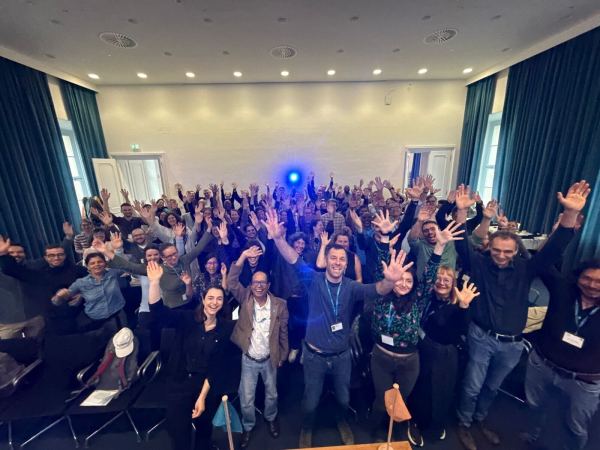
The intensive and productive week-long first authors’ meeting for the IPBES Spatial Planning and Connectivity Assessment took place at IIASA in Laxenburg from 22–26 September 2025. The meeting brought together more than 100 experts to launch this fast-track methodological assessment, co-chaired by Peter Verburg, Maria Jose Martinez Harms, and Luis Inostroza. This assessment focuses on... Continue Reading →
Čtvrté zasedání Národní platformy pro ekosystémové služby
V prostorách Akademie věd České republiky v Praze uspořádalo Ministerstvo životního prostředí (MŽP) ve spolupráci s Ústavem výzkumu globální změny AV ČR (CzechGlobe, 🔗) dne 27. května 2025 již čtvrté zasedání Národní platformy pro ekosystémové služby, jež spadá do aktivit integrovaného projektu LIFE Jedna příroda (🔗). Cílem čtvrtého zasedání NPES bylo poskytnout aktuální informace o dění... Continue Reading →
SSH Centre consortium meeting at Cambridge
As the SSH CENTRE (Social Sciences and Humanities for Climate, Energy and Transport Research Excellence) project enters its final phase, members of the consortium gathered between 11-12 June 2025 for a two-day meeting at the historic King’s College, Cambridge. The event focused on writing deliverables, project reflection and strategic planning, and brought together partners to... Continue Reading →
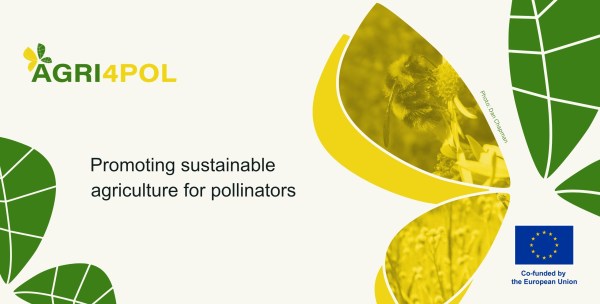
Promoting sustainable agriculture for pollinators: Launching Agri4Pol
Threats to pollinators and pollination services that support agriculture and provide benefits to people are a worldwide problem. This is recognised by scientists, national or transnational initiatives, and even policies. A team from our department at CzechGlobe has joined a new project that aims to help agriculture to become a positive force for pollinator biodiversity, crop pollination services and co-benefits to ecosystems and people.
Continue reading →
Engaging in Education: Our Contribution to Shaping Future Environmental Policy Experts
The Human Dimensions department has a long-standing tradition of actively contributing to higher education by engaging with universities. This involvement plays a crucial role in connecting academic research with real-world challenges. The collaboration includes teaching at institutions such as the Faculty of Science at Charles University and Masaryk University in Brno. Most recently, Eva Horváthová... Continue Reading →
Třetí setkání Národní platformy pro ekosystémové služby
Praha – V rámci aktivit integrovaného projektu LIFE pro soustavu Natura 2000 v ČR zvaného Jedna příroda uspořádalo Ministerstvo životního prostředí (MŽP) ve spolupráci s Ústavem výzkumu globální změny AV ČR (CzechGlobe) dne 18. dubna 2024 v prostorách Akademie věd České republiky v Praze třetí zasedání Národní platformy pro ekosystémové služby (NPES). Cílem třetího setkání NPES bylo... Continue Reading →
Interactions between biodiversity and related sectors in Europe.
This blog post summarises a recently published article Understanding the role of biodiversity in the climate, food, water, energy, transport and health nexus in Europe by Kim et al. 2024, also co-authored by the Czech Globe team represented by Romana Jungwirth Březovská, Simeon Vaňo and Alejandrina Viesca-Ramirez. This work is part of the wider activities... Continue Reading →
Using the Campbell Paradigm to Understand the Role of Institutional Trust in Environmental Policy Support
Public support strongly impacts social change. This has been shown by Elinor Ostrom, the winner of the Nobel Prize in Economic Sciences. At the same time, one of the key factors in the sustainable transformation of societies is the people’s action. Previous research has proven that the lack of popular backing can hinder the adoption... Continue Reading →
PLUS Change Project Launch & Kick off Meeting
The PLUS Change project—Planning Land Use Strategies: Meeting biodiversity, climate and social objectives in a changing world—a collaborative Horizon Europe project involving representatives from 14 countries and 23 institutions, commenced with a highly successful kick-off meeting held in Prague from June 12th to 14th. Read the press release on the project's linkedin. You can follow... Continue Reading →
Creating nature-centred futures for Europe in 2050
In the Horizon Europe-funded project BIONEXT, European changemakers are exploring new visions for nature-centered Europe for 2050. In the first out of three BIONEXT workshops, in May 2023 in Greece, changemakers from different backgrounds created visions of what a nature-centred Europe can look like in the year 2050. Who are the changemakers participating in BIONEXT... Continue Reading →
IPBES Transformative Change Assessment: 2nd Author Meeting in Costa Rica
Between 21st and 31st May this year, I was in Costa Rica for the IPBES Transformative Change Assessment Second Author Meeting and Summary for Policy Makers first meeting. I already blogged last year about what the assessment is about, how the process works etc., and because of the confidentiality of the report, I cannot write... Continue Reading →
Analýza archetypů jako přístup ke zkoumání udržitelných strategií
Archetypová analýza je metodologický přístup ke studiu složitých sociálně-ekologických systémů a vzájemného působení jednotlivých částí těchto systémů. Například zemědělské systémy pěstování plodin jsou procesy, které vyžadují lidskou činnost i specifické prostředí, ale napříč regiony existuje široká škála biofyzikálních atributů, zemědělských postupů nebo společensko-politických organizací a dalších faktorů, které tyto systémy utvářejí a které vykazují jedinečné,... Continue Reading →
Leading a New Project: PLUS Change
We are very excited to be coordinating a new project called PLUS Change: Planning Land Use Strategies for meeting climate, biodiversity and social goals in a Changing world. The project is funded by Horizon Europe (grant agreement 101081464) and will launch on 1st June and run for 4 years. It involves 23 partners from across... Continue Reading →
SYRI: Jak posílit společenskou i environmentální odolnost jako prevenci systémových rizik?
Výzkumníci a výzkumnice z CzechGlobe jsou součástí národního výzkumného konsorcia zkoumajícího dopady systémových rizik na společnost a ekonomiku. SYRI (Národní institut pro výzkum socioekonomických dopadů nemocí a systémových rizik) je virtuální vědecký hub, který sdružuje odborníky z Masarykovy univerzity, Univerzity Karlovy a ústavů Akademie věd ČR. Vznikl jako reakce na zjištění, že současné výzvy (včetně... Continue Reading →
SYRI: How to strengthen social and environmental resilience as a prevention of systemic risks?
CzechGlobe researchers are part of a national research consortium investigating the impacts of systemic risks on society and the economy. SYRI (National Institute for Research on the Socioeconomic Impact of Disease and Systemic Risk) is a virtual scientific hub that brings together experts from Masaryk University, Charles University and institutes of the Czech Academy of... Continue Reading →
Launching project Planet4B (Horizon RIA)
It has long been known that higher levels of biodiversity underpin good ecosystem health and functions and, conversely, continued biodiversity loss threatens both the biosphere and human life. Research provides evidence supporitng these facts and identifies the main cause - humans. The world’s ecosystem may undergo drastic changes and even alter to new states thanks... Continue Reading →
Living in unbearably hot cities – is this our future?
Climate change and its impacts, such as extreme heat, represent an unprecedented challenge for cities, causing overheating and threatening the future prosperity, health and well-being of urban residents. Climate adaptation is one of the central topics for sustainable cities and societies. Yet, we have limited knowledge about the magnitude of climate change that we will... Continue Reading →
Thinking about Participation for Sustainability
Recently, a group of us from the department put our different ideas together to write this paper “Participation as a pathway to pluralism: A critical view over diverse disciplines”. The paper was published in a special collection of the journal Advances in Ecological Research, called “Pluralism in Ecosystem Governance”. This blog post explains why we... Continue Reading →
Proběhne plenární zasedání platformy pro biodiverzitu a ekosystémové služby IPBES
3.–9. července 2022 proběhne v Bonnu 9. plenární zasedání Mezivládní vědecko-politické platformy pro biodiverzitu a ekosystémové služby (Intergovernmental Science-Policy Platform on Biodiversity and Ecosystem Services, IPBES). IPBES představuje “rozhraní mezi vědou a politikou” (science-policy interface), tedy platformu, která sdružuje politické zástupce jednotlivých zemí a odborníky na otázky biologické rozmanitosti (biodiverzity), ekosystémových služeb a udržitelnosti. IPBES... Continue Reading →
When legality is not enough: moving beyond legal land tenure for urban farmers in Soweto, South Africa
Urban agriculture is widely supported across developing countries as it has proven to be a vital livelihood strategy among the urban poor, resulting in various benefits, including enhanced food security and socioeconomic empowerment. Many researchers and policymakers stress that legal land tenure is one of the key assets that help to enhance the potential of... Continue Reading →
IPBES Transformative Change Assessment
Earlier this year, the IPBES (Intergovernmental Panel for Biodiversity and Ecosystem Services) Transformative Change Assessment was launched, and I am excited to be involved as a Coordinating Lead Author of Chapter 1: Transformative Change and a Sustainable World. This is my first time working on an IPBES assessment, and the past couple of months has... Continue Reading →
Hodnotící zpráva IPBES zaměřená na “nexus” mezi ochranou biodiverzity, produkcí potravin, dostupností vody a lidským zdravím
Začíná příprava hodnotící zprávy IPBES zaměřené na faktory ohrožující čtyři oblasti, které mají zásadní vliv na kvalitu života lidí: ochrana biodiverzity, produkce potravin, dostupnost vody a lidské zdraví (IPBES Nexus Assessment). Politické reprezentace všech států se v současném složitém a globalizovaném světě potýkají s otázkou, jak co nejefektivněji zohlednit vědecká poznání v připravovaných politických rozhodnutích.... Continue Reading →
Egoists like climate adaptation but not climate mitigation
In our recent blog post we argued that engaging in climate adaptation does not undermine the willingness of individuals to engage in climate mitigation and vice versa. In another study that is currently under review in a peer-reviewed journal (preprint of this study is linked here) we studied what values are typically associated with individual... Continue Reading →
How to best address climate change? Reflections on the Science for Net-Zero Transition and Empowering Policy Makers panels
In November of last year, The United Kingdom hosted 26 United Nations Climate Change Conference of the Parties (COP26). The Climate talks brought together over 30 000 delegates, among them Climate experts, politicians and activists to discuss actions in order to address climate change. In the fringe of COP26, UKRI and Science Europe convened the Science... Continue Reading →
Ecosystem resilience through sustainability policies: transdisciplinary process from Barcelona
This blog post is based around a research article ‘Adaptive resilience of and through urban ecosystem services: A trans-disciplinary approach to sustainability in Barcelona’ (de Luca C., Langemeyer J., Vaňo S., Baró F., Andersson E., in press, Ecology and Society, 2021) which emerged from the collaborations during the Biodiversa project ‘ENABLE - Enabling Green and... Continue Reading →
Participativní mapování ekosystémových služeb
Ekosystémové služby lze mapovat odbornými způsoby podle objektivních dat, případně podle statistických hodnot z literatury nebo matematickým modelováním. Participativní (příp. komunitní) mapování slouží k získání dat o percepci prostorového výskytu ekosystémových služeb v zájmovém území. Tito nejsou pochopitelně většinou odborníci na všechny oblasti jako je zemědělství nebo vodní hospodářství apod. Nicméně patří mezi ty, kteří spoluurčují... Continue Reading →
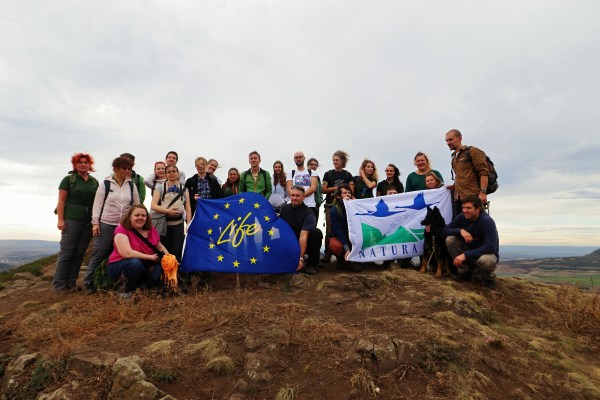
IP LIFE visited some of the Special Area of Conservation in Bohemian Central Uplands this October
CzechGlobe is one of the organizations that has been participating in the integrated LIFE project "One Nature" for the Natura 2000 system in the Czech Republic since 2019 (LIFE17 IPE / CZ / 000005 LIFE-IP: N2K revisited). The aim of this project is to set up and ensure a more efficient system of care for... Continue Reading →
PANELOVÉ DISKUZE Opatření v oblasti změny klimatu
Ústav výzkumu globální změny AV ČR – CzechGlobe Vás srdečně zve na sérii panelových diskuzí, jejichž cílem je veřejnosti vysvětlit problémy související s klimatickou změnou a nabídnout možná východiska. Během této série diskuzí získáte vědecké informace potřebné k tomu, abyste porozuměli reakci na klimatickou změnu, a to zejména v přípravě na konferenci COP26, která se bude konat v Glasgow od 1. do 12. listopadu. Listopadová COP26 se musí zaměřit... Continue Reading →
Climate adaptation and climate mitigation do not undermine each other
In our new paper in the Journal of Environmental Psychology, we report results from an experimental cross-cultural study conducted in Czechia, Hungary, Poland, and Slovakia. We found that support for climate adaptation does not undermine people’s commitment to climate mitigation and vice versa. In fact, we found that prior focus on climate adaptation increases worry... Continue Reading →
Public support for urban climate adaptation policy through nature-based solutions
The impacts of climate change on urban life require response in terms of adaptation planning. We investigated perceptions of and economic preferences for urban climate adaptation through nature-based solutions (NBS) in Prague and found that: (i) increased use of NBS is likely to generate significant economic public value; (ii) people perceive the species diversity of the NBS measures positively; (iii) NBS implemented in...
XPaths – cesty k udržitelnosti v suchých oblastech světa
Věda o udržitelnosti nekončí publikováním odborných článků, ale snaží se o dosažení udržitelné kvality života pro člověka i udržitelných podmínek pro přírodu. Těchto cílů však nemůže dosáhnout sama – je k nim zapotřebí místních partnerů, organizací i jednotlivců, kteří se na výzkumu podílí, spoluvytvářejí jeho výsledky a přivádějí je do praxe v rámci...
Changing the way we govern biodiversity: What do we need to learn?
In Autumn 2020, the conservation community was faced with the realization that the world has failed to meet any of the international policy targets set for biodiversity conservation. In 2010, in Nagoya, Japan, the UN Convention on Biological Diversity set 20 goals for protecting biodiversity. Signatory countries (164 of them) committed to adopting and meeting... Continue Reading →