
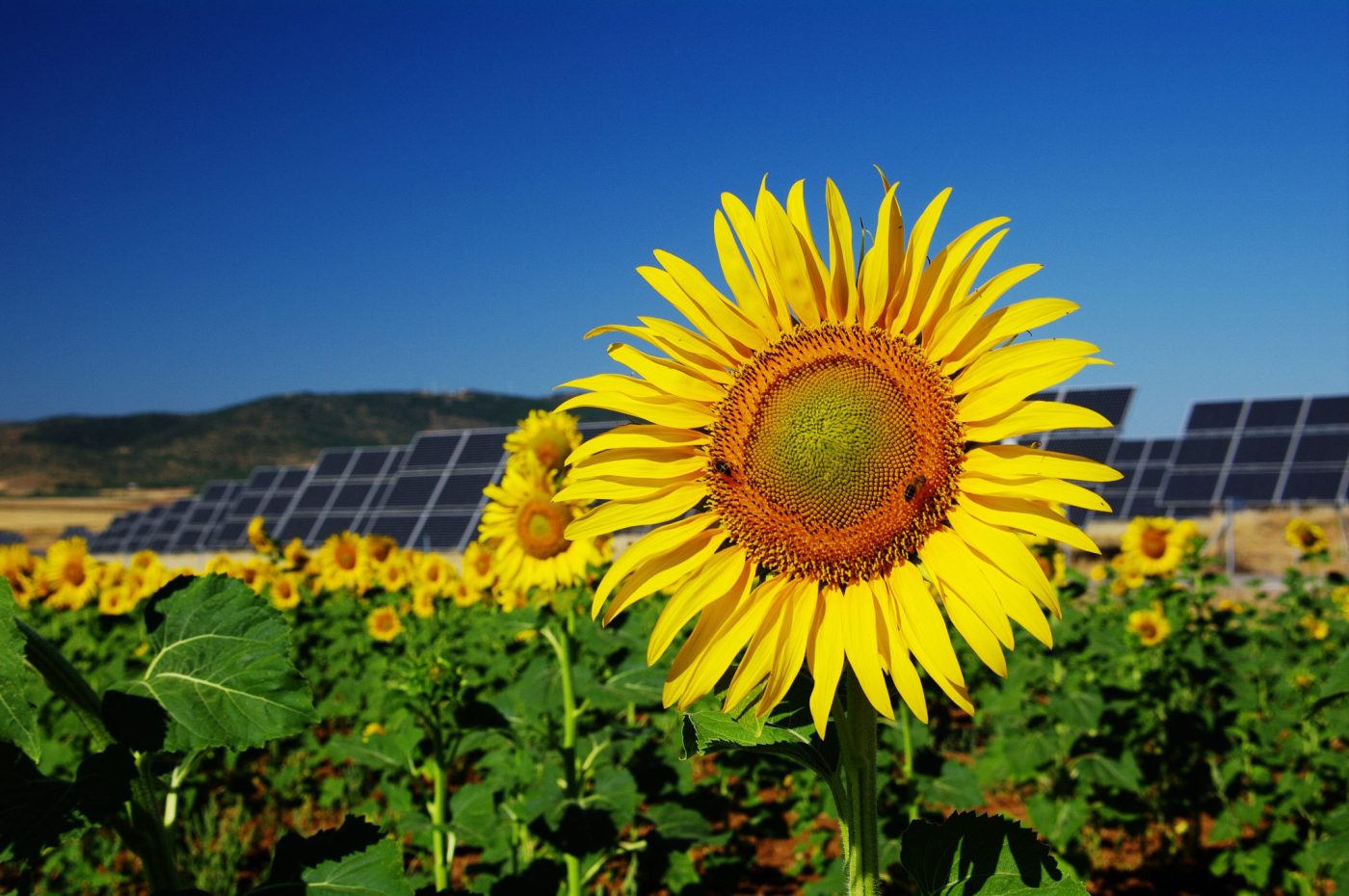
At the beginning of April 2026, a new international research project JustBioSolar (🔗) was launched, which focuses on one of the key challenges of today: how to cope with the energy crisis using renewable sources so that they not only help secure energy sources and benefits for society, but also protect biodiversity and contribute to mitigating climate change.
Expanding the portfolio of energy sources is a fundamental prerequisite for a resilient energy system in times of energy crises. It also represents one of the main “leverage points” for mitigating climate change. That is why great emphasis is currently being placed on rapidly increasing the capacities of renewable sources, especially wind and solar energy, which are expected to significantly contribute to the energy mix in the coming years, including in the Czech Republic.
These trends also have broader implications. Large-scale ground-based photovoltaic installations, but also agrivoltaics, can contribute to solving current problems with energy sources or reducing agricultural land fertility, but at the same time they can fundamentally change the landscape, affect the structure of ecosystems, increase habitat fragmentation or change land use patterns. They can bring financial benefits to local communities, but they can also interfere with their lives, for example, disrupting people’s relationship with the place, affecting local economic opportunities or provoking conflicts over the use of the given territory.
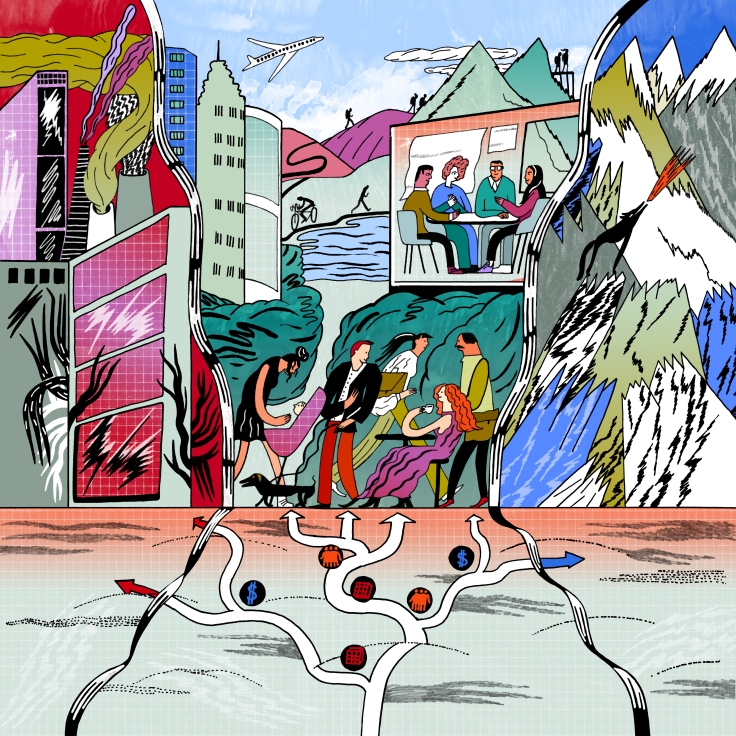
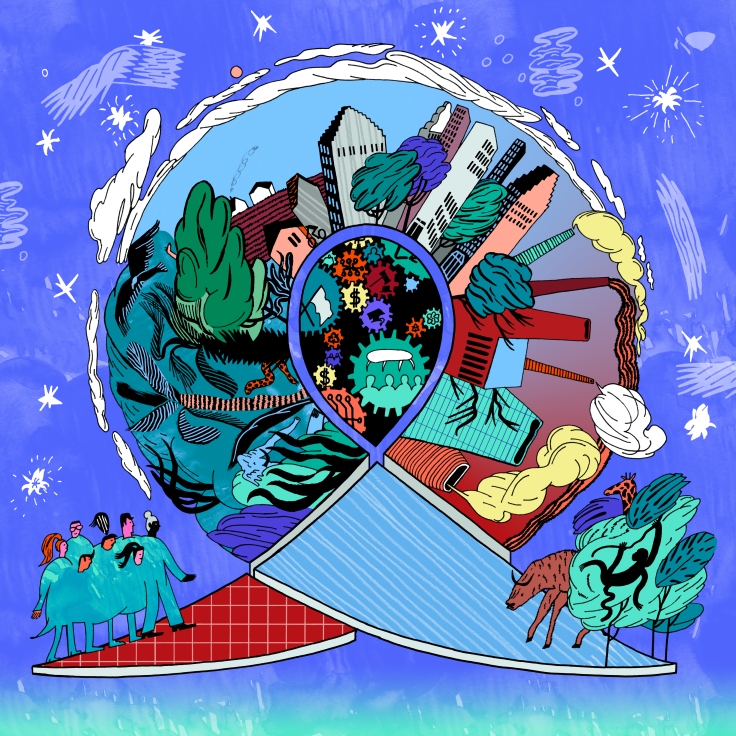
It is these complex and often contradictory impacts that are the focus of the JustBioSolar project. In connection with solving the energy crisis using renewable energy sources, the project works with the concept of the so-called “trilemma”, the tension between three key aspects: mitigating climate change, protecting biodiversity (including so-called biocultural diversity) and ensuring a fair distribution of the benefits and costs of related changes for society.
From a scientific perspective, the project approaches energy issues from a perspective that connects society, climate and biodiversity and society, the so-called Biodiversity-climate-society nexus (Pascual et al., 2022). This framework emphasizes that social and environmental problems cannot be solved in isolation, as interventions in one area can have fundamental consequences in other areas. Therefore, the energy transition is not just a question of technology, but a complex socio-ecological process that also includes values, power relations or institutional decision-making settings.
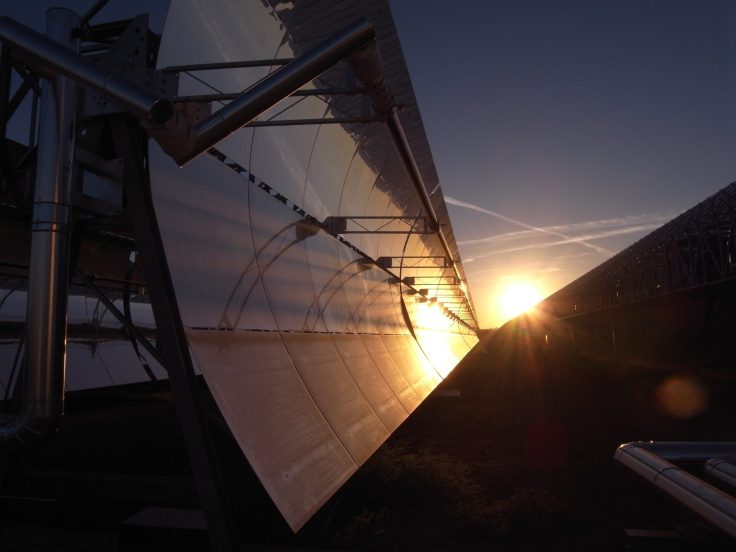
The JustBioSolar project brings together leading research institutions from across Europe and will run for three years. The main coordinator of the project is the Leibniz Centre for Agricultural Landscape Research (ZALF), partners include, for example, the Basque Centre for Climate Change, Vrije Universiteit Amsterdam or Lund University. The Czech Republic is represented in the project by the Institute for Global Change Research of the Academy of Sciences of the Czech Republic, v.v.i. – CzechGlobe through the Department of Social-Ecological Analysis (SE Lab).
Empirical research will be conducted in the form of case studies in various European regions, including South Moravia. These studies will allow for a detailed examination of the specific impacts of solar energy development on the landscape, biodiversity and local communities in various socio-ecological contexts. The project will also focus on the so-called “off-stage” impacts, i.e. indirect and distant consequences related, for example, to the extraction of raw materials for the production of solar panels in regions outside Europe.
A key aspect of the project is a transdisciplinary approach that connects natural and social sciences and actively involves various actors from local residents and farmers to nature conservation actors and policymakers. The aim of this approach is not only to understand existing conflicts, but also to contribute to finding solutions that are environmentally sustainable, socially just and practically feasible.
The Department of Social-Ecological Analysis (SE Lab) brings a perspective focused on values, justice and decision-making processes to the project. The research team will focus in particular on how the impacts of solar projects are perceived by different groups of actors, what types of values (for example, economic, ecological or relational) enter into decisions about the use of the landscape and how these values are taken into account in planning processes.
An important part will also be the analysis of power relations and institutional frameworks that influence who has the opportunity to enter into decision-making and whose interests are prioritized in practice. It is precisely the uneven distribution of benefits and costs, where benefits often go to investors or urban areas, while impacts are borne by local communities, that is one of the key sources of conflicts accompanying the development of renewable resources. The research will therefore also focus on how to strengthen public participation, how to incorporate local knowledge and values into planning and how to contribute to fairer and more inclusive forms of decision-making. The aim will be to identify principles and practices that can lead to a so-called “nature-positive” and at the same time equitable transformation of energetics.
The JustBioSolar project aims to contribute to the very current debate on the energy crisis in Europe. It shows that the transition to renewable sources is not only a question of technological progress, but also has a profound social dimension. If the new form of energy is to be sustainable in the long term, it must take into account not only the climate, but also biodiversity, the cultural values of the landscape and the needs of the people who live in it.








Leave a Reply